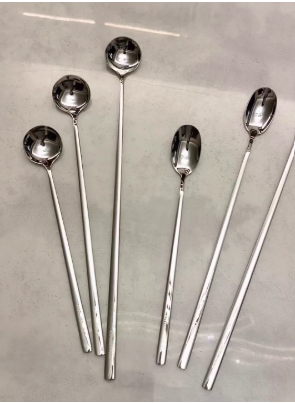
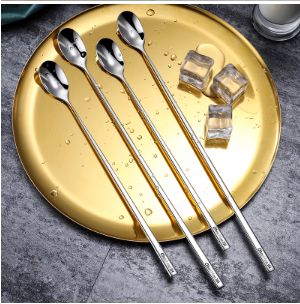


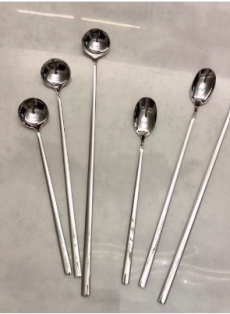
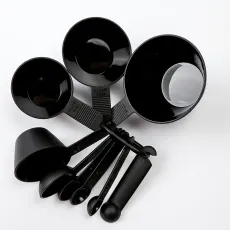
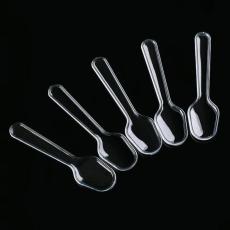
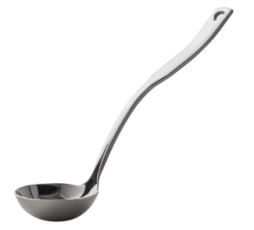
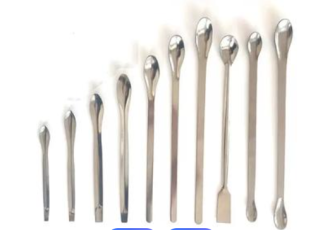
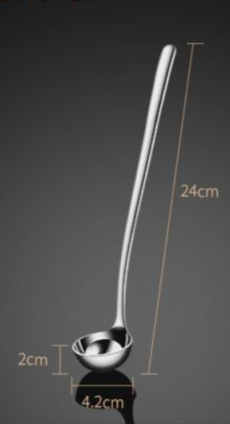
The core feature of this product is its high-strength stainless steel construction, offering exceptional high-temperature resistance and mechanical strength. It can directly contact high-temperature melts (e.g., molten high-temperature engineering plastics like PA, PPS, PEEK) for stirring or sampling without softening, melting, or releasing harmful substances. The high-precision polished surface has a low Ra roughness value, preventing material adhesion and facilitating easy cleaning. The one-piece, seamless design eliminates crevices and dead corners, preventing dirt accumulation and meeting high cleanliness standards in the food and pharmaceutical industries. Optional plastic insulated handles or all-stainless handles provide different user experiences; the former prevents burns, the latter allows for overall oven sterilization. The 316L stainless steel version offers enhanced resistance to chloride corrosion, suitable for marine or specific chemical environments.
The material complies with ASTM A240 standard. 304 stainless steel contains Cr 18%-20%, Ni 8%-10.5%; 316L contains Cr 16%-18%, Ni 10%-14%, Mo 2%-3%. The product has a tensile strength ≥520 MPa, yield strength ≥205 MPa, and elongation ≥40%. The polished surface can achieve a grit finish of #400 or higher, even mirror finish. The paddle edge can be left slightly blunt or polished completely smooth as required. The product undergoes passivation treatment to enhance the integrity and corrosion resistance of its surface chromium oxide protective layer. Material certification reports can be provided.
Widely used in scenarios involving high-temperature, high-viscosity materials. In the plastics industry, it is used for melt sampling at the die head of twin-screw extruders, and for stirring and coating hot melt adhesive rods. In the chemical field, it is used for stirring heated resins, greases, or waxy mixtures. In the production of food-grade (e.g., PET, PP) and medical plastics, its ability to withstand high-temperature sterilization makes it the tool of choice in cleanrooms. Additionally, it is a common tool for placing and retrieving sample crucibles in laboratory ovens and muff furnaces. It can also serve as a scraping tool for cleaning injection machine barrels or molds.











 Post RFQ


 Chat
Chat


 ALL CATEGORIES