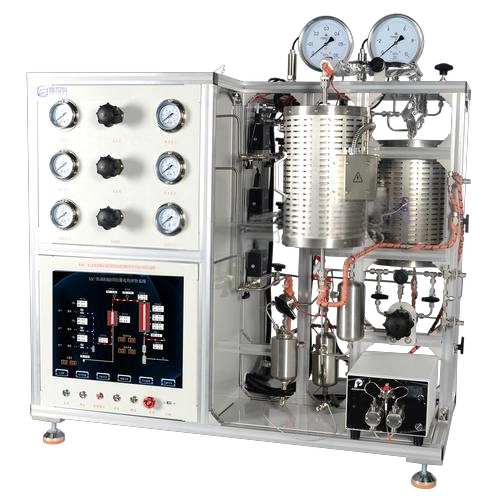
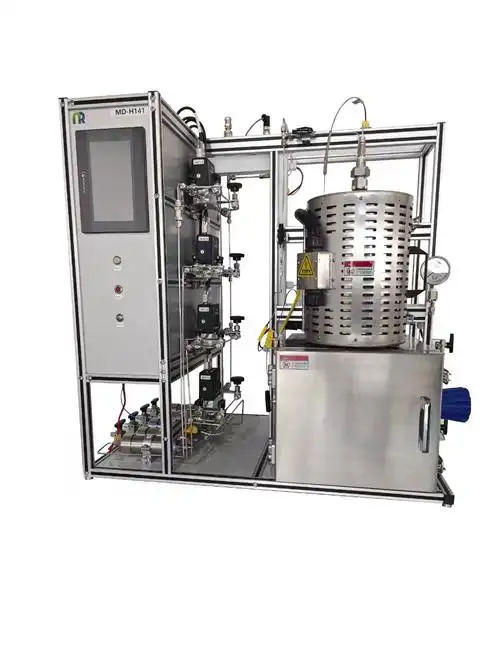


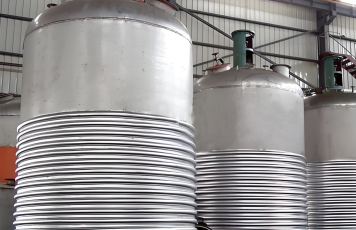
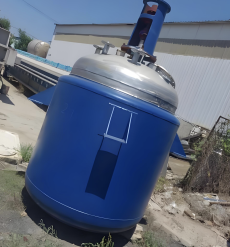
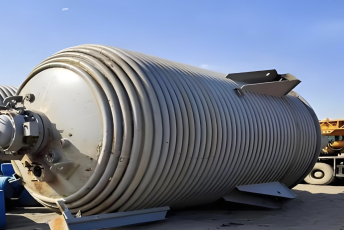
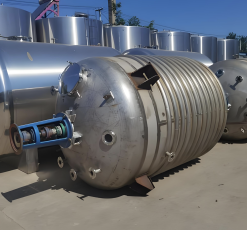

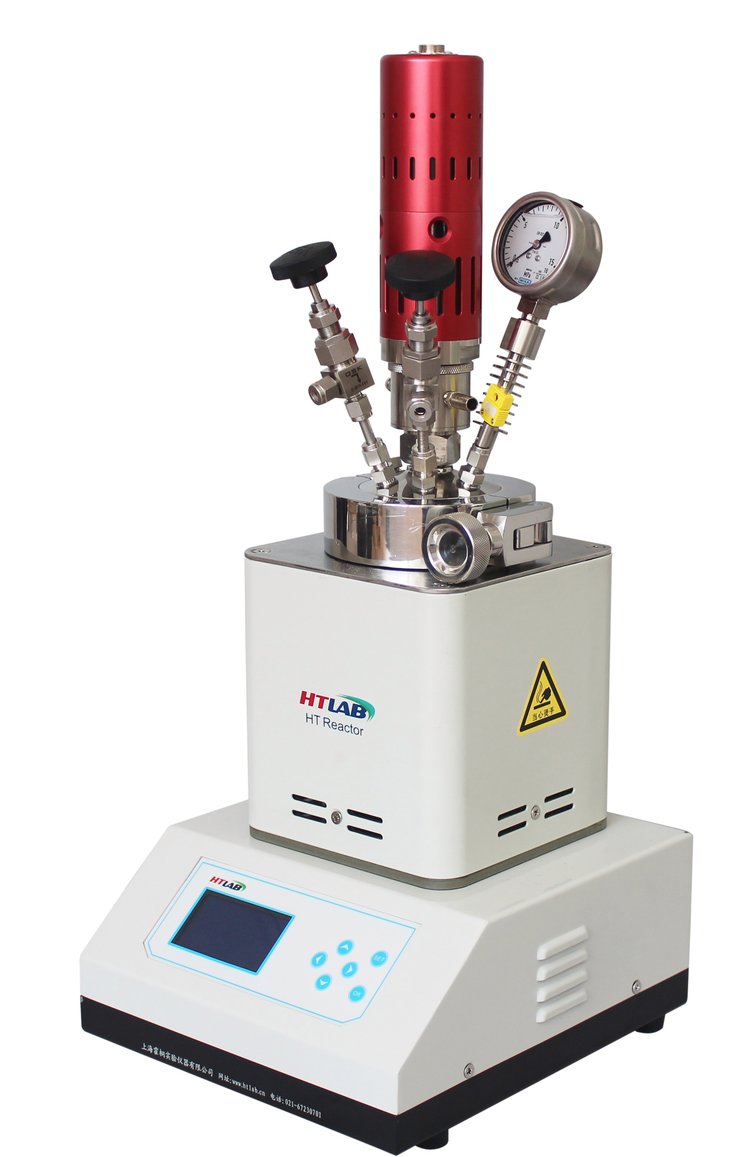
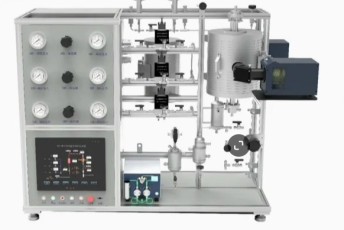
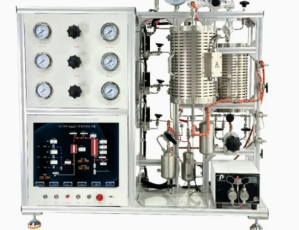
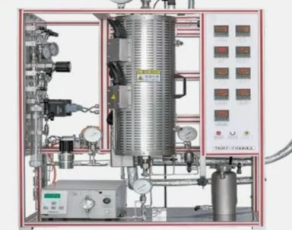
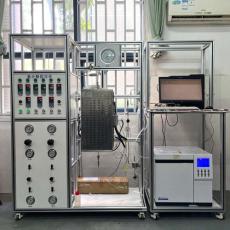
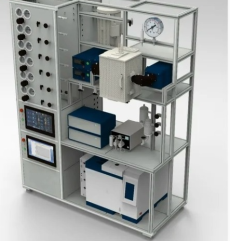
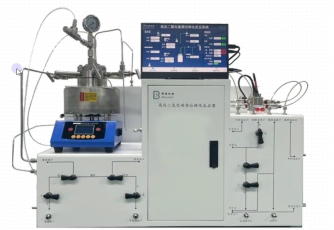
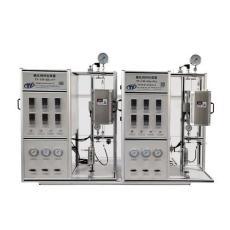
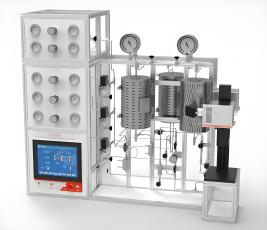
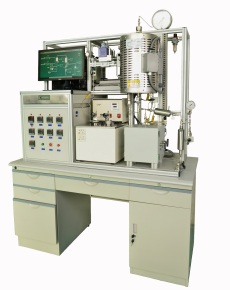
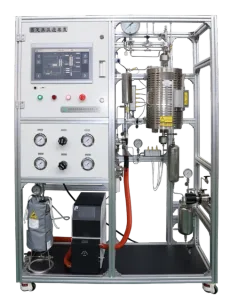
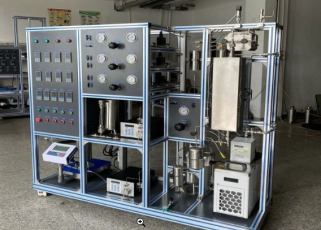
This device adopts Hastelloy C-276 material, which has strong corrosion resistance and adapts to corrosive reaction media containing sulfur and chlorine. The 32-channel data acquisition system can monitor multiple parameters such as temperature distribution, pressure fluctuation and catalyst fluidization state in the fluidized bed in real time, and the data accuracy is 40% higher than that of lab-scale devices. The built-in catalyst wear detection module can real-time evaluate the mechanical stability of the catalyst, solving the pain point that traditional pilot devices cannot quantify the wear performance. The modular fluidized air system supports adjusting the fluidization speed and air flow distribution, which can accurately simulate the working conditions of different industrial fluidized bed reactors. It is also equipped with emergency shutdown and pressure relief safety systems to ensure the safety of pilot experiments.
The overall size of the system is 3500mm (length) × 2200mm (width) × 4500mm (height), with a net weight of about 3200kg. The reaction furnace adopts segmented heating design, with a temperature control accuracy of ±0.3°C per segment and a maximum heating rate of 8°C/min. The inner diameter of the fluidized bed reactor is 150mm, with a adjustable height range of 1200-1800mm, adapting to different catalyst fluidization test requirements. The feeding system is equipped with a preheating module, which can preheat the feeding fluid to 400°C to fit the industrial reaction conditions. The power supply specification is 380V 50/60Hz, with a maximum power of 45kW. The supporting professional pilot data management software can generate complete scale-up test reports and support docking with enterprise MES systems.
It is mainly suitable for catalyst pilot scale-up testing of large chemical enterprises and new energy catalysis R&D institutions, as well as catalyst performance verification of oil refineries. Typical usage scenarios include: evaluating the activity and wear rate of fluid catalytic cracking (FCC) catalysts, testing the fluidization performance of biomass gasification catalysts, and studying the long-term stability of catalytic hydrogen production catalysts in the photovoltaic industry. It can directly provide key data support for catalyst selection and process optimization of industrial production devices, reducing the risk of industrial scale-up.







 Post RFQ


 Chat
Chat


 ALL CATEGORIES