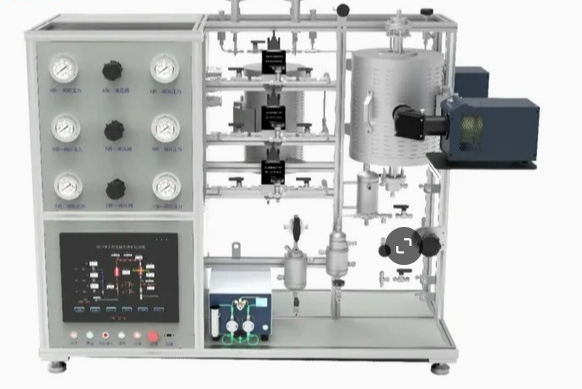
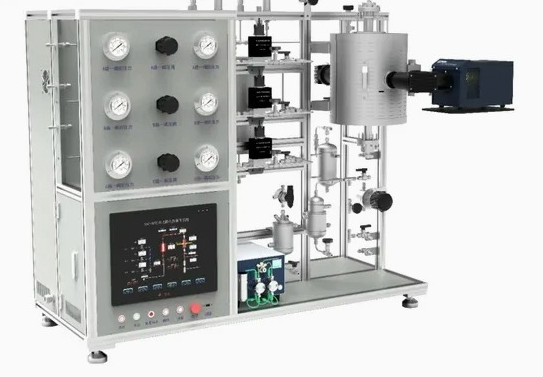



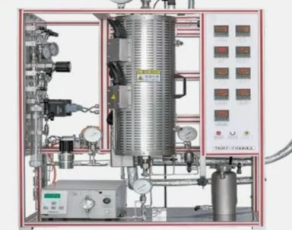
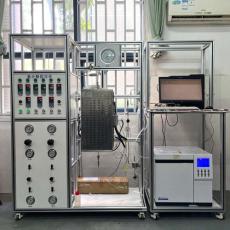
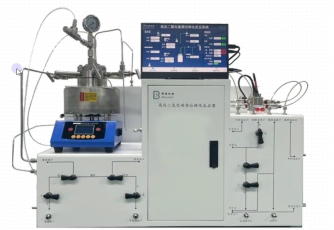
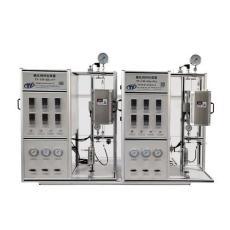
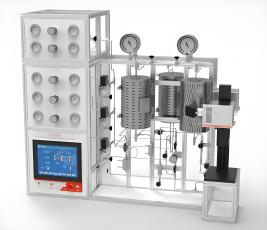
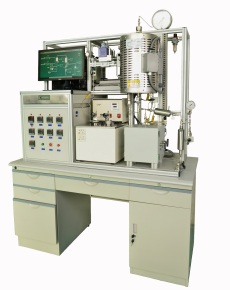
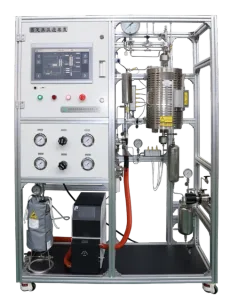
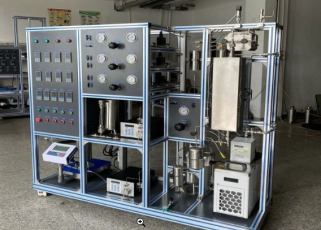
The core advantage of this unit lies in its dual-light path design, which can simultaneously test the catalytic performance of two groups of catalysts under the same reaction conditions, effectively reducing the error caused by different experimental batches. It supports adjustable simulated sunlight and monochromatic LED light sources, meeting the needs of different photocatalytic research scenarios. The quartz glass reactor has excellent light transmittance, ensuring the uniform transmission of light energy. The built-in temperature control system can realize accurate regulation of reaction temperature, realizing the evaluation of photothermal synergistic catalytic performance under different light intensity and temperature conditions.
Overall dimensions: 1100mm(W) × 900mm(D) × 1600mm(H); Net weight: 750kg; Light intensity adjustment range: 0-10 Suns (AM1.5G standard) with ±2% precision; Temperature control range: Ambient to 500°C with ±1°C accuracy; Gas flow control range: 0.5mL/min-2000mL/min; Sample cell path length: 10mm; Reactor material: High-transmittance quartz glass; UV-Vis detection wavelength range: 190-1100nm; Equipped with USB and Ethernet interfaces for data export; Passed CE safety certification; Compatible with mainstream commercial UV-Vis spectrophotometers on the market.
This dual-light path photothermal catalytic evaluation unit is widely applicable to solar photocatalytic water treatment, CO₂ reduction photocatalysis, photocatalytic degradation of organic pollutants and other photothermal synergistic catalytic research scenarios. It is suitable for university environmental engineering laboratories, new energy material enterprises' photocatalyst R&D, and environmental protection enterprises' photocatalytic technology development. It can help researchers efficiently screen high-performance photothermal composite catalysts and optimize photocatalytic reaction parameters, accelerating the industrial application of photocatalytic technology.








 Post RFQ


 Chat
Chat


 ALL CATEGORIES