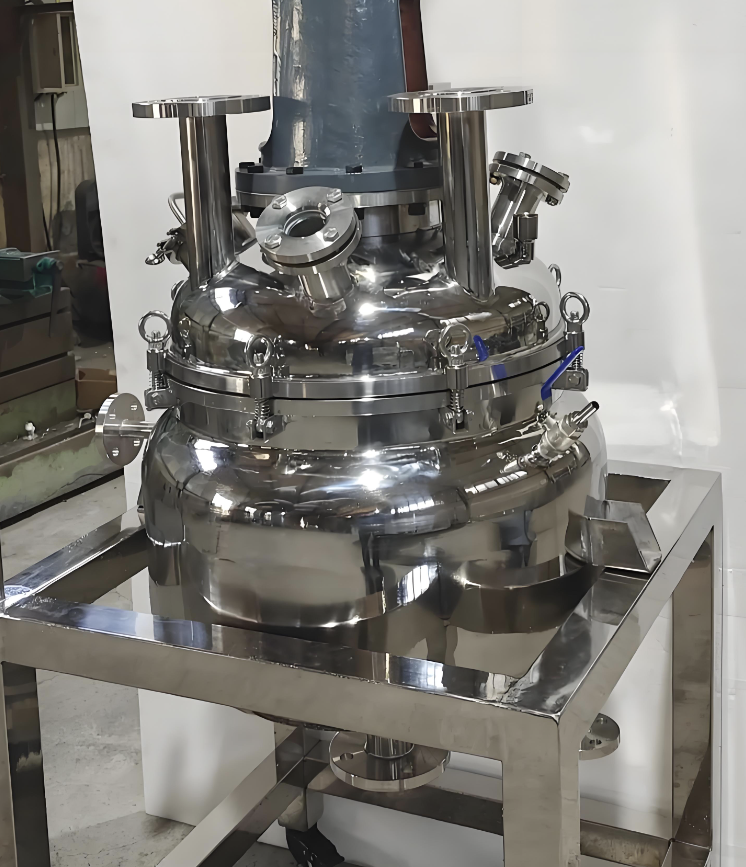
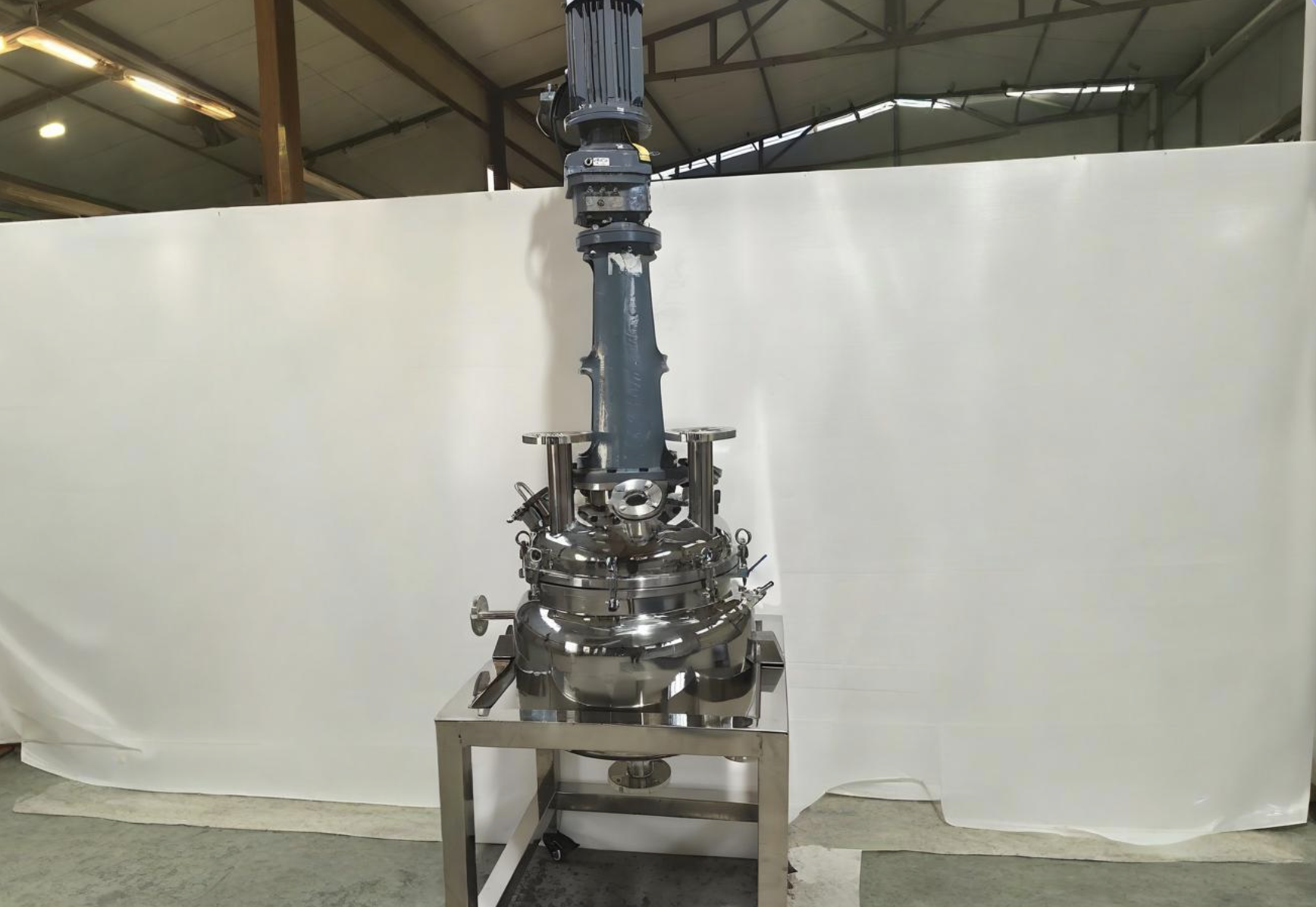





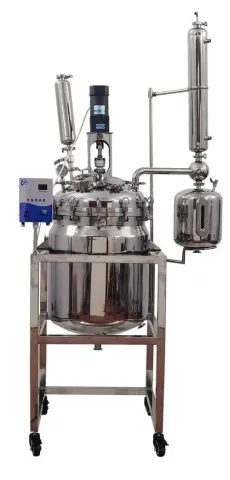
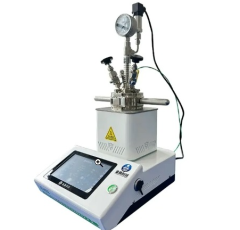
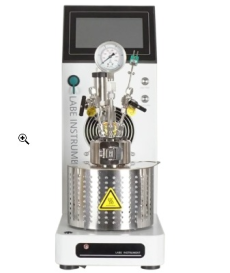
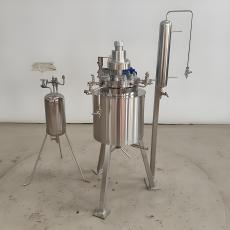
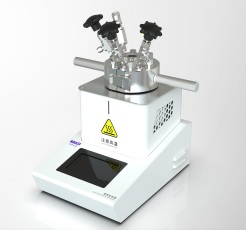

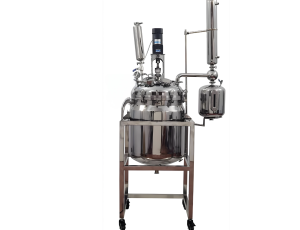
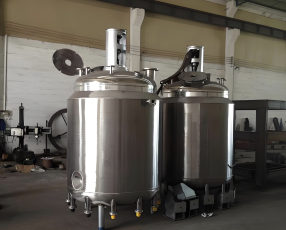
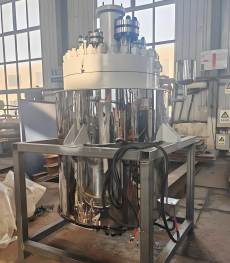
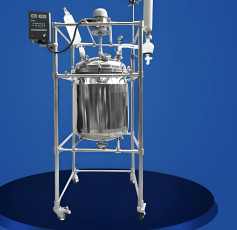
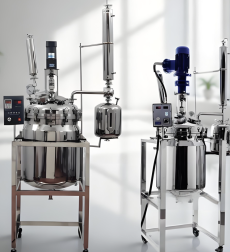
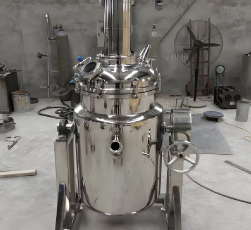
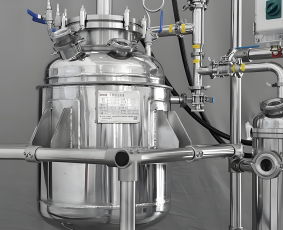
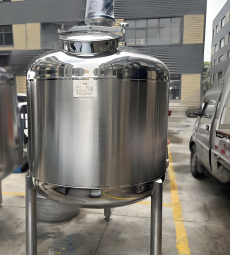
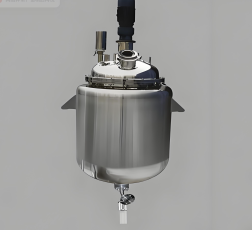
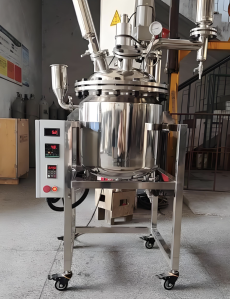
Its compact modular design occupies minimal space, perfect for limited lab environments. The SUS316L material offers excellent corrosion resistance against acidic and alkaline reaction media. The single-end mechanical seal effectively prevents material leakage, ensuring operational safety. The PID intelligent control system can monitor and adjust temperature and pressure parameters in real time, with stirring speed adjustable from 0 to 150 rpm to suit different mixing requirements. Compared with common lab reactors, its mirror-polished inner wall greatly reduces cleaning difficulty, making it ideal for high-cleanliness R&D scenarios such as pharmaceutical and cosmetic industries. Optional remote monitoring interface is available for more precise process control.
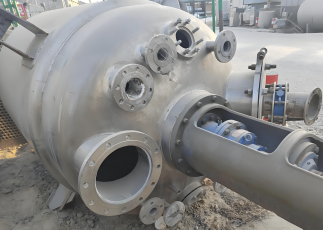
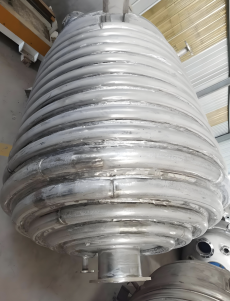
With a total volume of 50 liters, this reactor features a design pressure range of 0.1 to 0.6 MPa and a design temperature range of -10℃ to 180℃. It has a stirring power of 0.55 kW, adopts electric heating and jacket cooling, and has an inner wall roughness of Ra ≤ 0.8μm. It is equipped with single-end mechanical seal, standard accessories including manhole, sight glass, pressure gauge and safety valve, and uses a PID intelligent temperature control cabinet. Optional functions include vacuum negative pressure system, online sampling port and remote monitoring module. The overall dimensions are approximately 1200mm (length) × 800mm (width) × 1600mm (height), with a net weight of about 350 kg.
This reactor is mainly suitable for lab-scale R&D scenarios in university chemical laboratories, pharmaceutical research institutions and small-scale cosmetic production workshops. It can be used for synthesis of pharmaceutical intermediates, emulsification and preparation of cosmetic samples, mixing of fine chemical materials and other processes. It is especially suitable for high-cleanliness, small-batch and multi-batch R&D and production needs, helping researchers quickly verify reaction process parameters and provide reliable data support for large-scale production. Additional functional modules such as online sampling and vacuum negative pressure can be added on demand to adapt to different R&D requirements.







 Post RFQ


 Chat
Chat


 ALL CATEGORIES