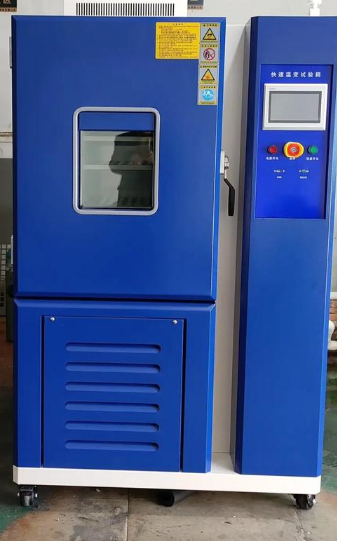
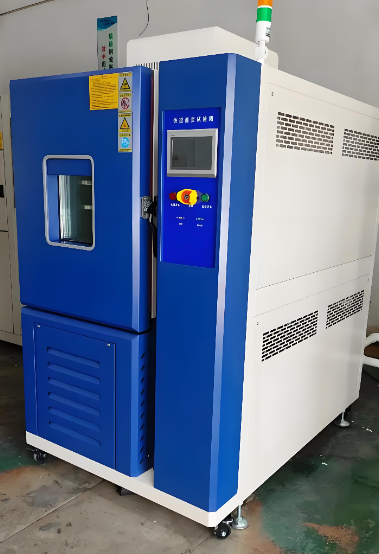





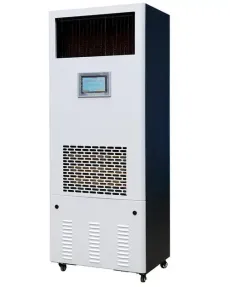
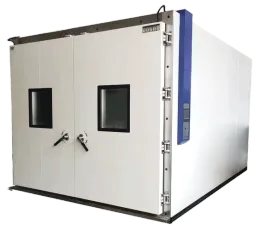

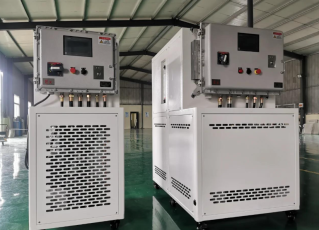
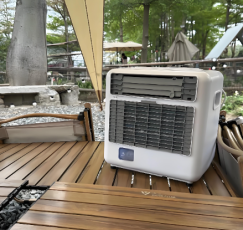
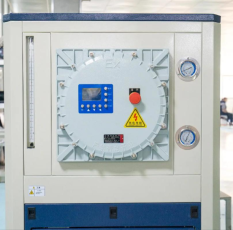
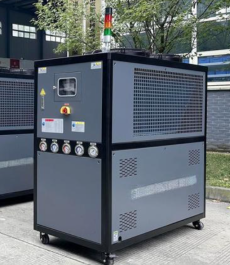
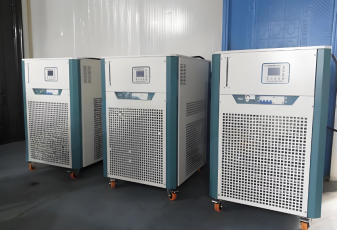
The core advantage of this product lies in its ±0.1℃ high-precision PID temperature control, which ensures stable and consistent temperature during the entire experimental process, reducing data errors caused by temperature changes. Its air-cooled design eliminates the trouble of connecting to external cooling water, making it more convenient and flexible for laboratory use. It is equipped with multiple safety protection systems including over-temperature and over-pressure protection to avoid equipment damage and experimental accidents caused by malfunctions. The touchscreen human-computer interaction interface simplifies operation, allowing non-professional operators to get started quickly. In addition, it is compatible with most common small-scale reaction equipment on the market, providing strong versatility for different experimental projects.
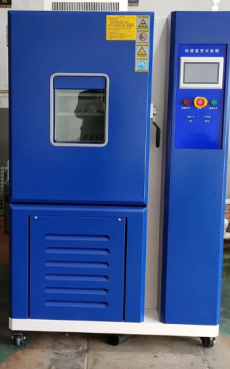
This machine has a wide temperature range of -40℃ to 200℃, with a temperature control accuracy of ±0.1℃. The circulating flow rate is 20L/min, and the working pressure is 0.3MPa. It adopts a 304 stainless steel inner tank with a thickness of 3mm, which has good corrosion resistance and service life. The rated power is 3.5kW, and the power supply is AC220V 50/60Hz. The noise during operation is controlled within 55dB, which will not interfere with the normal office and experimental environment. The machine is equipped with a 20L oil tank, which can meet the continuous operation needs of most small-scale experiments. It also supports external temperature probe expansion to meet customized experimental requirements.
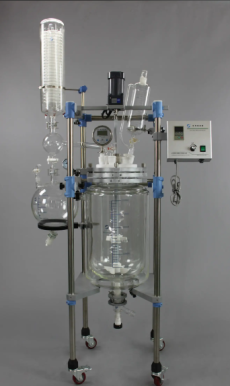
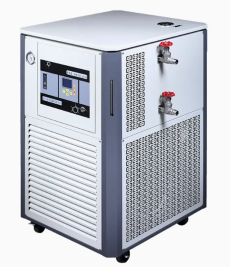
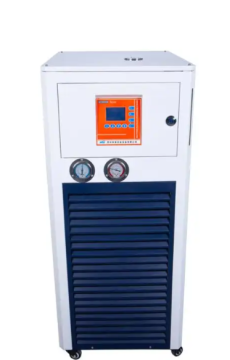
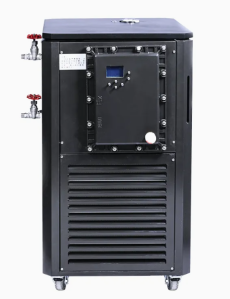
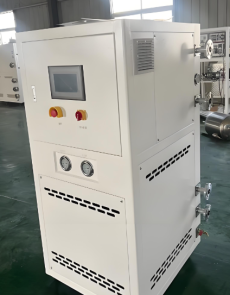
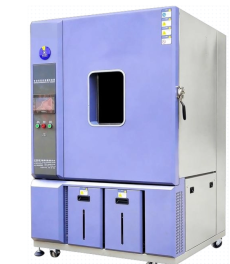
This benchtop temperature control integrated machine is mainly suitable for university chemical laboratories, material science research, drug R&D small test and teaching experiment scenarios. It can be used for temperature control of 5-50L glass reaction kettles, providing stable temperature environment for organic synthesis, inorganic material preparation, polymer material testing and other experimental projects. It is also suitable for field sampling temperature control in small scientific research teams, helping researchers obtain accurate experimental data in various complex scenarios.








 Post RFQ


 Chat
Chat


 ALL CATEGORIES