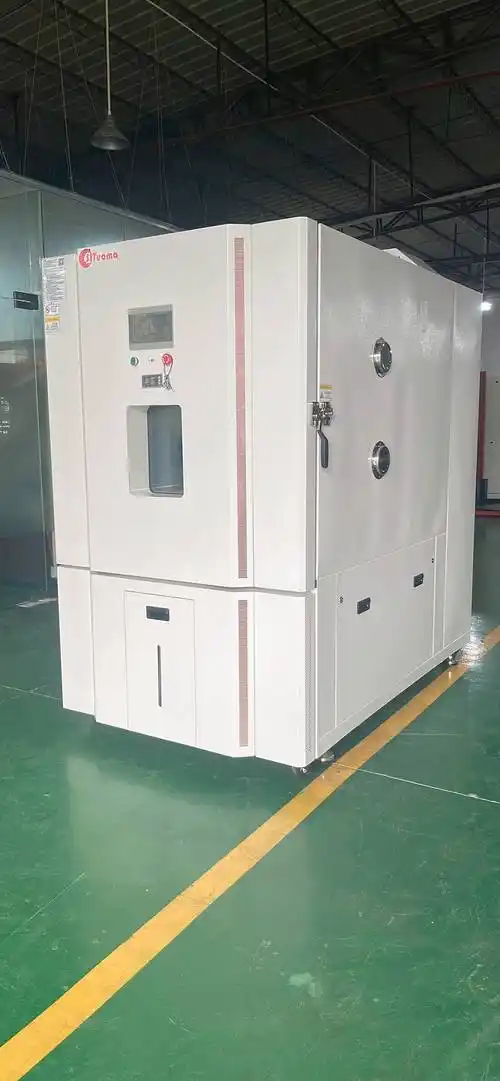
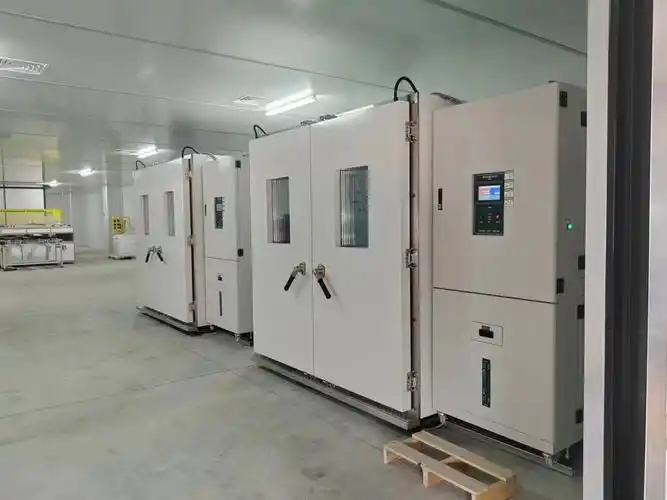





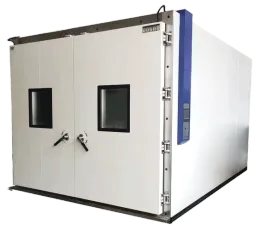
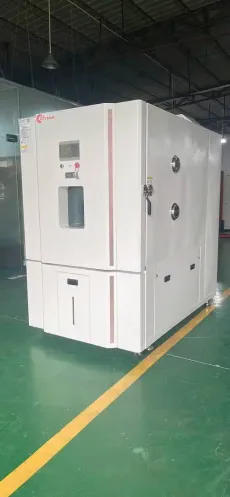

The core advantage is its wide temperature adjustment range and heavy loading capacity of up to 500kg, suitable for large industrial product testing. The 316L stainless steel interior offers stronger corrosion resistance for testing environments with corrosive gases. The dual parallel compressor design ensures stable operation under extreme temperatures, with a temperature switching speed of 0.5°C per minute, greatly improving testing efficiency. It supports storage of multiple test programs and can export CSV-format test reports to meet industrial production compliance requirements. Multiple safety protection systems including over-current, over-voltage, over-temperature and humidity abnormality alarms, plus door lock protection, avoid external environmental interference during testing and ensure the safety of test personnel and equipment.
The overall external dimensions are 2000mm(W) × 2500mm(D) × 2200mm(H), with a net weight of 1200kg. The input voltage is 380V three-phase 50/60Hz with a rated power of 5.5kW. The 1000-liter internal volume is equipped with 5 adjustable stainless steel test trays with spacing adjustable from 50 to 200mm. The industrial-grade touch screen supports multi-language display, and optional 4G remote monitoring module enables real-time test status viewing and parameter adjustment via mobile phone or computer. It has automatic power recovery function to avoid resource waste caused by test interruption.
It is mainly applicable to automotive component environmental reliability testing, aerospace component climate simulation testing, bulk electronic component aging testing, building material air permeability and weather resistance testing, and chemical product stability testing. Typical scenarios include automotive interior material high and low temperature aging testing, photovoltaic module humidity aging testing, semiconductor package temperature and humidity cycle testing, and coating weather resistance testing, helping enterprises verify product performance in different climate environments, detect product defects in advance, optimize production processes, and improve product market competitiveness.


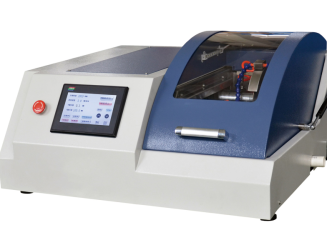
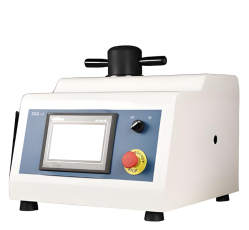
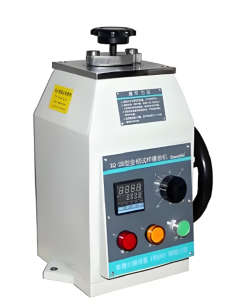
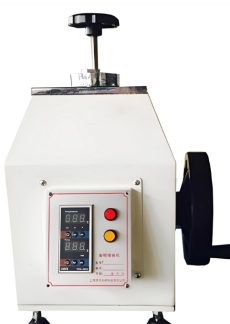





 Post RFQ


 Chat
Chat


 ALL CATEGORIES