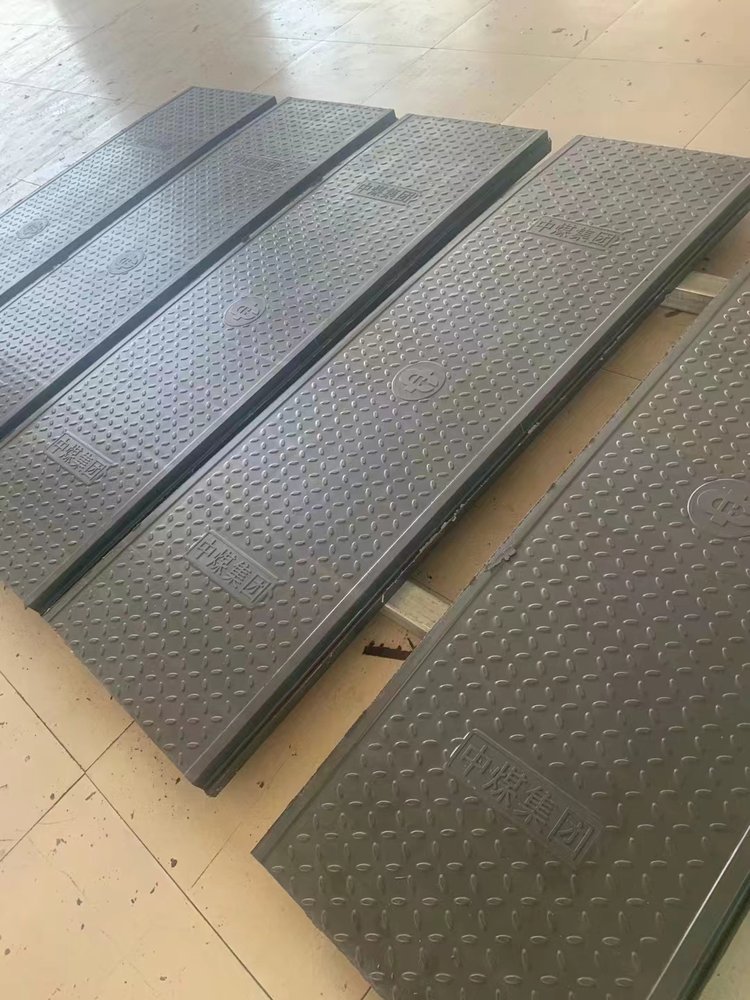
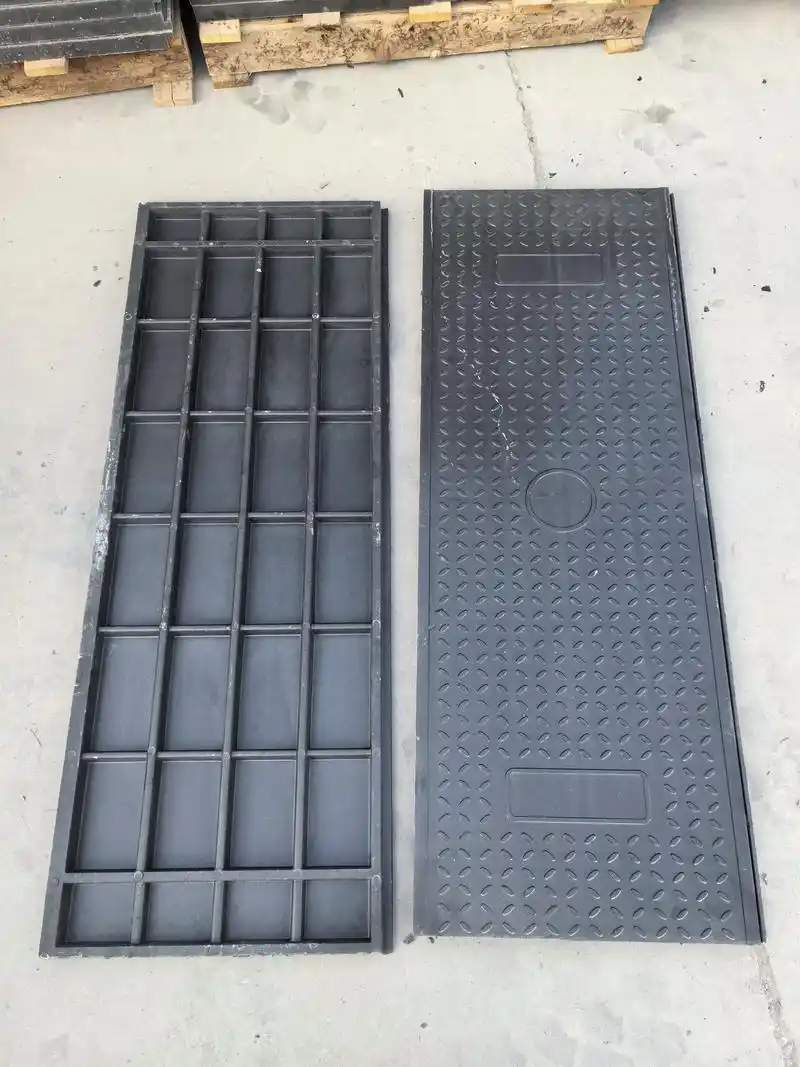


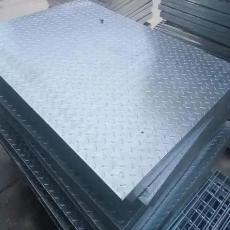
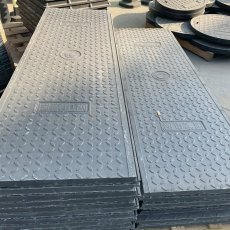
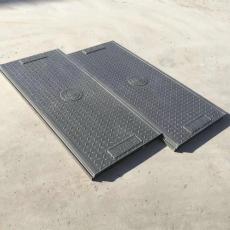
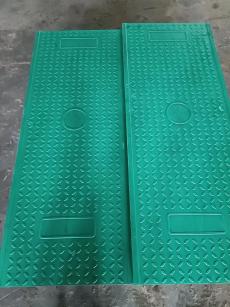

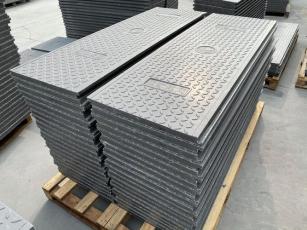
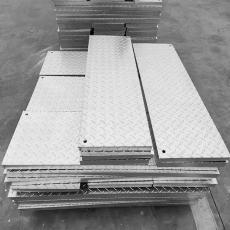
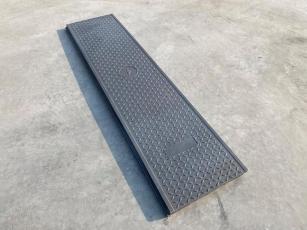
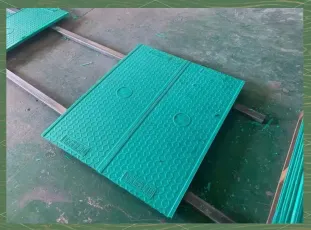
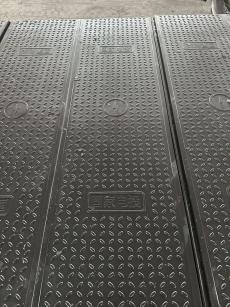
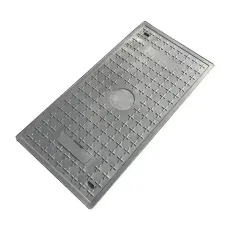
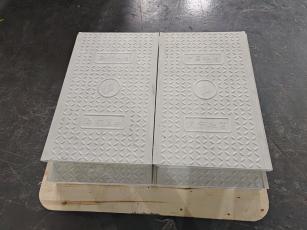
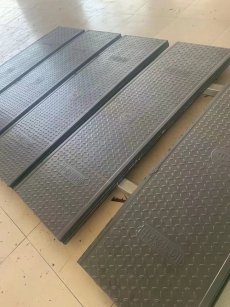
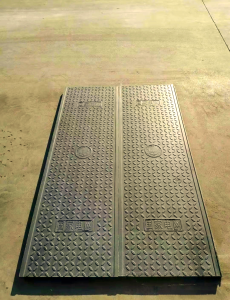
It is made of high-strength ductile iron, which meets the EN 124 F900 load standard and can withstand the rolling of 90-ton heavy vehicles. The surface is designed with diamond anti-slip texture, which greatly improves the safety of walking and vehicle passing. It has built-in vibration sensors to monitor the opening and closing status of the cover and abnormal rolling impact in real time, pressure sensors to monitor the force anomaly of the pipeline in the trench, and cable temperature sensors to early warn overheating faults. Equipped with 5G communication module, it can upload data in milliseconds, and can access the factory central control system through industrial bus protocol. When abnormal conditions occur, it will automatically trigger multi-level alarms, and it also has anti-tamper locking function, which will immediately trigger alarm push when illegally opened.
The single-piece size is 1200mm×1000mm×150mm, the single-piece weight is about 180kg, the load rating is F900, the impact resistance rating is IK10, and the ingress protection rating is IP68, which can be completely immersed in 1.5m deep water for 30 minutes without failure. It is powered by DC24V industrial power, with a standby power of ≤5W. The vibration monitoring accuracy is ±0.1g, the pressure monitoring range is 0~100MPa, and the temperature monitoring accuracy is ±0.3℃. The operating temperature range covers -40℃ to 80℃. The shell is coated with fluorocarbon coating, which has oil resistance and corrosion resistance, and the service life can reach more than 20 years.
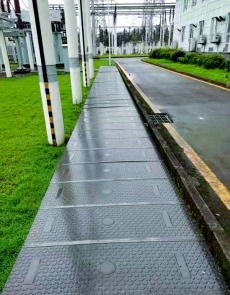
It is suitable for underground cable trench scenarios where heavy vehicles pass through in steel plants, heavy machinery manufacturing plants, container ports, logistics and storage parks, etc., and can be used for laying high-voltage power cables and heavy industrial control cables. Operation and maintenance personnel can view the cover status and pipeline operation parameters through the factory central control system. When there is cover shifting, overload rolling or cable overheating, they can receive alarm information in the first time, and arrange operation and maintenance personnel to arrive at the scene in time to avoid safety accidents such as pipeline damage and electric leakage fire.








 Post RFQ


 Chat
Chat


 ALL CATEGORIES