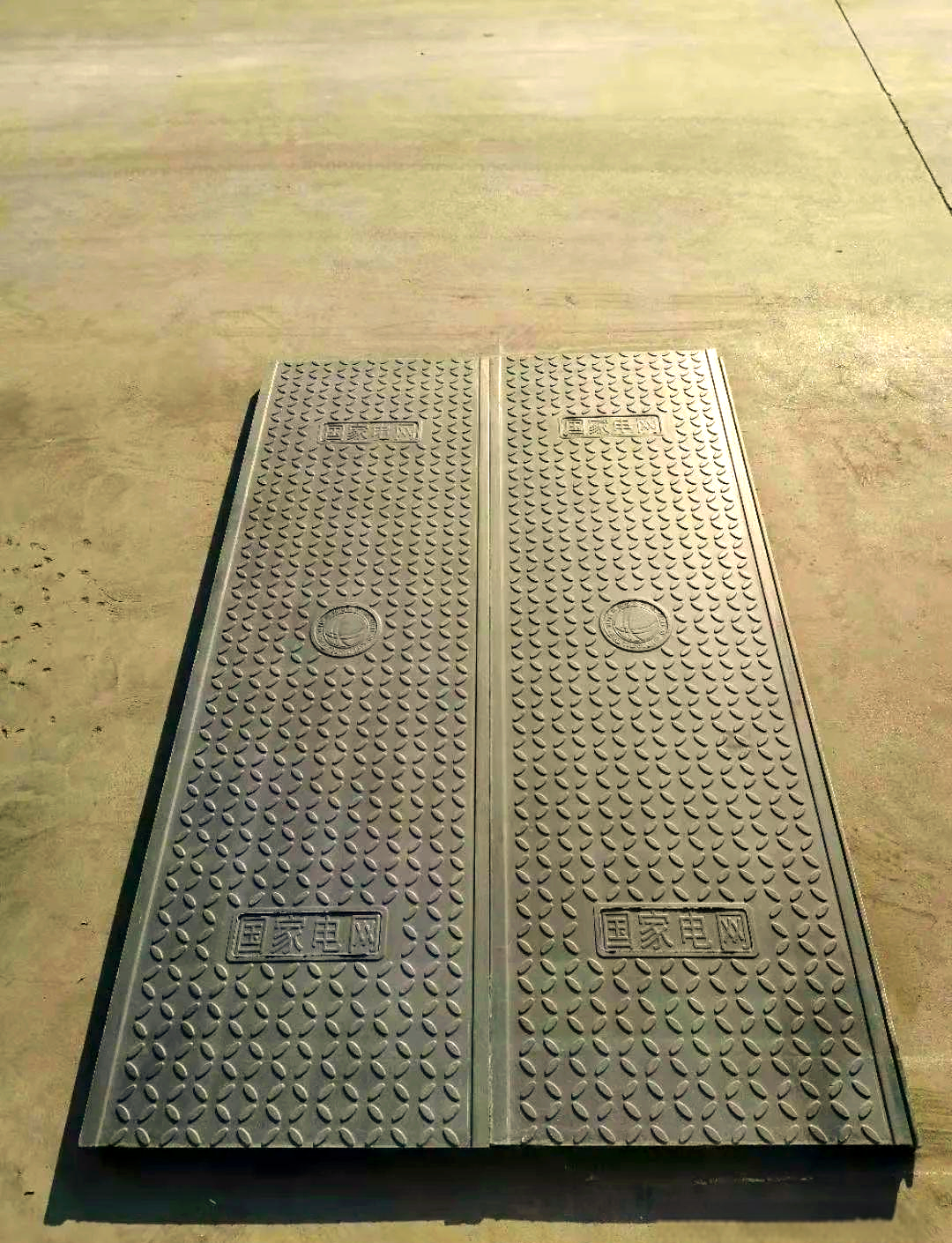
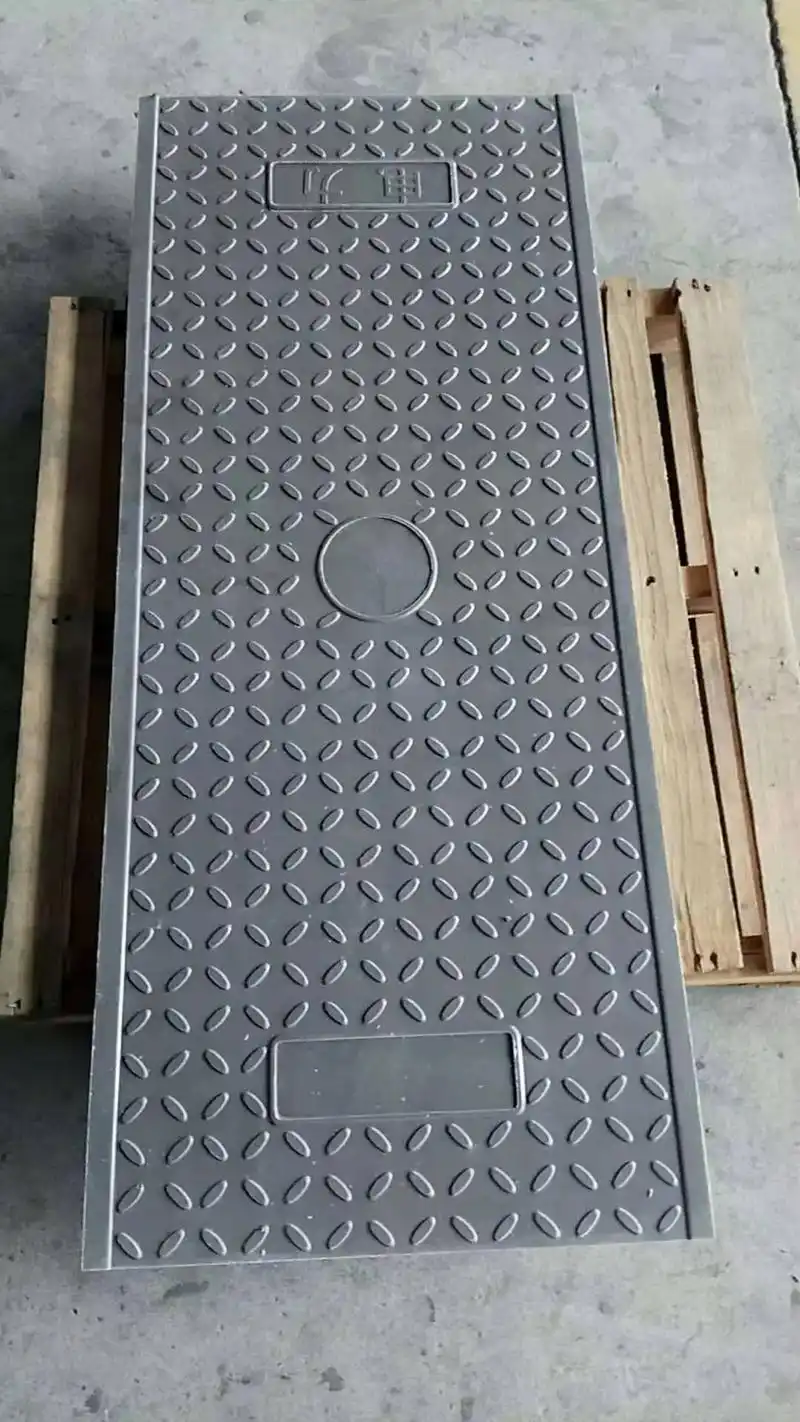


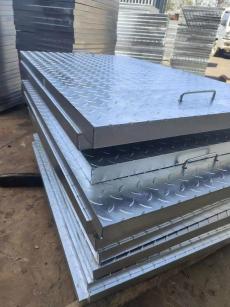
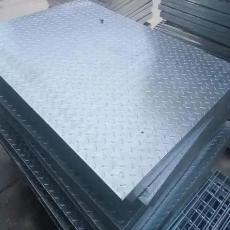
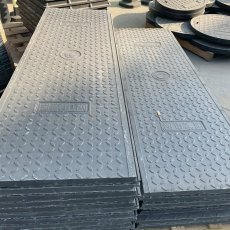
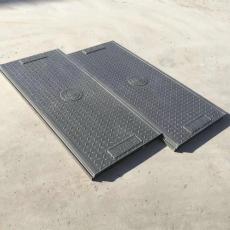
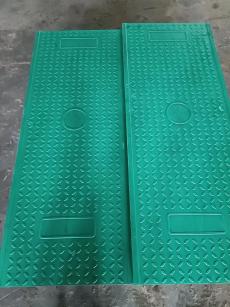

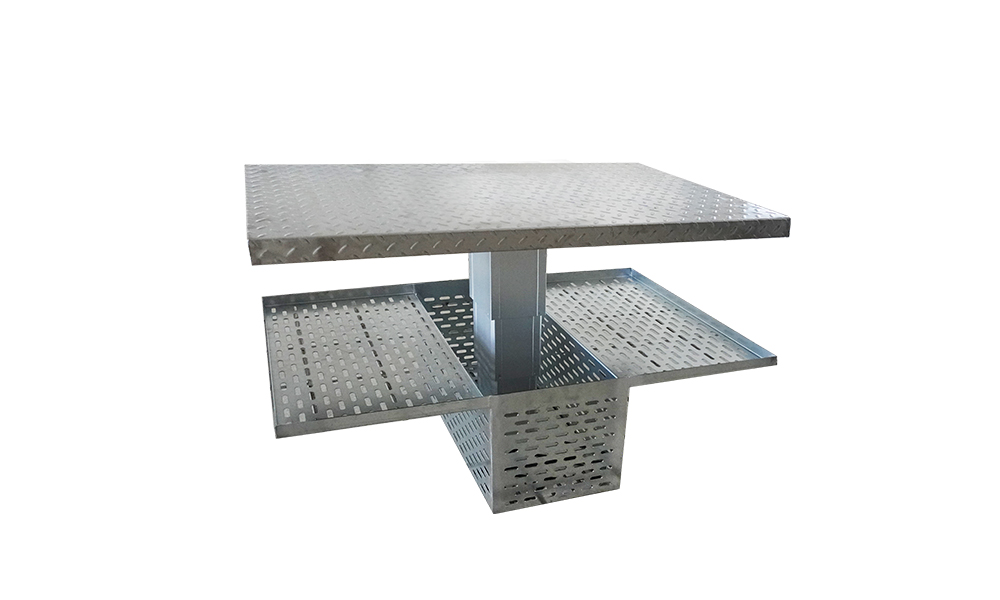
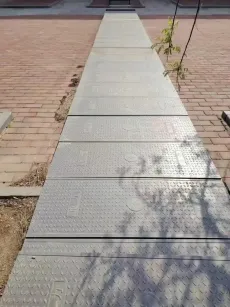
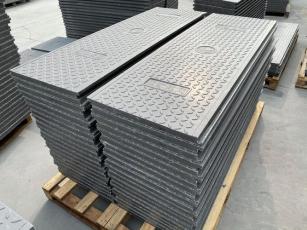
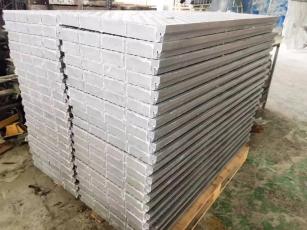
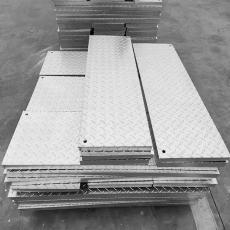
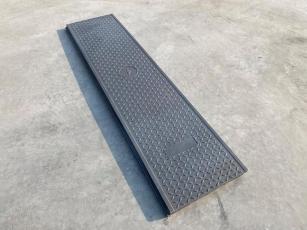
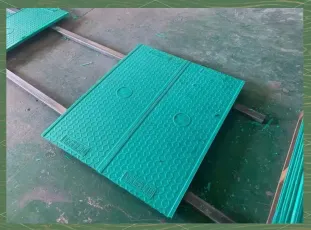
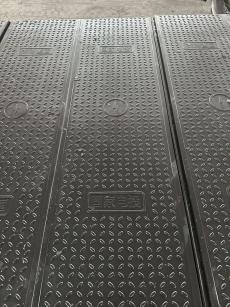
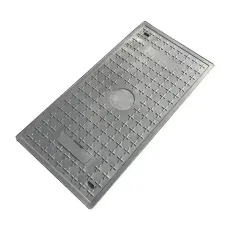
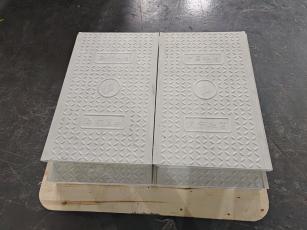
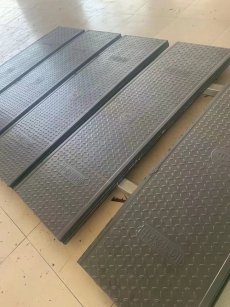
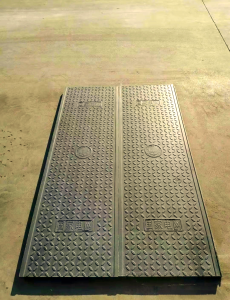
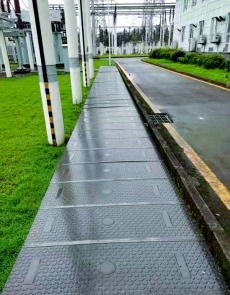
This cover adopts a composite structure of SMC composite material and galvanized steel, balancing strength and insulation performance. The IP67 protection rating can effectively prevent rainwater and sediment from invading. It is equipped with temperature, humidity and water immersion sensors, which can collect the internal environmental parameters of the cable trench in real time and upload them to the cloud platform through the LoRaWAN protocol. When the monitoring parameters exceed the threshold, it will automatically trigger audible and visual alarms and cloud push. Compared with traditional cast iron covers, the weight is reduced by 40%, and one person can complete the opening and closing operation, greatly improving the convenience of operation and maintenance. It also has anti-corrosion and anti-aging properties, with a service life of more than 15 years.
The overall size is 600mm×800mm×100mm, the single-piece weight is about 22kg, and the load rating meets the C250 standard (can withstand light vehicle rolling ≤10 tons). It is powered by AC220V external power, with a standby power of ≤3W. The monitoring sensor accuracy: temperature and humidity ±0.5℃/±3%RH, water leakage detection sensitivity ≤10mm. The communication distance can reach 3km in open scenes. The shell is coated with gray epoxy zinc-rich coating with a thickness of ≥80μm, which has anti-ultraviolet and acid-alkali corrosion resistance. The operating temperature range covers -20℃ to 60℃.
It is mainly suitable for urban municipal weak current cable trenches, supporting pipe networks in residential quarters, underground pipelines in commercial complexes and other scenarios, which can be used for laying weak current communication cables, monitoring cables, etc. It is suitable for areas that require regular inspection but do not need heavy rolling. Operation and maintenance personnel can view the internal status of the cable trench through the cloud platform without on-site one-by-one inspection, greatly shortening the fault troubleshooting time and reducing the labor cost and safety risks of manual inspection.







 Post RFQ


 Chat
Chat


 ALL CATEGORIES