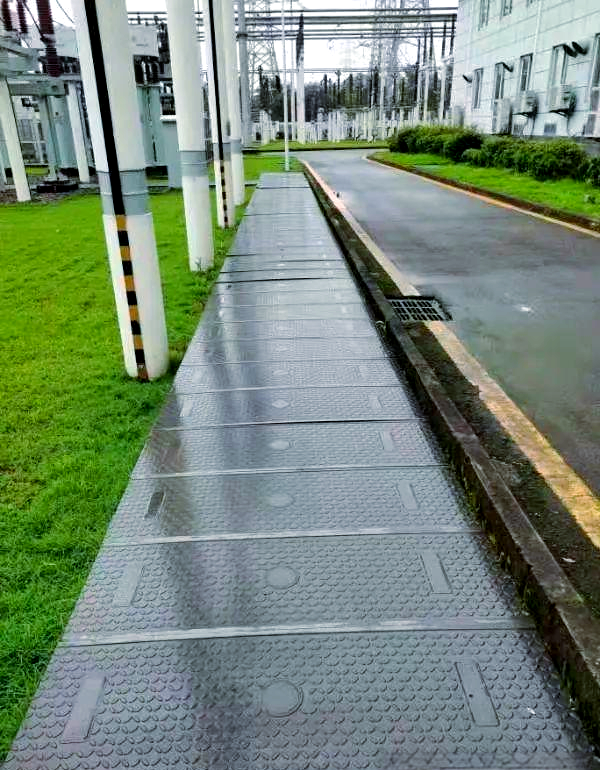
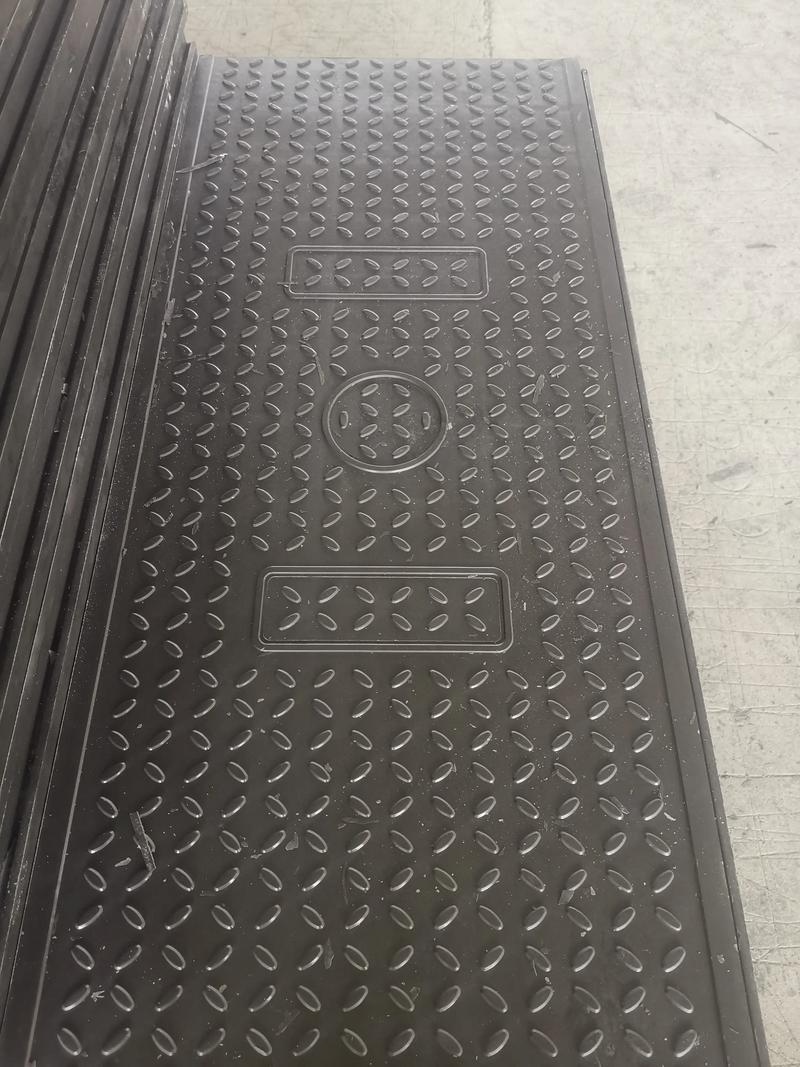


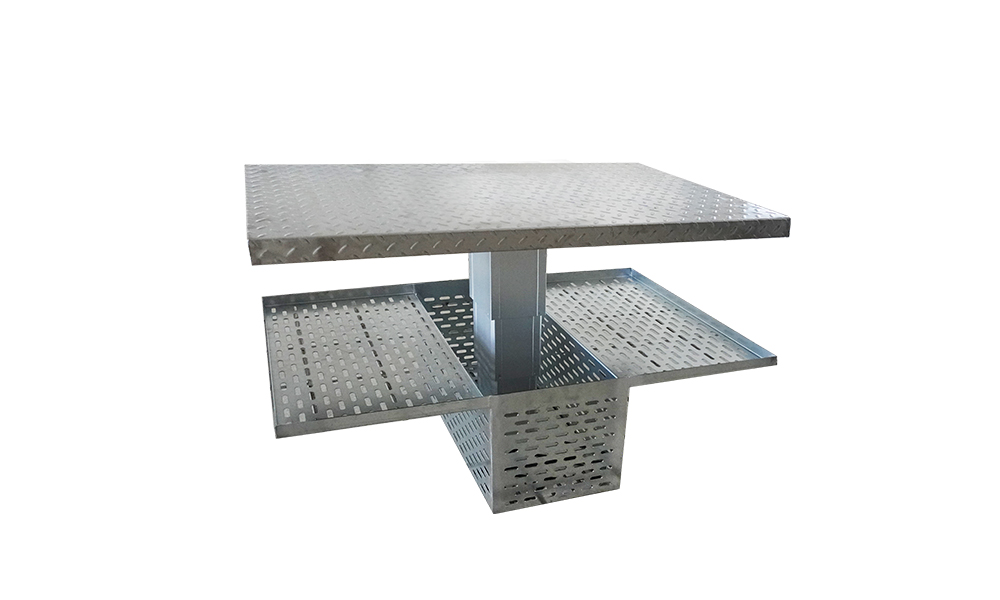
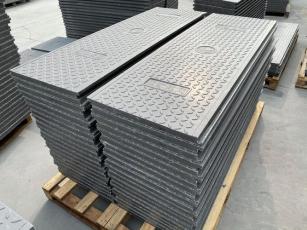
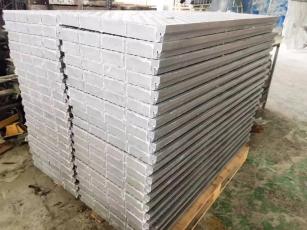
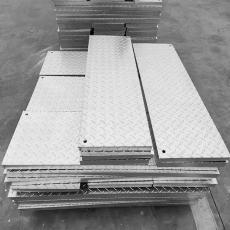
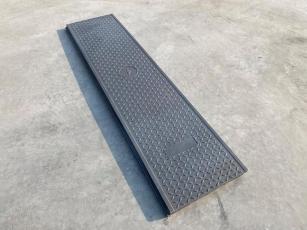
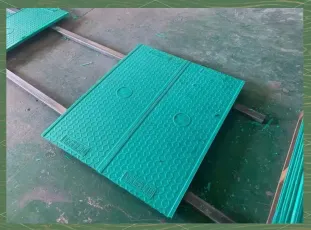
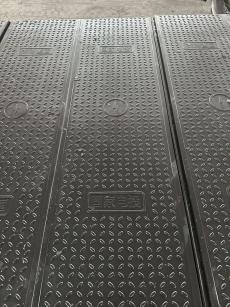
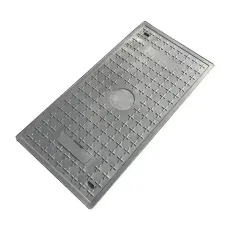
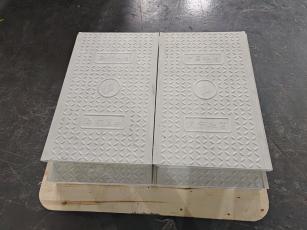
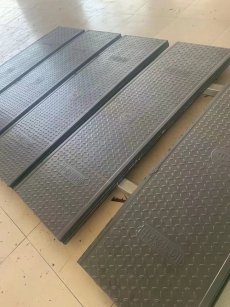
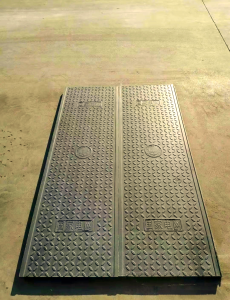
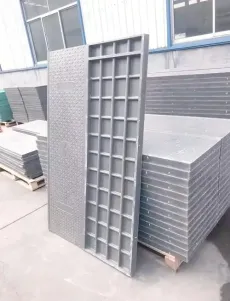
Adopts carbon fiber composite materials, which has the characteristics of light weight, high strength, reducing the consumption of metal resources. The weight is only 8kg per unit, which is 60% lighter than traditional metal covers, reducing the installation and maintenance labor cost. Built-in high-precision water leakage sensor and pressure sensor, with a water leakage detection sensitivity of ≤5μS/cm, which can effectively detect water leakage inside the cable trench. Equipped with a low-power NB-IoT communication module, which can last up to 3 years without charging. The cloud platform supports real-time data viewing and alarm push, which can assist operation and maintenance personnel to quickly locate fault points, and meets the environmental protection requirements of low-carbon municipal projects.
The main body is made of carbon fiber composite materials with a thickness of 12mm, and the surface is coated with UV-resistant coating to resist long-term solar radiation. The protection rating is IP66, which can prevent dust from entering and splashing water. It is equipped with a water leakage sensor with a sensitivity of ≤5μS/cm and a pressure sensor with a range of 0~30kPa. The communication mode is NB-IoT CAT1, which has wide coverage and low power consumption. The alarm threshold is set as water leakage detected and pressure change greater than 12kPa, which can effectively identify abnormal conditions. The installation size is 500mm×600mm×70mm, which is suitable for small municipal cable trenches. The working temperature range is -20℃ to 60℃, which can adapt to most urban climate environments. It meets the EU REACH environmental protection certification, and can be completely recycled after scrapping.
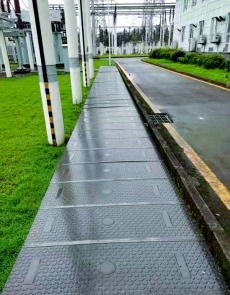
This product is mainly applicable to urban pedestrian streets, green belt cable trenches, residential community weak current wells and other low-carbon municipal scenarios, used to cover the trenches laying communication optical cables and low-voltage power cables. It can not only prevent theft and damage to cables, but also monitor the water leakage inside the cable trench in real time, timely detect potential faults such as cable moisture corrosion and water immersion, assist operation and maintenance personnel to carry out targeted maintenance, reduce the consumption of metal resources, and meet the environmental protection requirements of low-carbon municipal projects. It provides a green and intelligent solution for urban cable trench laying.







 Post RFQ


 Chat
Chat



 ALL CATEGORIES