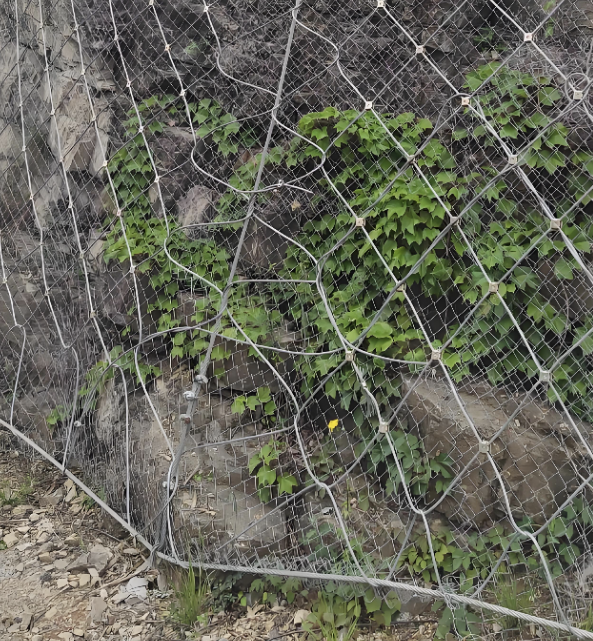
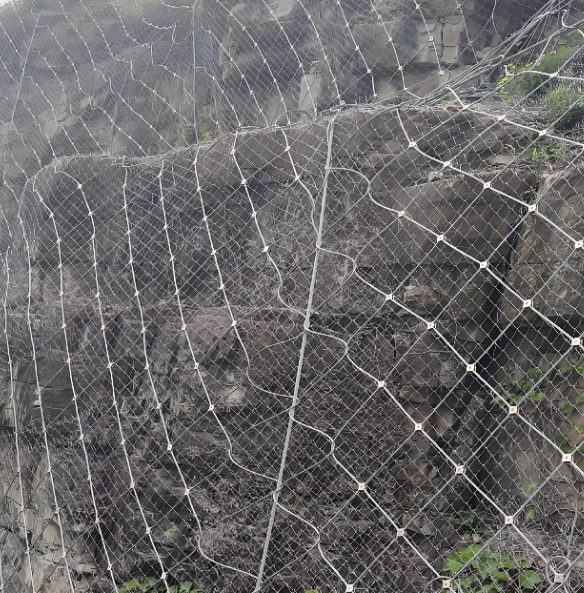





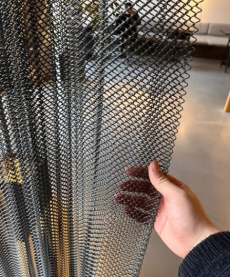

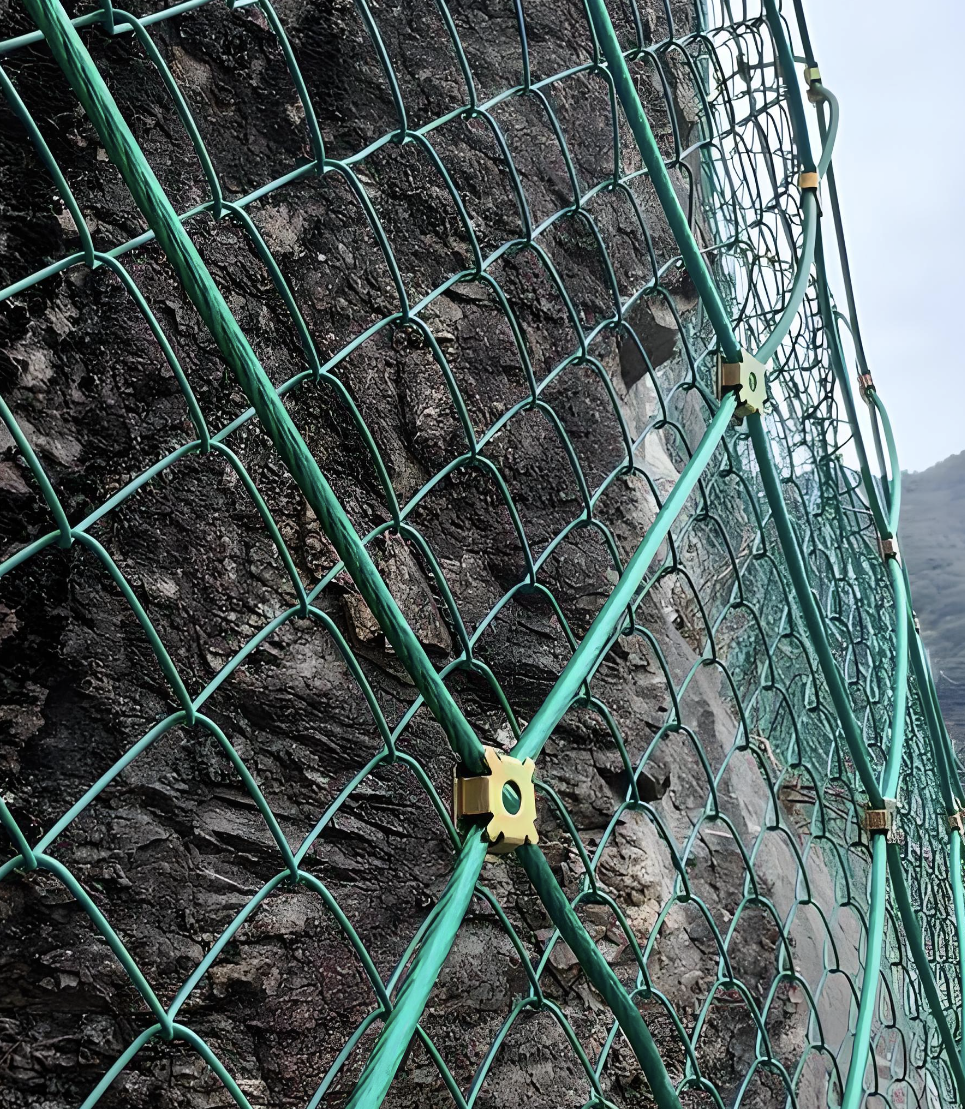
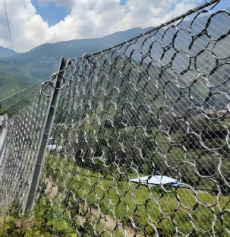
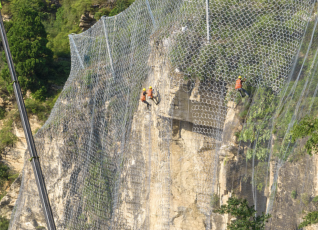
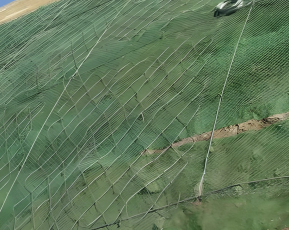
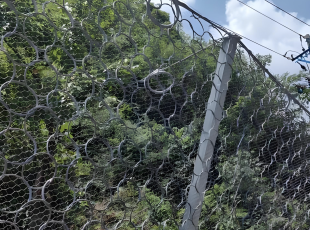
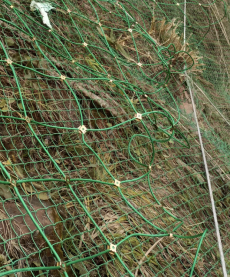
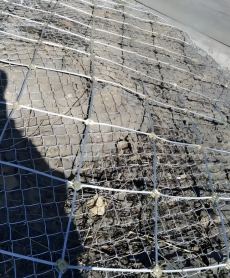
This active chain link slope protection net solves key drawbacks of traditional slope protection products, including poor terrain adaptability and susceptibility to fracture under dynamic loads. Its core technical strength lies in the interwoven chain link structure, which eliminates stress concentration by allowing flexible deformation with slope shifts. The hot-dip galvanized process helps ensure a 10-year service life in harsh outdoor environments, while the bolt-based installation design enables rapid on-site construction without complex welding. Additionally, the mesh structure maintains natural slope water circulation, reducing slope erosion risks caused by accumulated water, and its good permeability supports subsequent slope greening efforts.
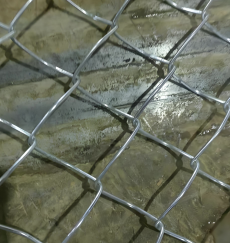
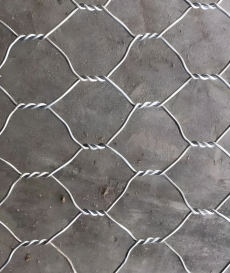
Crafted from 2.8mm diameter hot-dip galvanized low carbon steel wire, this product features a 50mm × 50mm mesh opening and an 85μm thick galvanizing layer, meeting high anti-corrosion standards for outdoor metal products. The standard roll measures 30m in length and 2m in width, with a unit weight of 12kg per square meter for easy transportation and on-site handling. The included anchor bolt set comprises 16mm diameter expansion bolts, 10mm diameter connecting hooks, and fixed pressure plates, suitable for securing most medium-slope terrain. It can be cut on-site to fit custom construction needs, with a maximum allowable tensile load of 15kN per meter width.
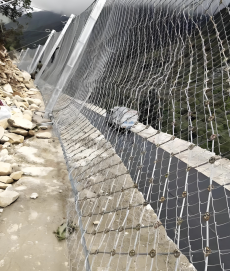
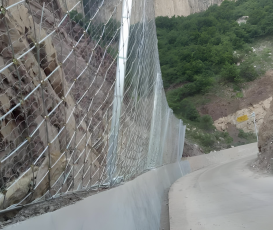
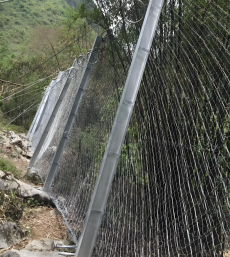
This active chain link slope protection net is ideal for medium-risk slope scenarios with a gradient of ≤60°, including mountain highway cut slope protection, railway subgrade slope stabilization, scenic area mountain rock fall prevention, and small to medium-sized hydropower project slope protection. It is particularly suitable for ecologically sensitive areas, as its flexible structure avoids damaging original surface vegetation and soil during installation, and complements subsequent slope greening projects. It effectively blocks small falling rocks with a particle size under 30cm, reducing safety threats to lower traffic flows and on-site personnel.








 Post RFQ


 Chat
Chat


 ALL CATEGORIES