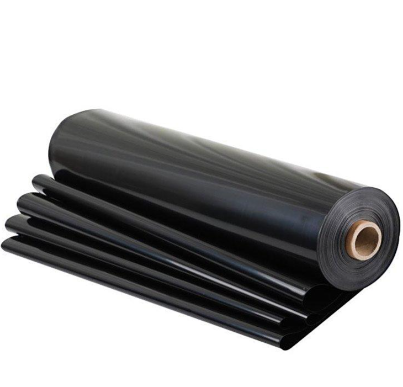
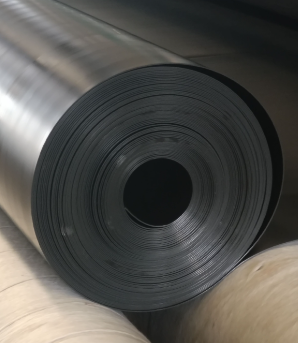


The core properties of HDPE geomembrane stem from its polymer structure. 1) Exceptional chemical resistance: withstands over 80 types of acids, alkalis, salts, and organic solvents, with a pH tolerance range of 1-14. 2) Excellent UV resistance: service life exceeding 50 years outdoors, achieved by adding premium carbon black and stabilizers. 3) High mechanical strength: superior tensile, tear, and puncture resistance, capable of withstanding stress from foundation settlement. 4) Extremely low permeability: one of the lowest water vapor transmission rates among geomembranes, ensuring long-term impermeability. 5) Good dimensional stability: relatively low thermal expansion/contraction coefficient, with a wide temperature adaptability (-60°C to +60°C). 6) Environmentally safe: stable material composition without leaching harmful substances, protecting soil and groundwater. 7) Reliable seam welding: can be welded using dual-track hot wedge or extrusion methods, forming continuous seams stronger than the parent material. 8) Root penetration resistance: high strength effectively resists puncture by plant roots.
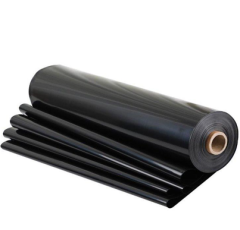
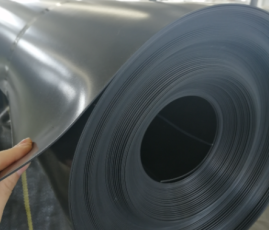
Standard roll widths are typically 5-8 meters, with lengths of 50-100 meters. Technical specifications strictly adhere to international standards: 1) Thickness tolerance: ±3% to ±10% (increasing with thickness). 2) Surface texture: Smooth or textured (for increased friction coefficient). 3) Carbon black dispersion uniformity: ≥97%. 4) Oxidative Induction Time (OIT): ≥100 minutes (key indicator for anti-aging). 5) Stress crack resistance: ≥1500 hours (NCTL test). 6) Low-temperature brittleness temperature: ≤-70°C. 7) Tensile Tear Resistance: ≥150 N/mm. 8) Water Vapor Transmission Rate: ≤1.0×10⁻¹³ g·cm/(cm²·s·Pa). 9) Dimensional stability: ≤±2%. 10) Products are supplied with third-party test reports.
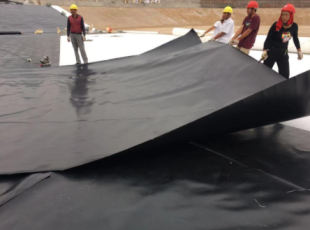
Primarily used in fields demanding the highest impermeability in harsh conditions: 1) Environmental engineering: base liners and covers for solid waste landfills (municipal solid waste, hazardous waste). 2) Water conservancy projects: impermeable liners for drinking water reservoirs, irrigation canals, and artificial lakes. 3) Mining engineering: impermeable barriers and contaminant isolation for leach pads, tailings ponds, and solution ponds. 4) Petrochemical industry: secondary containment for oil tank bases, containment ponds, and wastewater treatment basins. 5) Transportation engineering: impermeable separation layers for railway and road subgrades. 6) Aquaculture: slope protection and pond bottom lining for aquaculture ponds. 7) Landscape engineering: liners for golf course ponds and constructed wetlands. 8) Special applications: liners for radioactive waste isolation and evaporation ponds.








 Post RFQ


 Chat
Chat




 ALL CATEGORIES