


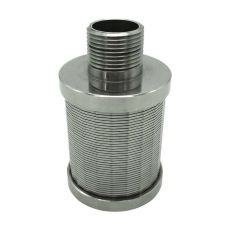
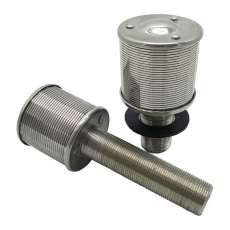
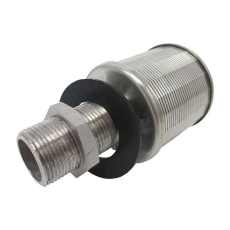
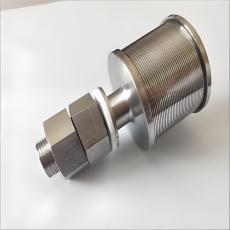
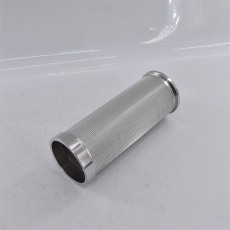
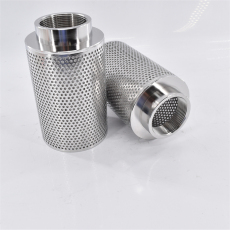
Made from 316L stainless steel with molybdenum element, this water cap offers 3 times better corrosion resistance than 304 stainless steel, ideal for treating seawater, acidic wastewater with pH 3-11, and chemical-containing media. The 0.2mm ultra-narrow slots with ±0.01mm precision effectively retain fine filter materials like zeolite and resin particles, preventing media loss and system blockage. The long-handle design (220mm total height) supports installation in 40-60mm thick filter plates, ensuring firm fixation even during high-intensity backwashing. Welded connection eliminates thread wear risks, providing a leak-proof seal with a service life of over 8 years. Its optimized water flow channel design reduces hydraulic resistance by 18%, increasing overall system filtration efficiency. The product also passes FDA food contact safety certification, making it safe for use in food and beverage production water treatment.
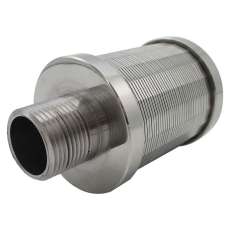
Constructed from 316L stainless steel compliant with ASTM A240 standards, the water cap has an overall height of 220mm, handle diameter of 25mm, and head diameter of 60mm. The slot width is controlled to ±0.01mm, ensuring consistent water flow across all units. At 0.5MPa working pressure, the rated water flow rate reaches 2.2 m³/h per cap. It adapts to 40-60mm thick filter plates, with a welded connection that supports high-pressure working environments. The operating temperature range is -20℃ to 150℃, withstanding short-term high temperatures up to 180℃. The maximum working pressure is 1.0MPa, and burst pressure is ≥2.0MPa, meeting industrial heavy-duty application requirements. The surface is treated with electrolytic polishing, achieving a surface finish of Ra0.8, minimizing sediment adhesion. Each unit weighs approximately 420g, providing strong stability during backwashing.
This product is primarily applied in industrial wastewater treatment systems, including petrochemical wastewater filtration, printing and dyeing wastewater purification, and metallurgical wastewater solid-liquid separation projects, where it resists corrosion from chemical contaminants. It is a core component in seawater desalination pretreatment filter tanks, effectively adapting to high-salt-content seawater environments. In food and beverage production, it supports pure water preparation systems, meeting strict FDA food safety standards to ensure product hygiene. It is also suitable for offshore platform water supply systems and marine aquaculture water treatment units, withstanding harsh marine corrosion conditions. Additionally, it can be used in deep-bed resin ion exchange systems for boiler water softening, ensuring uniform water distribution to maximize resin utilization efficiency.







 Post RFQ


 Chat
Chat


 ALL CATEGORIES