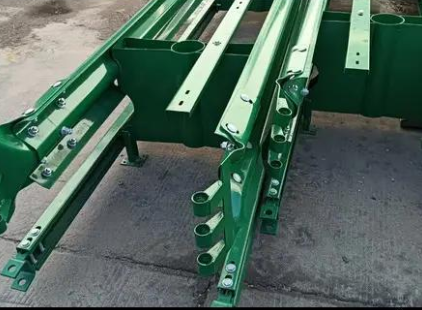
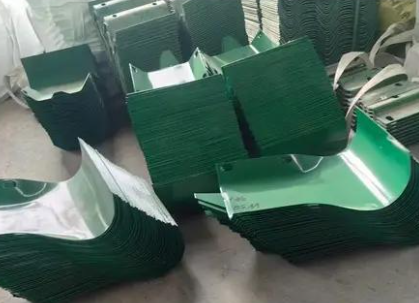


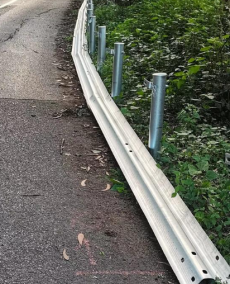
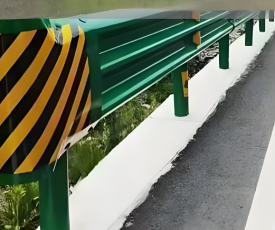
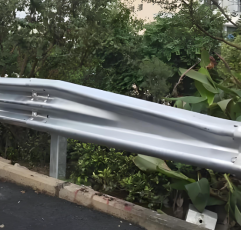
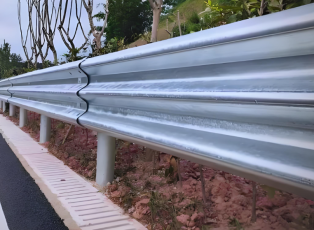
The double-wave design with reinforcing ribs is the core technical highlight, as it adds longitudinal support to the panel, preventing excessive deformation during high-speed collisions. Made from Q355 steel, it has a yield strength of ≥355MPa, enabling it to absorb impact forces without fracturing. The reinforced anti-blocks are 30% larger than standard blocks, distributing collision energy more evenly across posts and panels, reducing the risk of guardrail collapse. The 90μm hot-dip galvanized coating passes 400-hour salt spray tests, resisting corrosion from mountain rain and fog. It also features pre-drilled holes for angle adjustment, allowing posts to be tilted to match curve radii, solving the pain point of mountain roads needing guardrails to fit irregular terrain.
Each guardrail panel is 4320mm long, with a double-wave dimension of 310mm×85mm, and a reinforcing rib height of 15mm, increasing panel rigidity by 50%. The panel thickness is 3.5mm, meeting Grade SA crash test requirements, with an impact resistance rating of ≥18J. The 140mm-diameter posts are embedded 1400mm deep, requiring a foundation bearing capacity of ≥130kPa, and are spaced 3500mm apart on curves (500mm closer than straight sections) to enhance stability. The reinforced anti-blocks weigh 8.2kg each, and are welded to posts with full penetration welds, ensuring no separation during impacts. All components undergo cold bending tests, with a bending angle of ≥18° without cracking, meeting EU CE EN 1317-1 standards.
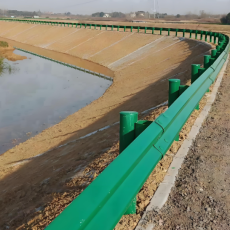
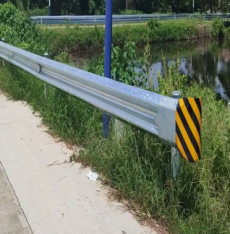
This guardrail is primarily used in mountain winding road curves, cliffside roads, steep downhill sections, and scenic mountain roads. It is installed along road edges adjacent to cliffs or deep valleys to prevent vehicles from falling off, reducing fatalities in mountain accidents. In steep downhill sections, it acts as a buffer for braking-failed vehicles, slowing them down to avoid collisions with other vehicles. It is also suitable for tourist mountain roads, protecting tourists and tour buses from out-of-control accidents. For remote mountain roads with limited maintenance, its 22-year service life reduces the need for frequent repairs. Additionally, it can be installed in landslide-prone mountain sections, as its rigid structure can resist minor debris impacts, protecting road users from falling rocks.







 Post RFQ


 Chat
Chat


 ALL CATEGORIES