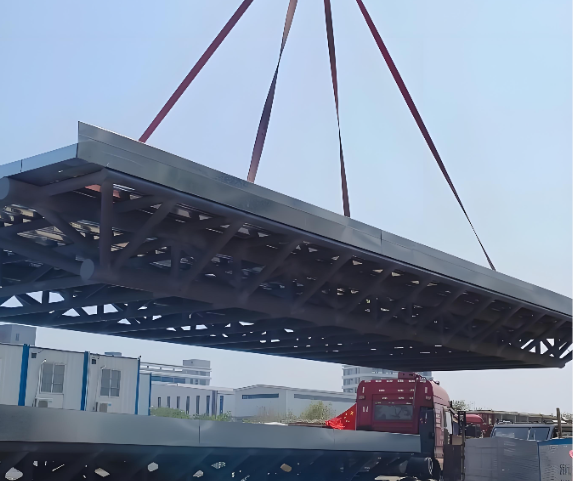
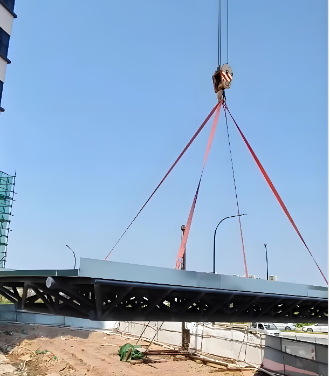




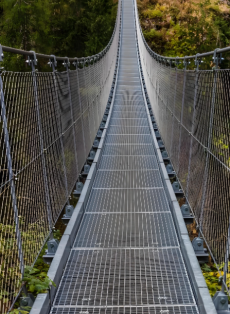
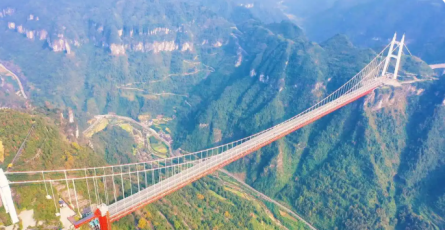
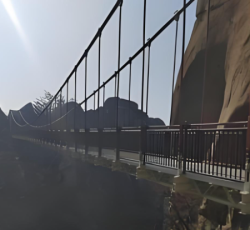
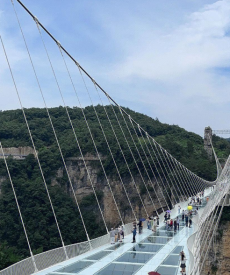
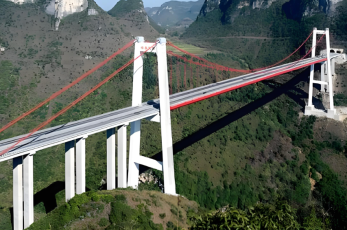
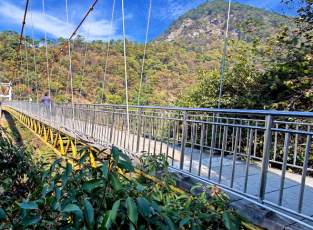
This suspension bridge’s key advantage lies in its rapid deployment and adaptability to remote, challenging terrains. Its galvanized steel components are coated with a 2mm thick anti-corrosion layer, providing protection against rust and wear in wet, humid, or muddy environments, which is critical for rural areas with limited maintenance resources. The modular design allows for flexible span adjustment between 30-60 meters, making it suitable for crossing small rivers, gullies, or mountain valleys without requiring custom engineering. A major technical highlight is its shallow foundation requirement—only 1.5 meters deep concrete footings are needed, which can be installed with basic hand tools or small excavators, avoiding the need for costly deep foundation work. To solve rural transportation pain points, the bridge supports both pedestrian traffic and light vehicles such as tractors or pickup trucks, enabling farmers to transport crops to markets and access essential services. Additionally, the bridge’s components are fully reusable, allowing it to be disassembled and relocated to other sites as needed, making it a sustainable and cost-effective solution for temporary or permanent rural infrastructure projects.
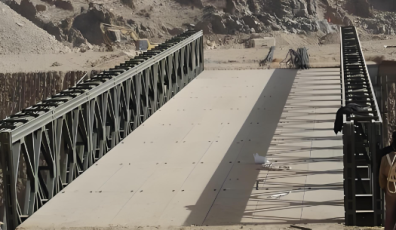
This modular suspension bridge offers an adjustable main span length between 30 and 60 meters, with a total structure length ranging from 38 to 68 meters including 4-meter approach ramps on each end. The deck width of 3 meters accommodates two pedestrians or one light vehicle at a time, with a maximum load capacity of 15 kN/m² to support up to 3-ton tractors or pickup trucks. The main structure components are made of galvanized steel with a 2mm anti-corrosion coating, each weighing no more than 150 kg for easy handling and transportation. The suspension cables are 50mm galvanized steel ropes, with secondary hangers spaced 2 meters apart to support the deck. The shallow concrete footings require only 1.5 meters of digging, which can be completed with basic hand tools or a small backhoe in 1 day per footing. The bridge’s wind resistance rating is 100 km/h, and its seismic resistance rating is magnitude 7.0, ensuring safe performance in most rural environments. All components comply with ASCE bridge design standards, and assembly instructions are provided in multiple languages for easy on-site implementation.
This modular suspension bridge is designed for a wide range of rural and emergency response scenarios. In remote rural villages, it can cross small rivers or gullies, connecting communities to main roads, schools, and healthcare facilities, reducing travel time by up to 90% for local residents. For agricultural communities, it provides a safe passage for tractors and farm equipment, enabling efficient transport of crops to markets and reducing post-harvest losses. In disaster-stricken areas, it can be deployed quickly to replace damaged bridges, restoring critical transportation links for relief supplies and emergency personnel. It is also suitable for mountainous regions, where it can connect isolated hiking trails or small settlements without disrupting the natural landscape. Additionally, the bridge can be used for temporary construction sites, providing a safe crossing for workers and equipment over rivers or construction trenches. Rural development agencies can use this bridge to fund sustainable infrastructure projects, while disaster relief organizations can stock it in emergency response kits for rapid deployment during floods, earthquakes, or other natural disasters.













 Post RFQ


 Chat
Chat


 ALL CATEGORIES