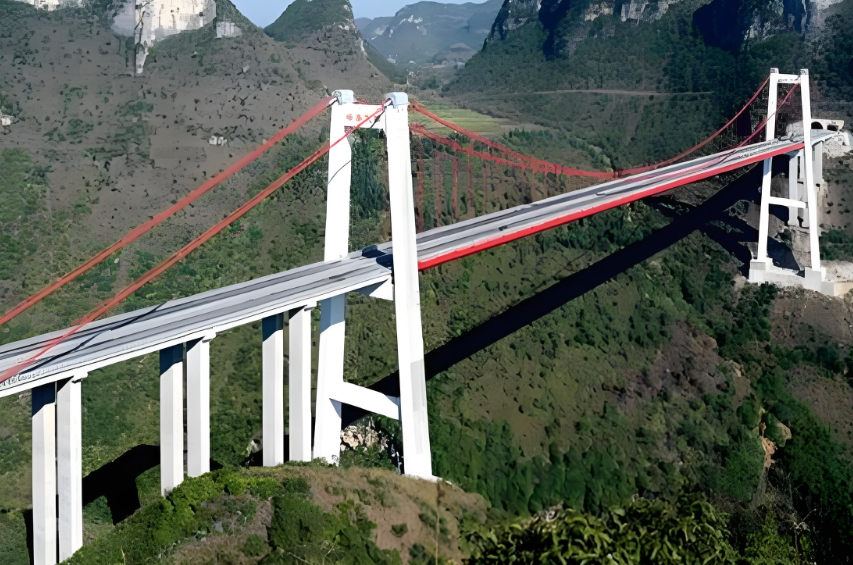






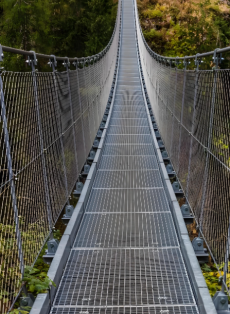
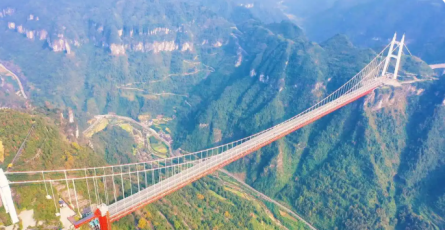
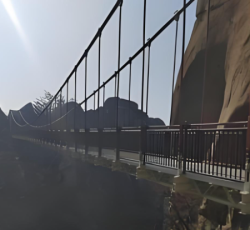
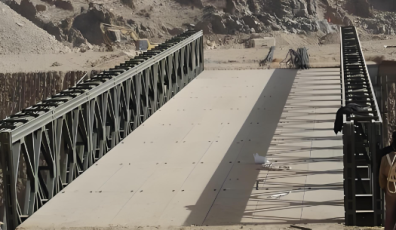
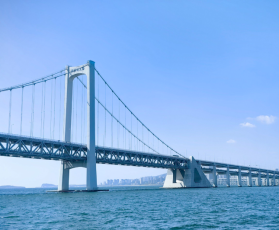
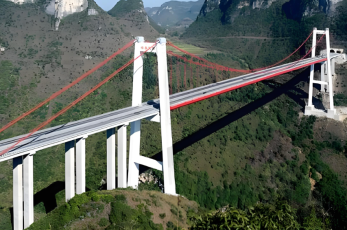
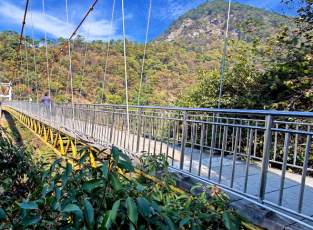
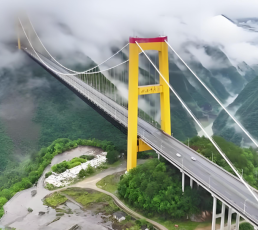
This heavy-duty suspension bridge is built for rugged performance, with key features that set it apart from standard vehicle bridges. The high-strength Q460 low-alloy steel main trusses offer 30% higher tensile strength than conventional carbon steel, enabling it to support 75-tonne heavy-duty trucks without structural deformation. The reinforced concrete deck with an anti-slip asphalt overlay provides exceptional resistance to wear and tear from heavy machinery, while the 1.8-meter-high steel guardrails prevent vehicles from veering off the bridge, even on steep mountain slopes. Unlike traditional concrete bridges that require extensive on-site formwork and casting, this bridge uses prefabricated steel components that can be transported via narrow mountain roads and assembled on-site in as little as 90 days, reducing construction time by 50%. It also incorporates seismic isolation bearings that absorb 60% of seismic energy, protecting the structure during earthquakes up to magnitude 7.0, a critical feature for mountainous regions prone to tectonic activity. Additionally, the steel components are coated with a high-temperature resistant anti-corrosion paint, ensuring durability in areas with extreme temperature fluctuations and heavy dust.
Technical specifications include a main span of 80 meters, with a total bridge length of 140 meters including approach ramps. The 6-meter-wide deck accommodates two lanes of heavy vehicles, with a clear height of 4.5 meters to allow passage of tall mining equipment. The main suspension cables consist of 37 strands of high-tensile steel wire, each with a breaking strength of 2500 kN, providing redundant load support. The supporting piers are made of reinforced concrete, with a foundation depth of 12 meters to anchor securely into mountain bedrock. The bridge’s total weight is 380 metric tons, ensuring structural stability even under maximum load conditions. The anti-slip asphalt overlay has a friction coefficient of 0.9, meeting international safety standards for heavy vehicle traffic. Seismic isolation bearings are installed at the base of each pier, with a displacement capacity of 300 mm to absorb seismic shocks. All steel components undergo a shot blasting process before coating to remove rust and scale, ensuring maximum adhesion of the anti-corrosion paint. The bridge is designed to operate in temperatures ranging from -40°C to 60°C, making it suitable for extreme mountain climates.
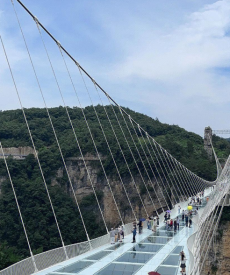
This suspension bridge is specifically designed for challenging off-road and remote area applications. In mining regions, it provides a critical crossing for heavy haul trucks transporting ore from mountain mines to processing facilities, eliminating the need for long, detour routes that increase transportation costs by up to 40%. In remote rural areas, it connects isolated villages to main highways, enabling residents to access medical care, education, and market opportunities more efficiently. It is also ideal for construction projects in mountainous regions, allowing the transportation of heavy construction equipment and materials to remote job sites. For military use, it can be deployed as a temporary or permanent crossing for armored vehicles in rugged terrain. The bridge’s ability to withstand extreme weather conditions, including heavy snow, strong winds, and earthquakes, makes it suitable for regions like the Rocky Mountains, Andes, or Himalayan foothills. Mining companies, rural development authorities, construction firms, and military organizations are the primary target customers, with applications focused on improving transportation infrastructure in hard-to-reach locations.











 Post RFQ


 Chat
Chat


 ALL CATEGORIES