




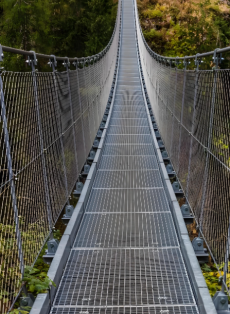
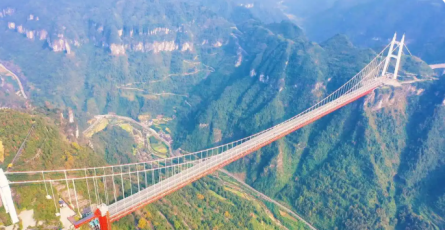
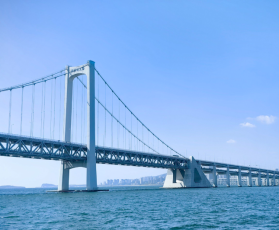
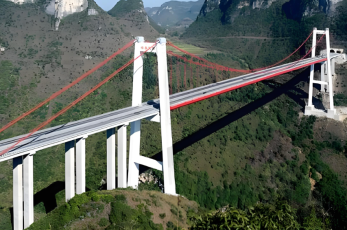
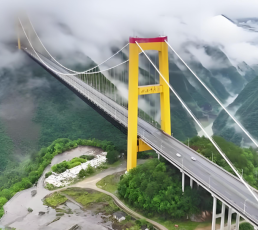
The prominent feature of this bridge is its anti-corrosion performance and heavy-load capacity. The main cables use Zn-Al-Mg alloy coated steel wire, which offers 8-10 times better corrosion resistance than traditional galvanized steel, perfectly adapting to harsh marine environments with salt spray and high humidity. The orthotropic steel deck is coated with a 2mm thick epoxy anti-corrosion layer, reinforced with a wear-resistant asphalt overlay to withstand repeated heavy container truck loads. Active flutter dampers are installed to resist vortex-induced vibration, ensuring structural stability even during Grade 14 typhoon-level winds. The double-tower structure uses high-performance marine concrete with corrosion inhibitors, preventing steel bar rusting in saltwater-contaminated soil. A remote anti-corrosion monitoring system tracks coating integrity and cable corrosion in real time, providing predictive maintenance alerts to reduce unplanned downtime.
The total bridge length is 980 meters, with a 450-meter main span and two 265-meter side spans. The deck width is 18 meters, featuring three 5-meter traffic lanes and 1.5-meter sidewalks on both sides. The double towers are 110 meters tall, with reinforced concrete foundations extending 45 meters into seabed bedrock to resist seismic activity (Grade 9 seismic intensity). The main cables have a diameter of 120mm, composed of 49 strands of 127×0.7mm Zn-Al-Mg alloy coated steel wires, with a tensile strength of 1960 MPa. The orthotropic steel deck is 16mm thick, with a 50mm wear-resistant asphalt overlay and 2mm epoxy anti-corrosion coating. It meets Grade 14 wind resistance standards, capable of withstanding 42.5 m/s typhoon winds. The design service life is 70 years, with annual corrosion rate ≤0.005mm under marine C5-M conditions. It is equipped with automatic navigation lighting and fog warning systems to ensure safe passage in low-visibility offshore environments.
This bridge is essential for coastal port logistics networks, enabling direct connection between port terminals and inland freight hubs without detours. It can be used to connect offshore industrial parks to mainland supply chains, facilitating the transportation of heavy industrial equipment and raw materials. In island development projects, it provides a reliable cross-channel link for passenger and cargo traffic, replacing expensive ferry services and reducing transportation costs by 40%. It is also suitable for coastal disaster relief, ensuring unobstructed access for emergency supplies and rescue vehicles during typhoons or storm surges. Target clients include port management authorities, coastal industrial park developers, island regional governments, and marine infrastructure construction companies.










 Post RFQ


 Chat
Chat


 ALL CATEGORIES