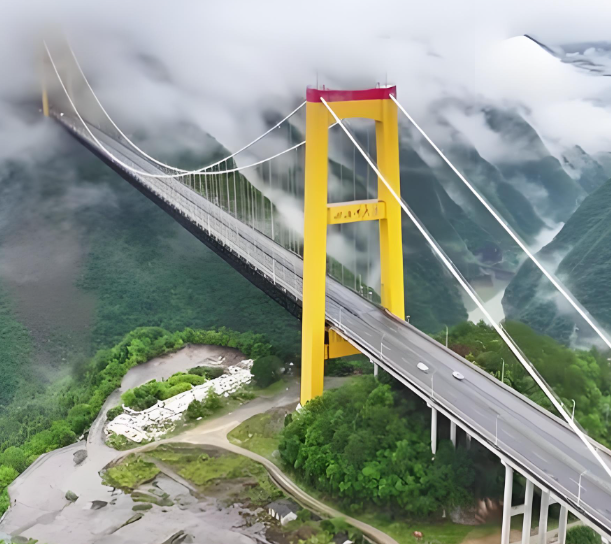
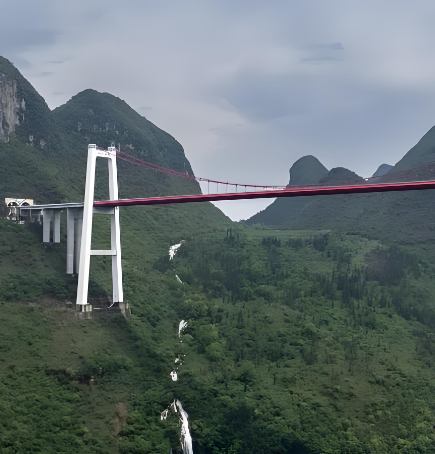




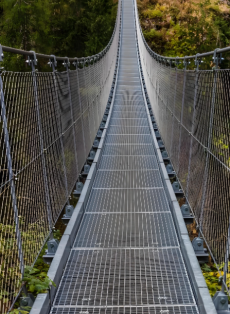
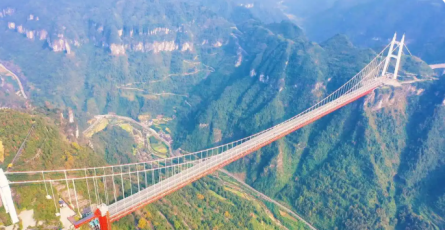
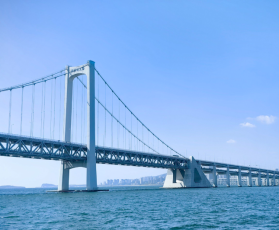
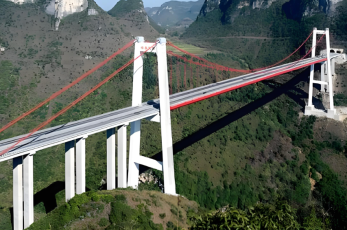
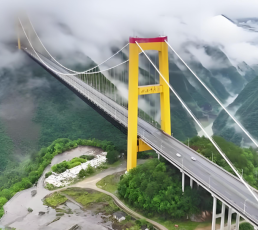
This bridge’s core advantage lies in its exceptional load-bearing capacity and mountain-adapted performance. The main cables use zinc-aluminum alloy coated steel wire, which offers 50% better corrosion resistance than standard galvanized steel, making it ideal for high-humidity mountain environments with frequent fog and rainfall. The steel-grid-reinforced asphalt deck can withstand repeated heavy truck loads (HS20-44 standard) without cracking, extending deck service life by 30% compared to ordinary asphalt decks. Equipped with active wind-resistant dampers, it reduces structural vibration by 55% during strong mountain gusts, ensuring safe passage for high-sided trucks. The double towers use reinforced concrete with anti-freeze additives, capable of withstanding temperatures as low as -30°C without frost damage. A snow-melting system is embedded in the sidewalks to prevent ice accumulation in winter, enhancing pedestrian safety. Prefabricated tower components are transported via modular split design, adapting to narrow mountain roads for easy on-site assembly.
The total bridge length is 620 meters, including a 280-meter main span and two 170-meter side spans. The deck width is 12 meters, with two 3.75-meter traffic lanes and 1.5-meter sidewalks on both sides. The double towers stand 75 meters tall, with reinforced concrete foundations extending 35 meters into bedrock to ensure stability in seismic zones (seismic intensity Grade 8). The main cables have a diameter of 95mm, composed of 37 strands of 127×0.6mm zinc-aluminum alloy coated steel wires, with a tensile strength of 1860 MPa. The asphalt deck is 180mm thick, reinforced with a 10mm steel grid to enhance load distribution. It meets Grade 13 wind resistance standards, capable of withstanding 37.9 m/s wind speeds. The design service life is 60 years, with annual corrosion rate ≤0.008mm under C5-M conditions. It is equipped with a remote structural health monitoring system that integrates seismic sensors, wind speed meters, and load cells to provide real-time safety data.
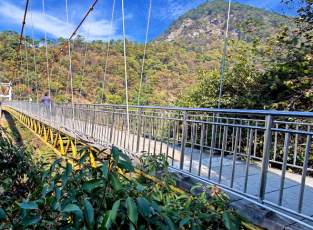
This bridge is primarily used for inter-regional highway construction in mountainous, plateau, and valley areas. Typical applications include connecting remote mountain villages to urban logistics hubs, enabling efficient transportation of agricultural products and construction materials. It is also suitable for mining regions, where heavy freight trucks need to cross deep valleys to reach mining sites. In disaster-prone mountain areas, it serves as an emergency evacuation route, ensuring unobstructed access for rescue vehicles during landslides or floods. Target clients include national highway construction authorities, regional transportation departments, mining companies, and emergency management agencies. It can also be used for tourism development in scenic mountain areas, providing safe passage for tourist buses while showcasing the natural landscape.











 Post RFQ


 Chat
Chat


 ALL CATEGORIES