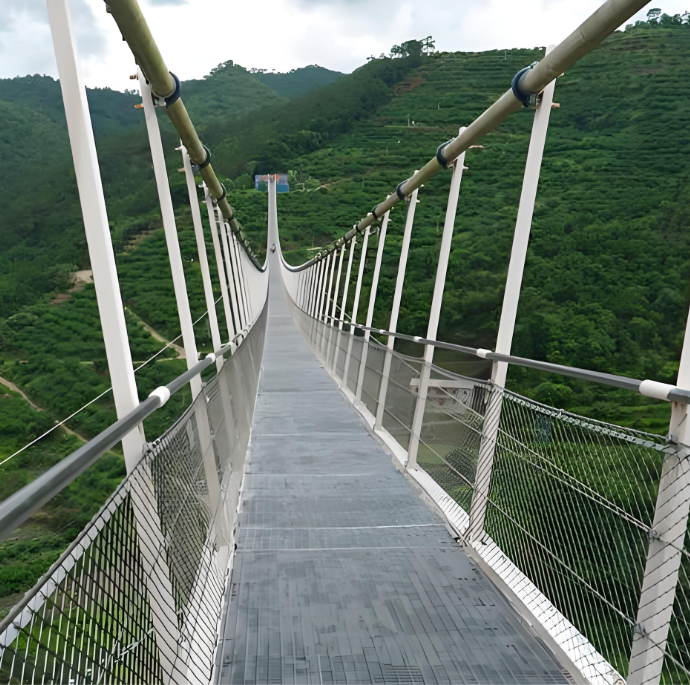
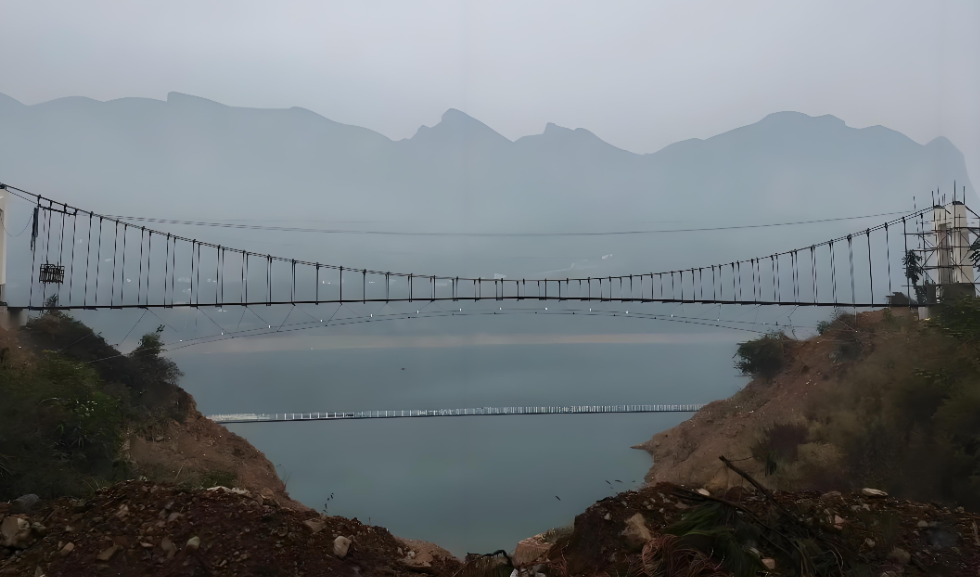




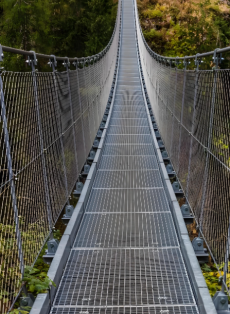
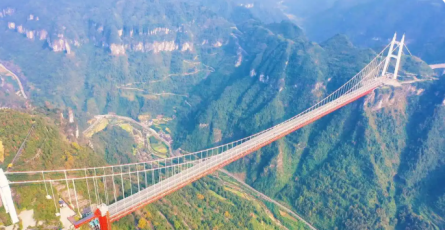
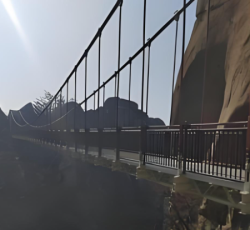
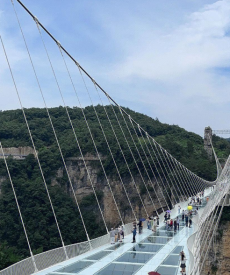
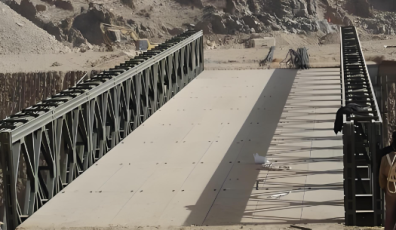
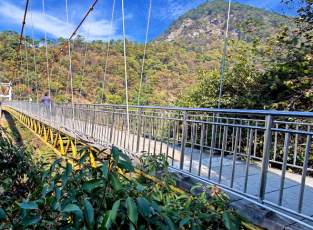
This rural suspension bridge stands out with its cost-effective design and ease of installation, tailored for remote areas with limited infrastructure. Using locally sourced hardwood for deck planks reduces transportation costs and supports local economies, while galvanized steel components provide superior corrosion resistance, extending lifespan in humid or wet rural environments. Minimal heavy machinery is required for installation—most components can be transported by truck or even carried by hand to remote sites, and assembly uses basic hand tools and small hydraulic jacks. The wood plank deck with anti-slip screws ensures secure footing for pedestrians, livestock, and light vehicles like tractors or pickup trucks. 1.1-meter-high steel pipe handrails with wooden grips offer comfortable, safe support for crossing, and the modular design allows for easy repair or replacement of damaged plank sections without disrupting the entire bridge. Its lightweight structure minimizes impact on the surrounding landscape, avoiding the need for large foundation works that could disrupt river ecosystems.
The main span measures 30 meters, with an overall width of 3.0 meters, providing enough space for single-lane light vehicle traffic or two-way pedestrian traffic. Main structural components include galvanized steel cables with a diameter of 0.2 meters, anchored to concrete or rock anchors that can be installed with minimal excavation. The deck uses 5cm thick local hardwood planks, spaced 2cm apart to allow water drainage, secured with anti-slip screws to prevent shifting. Maximum load capacity is 3 tons, suitable for pickup trucks, tractors, livestock, and pedestrian traffic. Construction time is 4 weeks, including site preparation, anchor installation, cable tensioning, and deck assembly. Annual maintenance costs are approximately 0.5% of the total purchase price, primarily consisting of replacing damaged planks, tightening cable tension, and cleaning steel components to prevent rust. Design lifespan is 50 years, with galvanized steel components expected to last 60+ years with proper maintenance. Installation requires only a small hydraulic jack and basic hand tools, making it accessible to local construction teams without specialized training.
This bridge is ideal for remote rural communities separated by rivers or small valleys, where lack of connectivity limits access to schools, hospitals, and markets. It can connect farms to main roads, enabling efficient transport of agricultural products to market and reducing travel time for farmers. In mountainous rural areas, it can provide access to remote villages that are cut off during rainy seasons when rivers flood, ensuring year-round connectivity. It’s suitable for community-led development projects, where local groups can participate in installation, building skills and ownership of the infrastructure. Agricultural businesses can use it to connect different parts of large farms separated by streams, improving efficiency of livestock and crop transport. Additionally, it can serve as a temporary bridge in rural areas during permanent bridge repairs, ensuring continuous access for local residents and businesses. Its cost-effective design and ease of installation make it a transformative solution for underserved rural regions.









 Post RFQ


 Chat
Chat


 ALL CATEGORIES