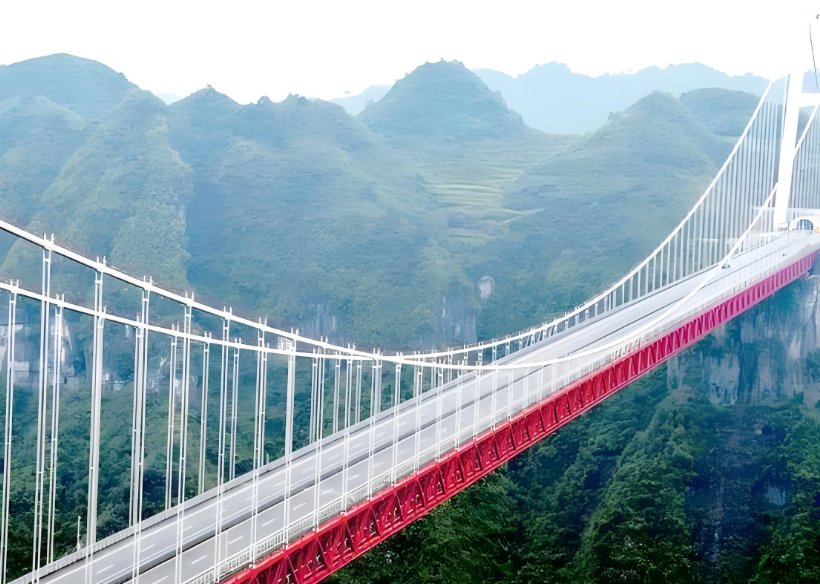
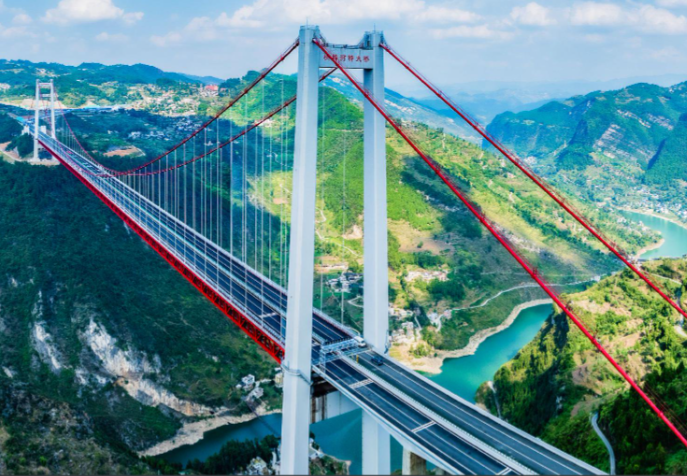






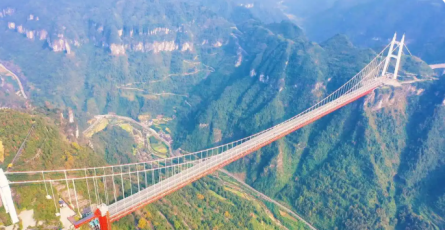
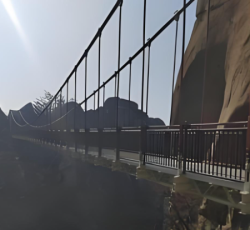
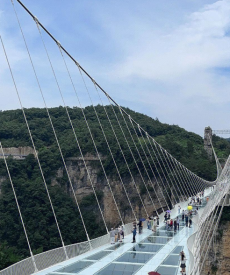
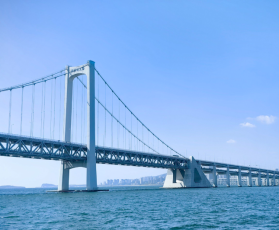
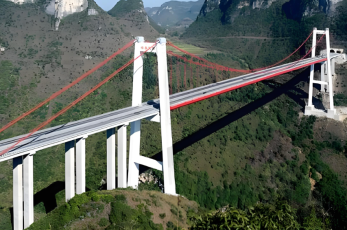
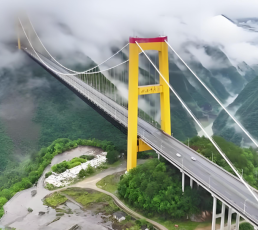
This long-span suspension bridge boasts engineering innovations to address the challenges of crossing large natural barriers. High-strength steel cables with a tensile strength of 1860 MPa enable the 1200-meter main span, eliminating intermediate piers and preserving waterway navigation or valley ecosystems. The reinforced concrete pylons, reaching 180 meters in height, are anchored to bedrock using deep foundation systems, ensuring stability during category 5 hurricanes and magnitude 8.0 earthquakes. High-friction asphalt pavement provides superior skid resistance, reducing accident risks for heavy trucks and passenger cars. Advanced wind tunnel testing and aerodynamic deck design minimize flutter and sway, ensuring safe passage even in high-speed crosswinds. Intelligent structural health monitoring systems with sensors track cable tension, pylon displacement, and deck vibrations in real time, enabling proactive maintenance and early issue detection. Modular deck construction accelerates on-site assembly, reducing overall project timeline compared to traditional cast-in-place methods.
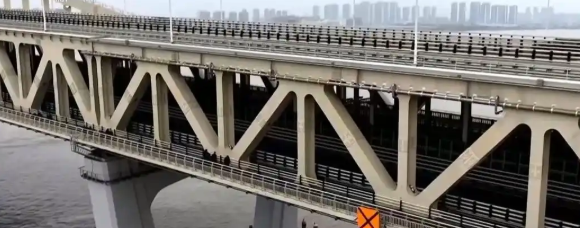
The main span stretches 1200 meters, with an overall width of 26 meters, accommodating 6 traffic lanes (3 in each direction) plus 2 3-meter-wide emergency shoulders. Main cables consist of 10,000+ high-strength steel wires, each with a diameter of 5mm, bundled into a single 0.8-meter-diameter cable. Pylons are 180 meters tall, constructed from C50 reinforced concrete with a 4-meter-square cross-section at the base, tapering to 2 meters at the top. Deck surface uses 12cm thick high-friction asphalt pavement, laid on a steel truss deck system for strength and weight efficiency. Wind resistance is rated for category 5 hurricanes, with deck aerodynamics optimized to withstand wind speeds up to 250 km/h. Seismic resistance meets ISO 14801 standards for magnitude 8.0 earthquakes. Construction time is 36 months, including site preparation, foundation works, cable spinning, and deck installation. Design lifespan is 100 years, with scheduled major inspections every 10 years and routine maintenance every 2 years.
This bridge is tailored for intercity highway networks crossing major natural obstacles like large rivers, bays, or mountain valleys. It’s ideal for transportation departments looking to reduce travel time between cities, boost regional trade, and enhance emergency response accessibility. For example, it can connect coastal cities separated by wide bays, eliminating long detours through inland routes. It also serves as a critical link in transnational highway systems, facilitating cross-border trade and tourism. In regions prone to extreme weather or seismic activity, its robust resistance ratings ensure uninterrupted traffic flow even during natural disasters. Additionally, its design avoids intermediate piers, making it suitable for shipping lanes where vessel navigation clearance is a top priority, supporting maritime commerce while enhancing land-based transportation connectivity.








 Post RFQ


 Chat
Chat


 ALL CATEGORIES