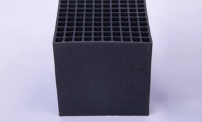
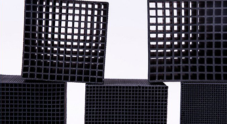


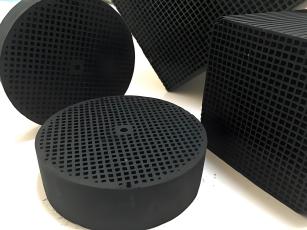
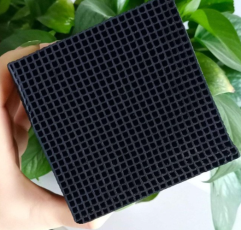
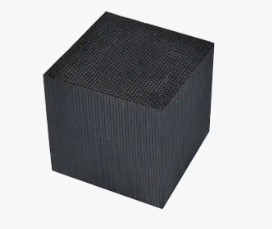
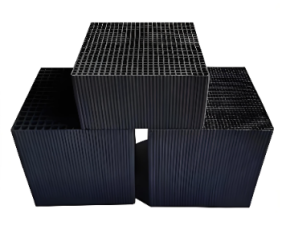
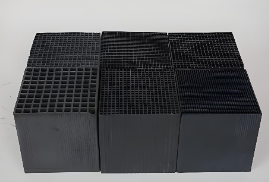
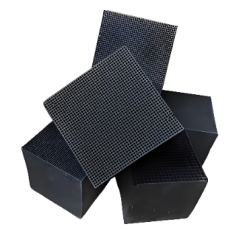

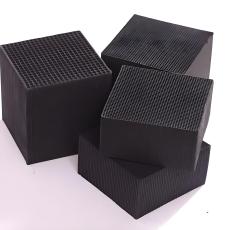
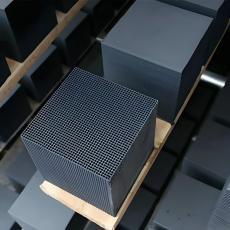
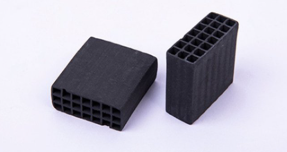
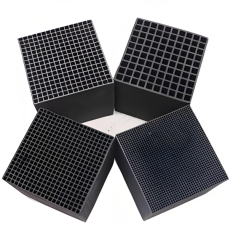
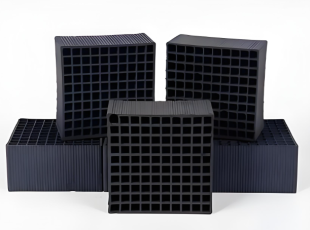
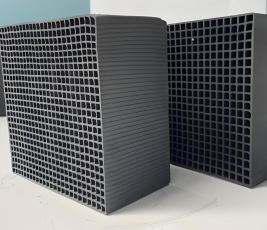
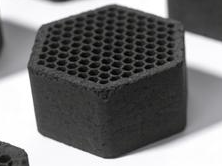
It uses special carbon materials as raw materials, and undergoes high-temperature activation process above 1200℃ to form a stable porous structure. It can continuously play an adsorption role in the high temperature environment of 800℃. It has excellent thermal shock resistance, and still maintains more than 95% of its adsorption performance after 100 temperature cycle tests. The unique honeycomb structure reduces the resistance of high-temperature airflow, reducing system energy consumption. It solves the problems of easy failure and frequent replacement of activated carbon in high-temperature waste gas treatment, and has good acid and alkali resistance to adapt to complex waste gas components.
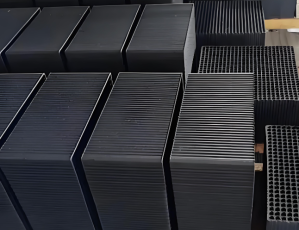
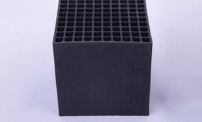
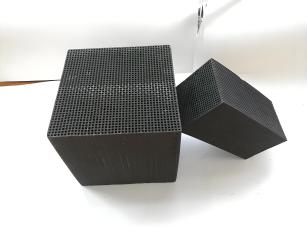
Its detailed parameters include iodine value of 950 mg/g, moisture content ≤3%, ash content ≤6%, pore size 2-5 nm, external dimension 100×100×100 mm, single block weight about 2.5 kg, compression strength ≥0.6 MPa, maximum operating temperature 800℃, applicable pH range 2-12, bulk density 0.52-0.60 g/cm³. It can be customized into different external dimensions to match different treatment equipment, and is treated with high-temperature resistant coating to improve thermal oxidation resistance.
It is mainly applied to high-temperature waste gas treatment systems in industries such as steel smelting, ceramic firing, waste incineration and biomass power generation. It is used to remove harmful components such as dioxins, heavy metals and VOCs in flue gas. It can also be used in the pretreatment link of high-temperature flue gas, reducing the load of subsequent purification equipment and extending the service life of the equipment, meeting the strict environmental protection requirements of industrial high-temperature waste gas treatment.







 Post RFQ


 Chat
Chat


 ALL CATEGORIES