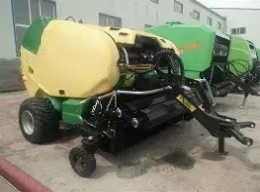
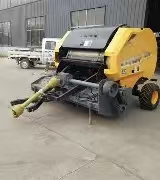





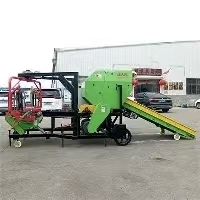
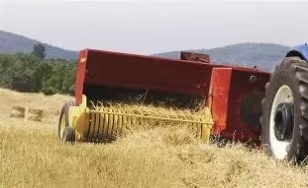
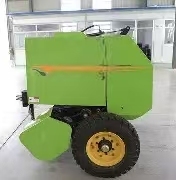
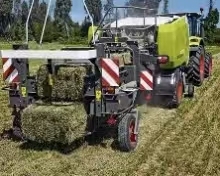
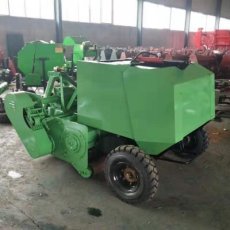
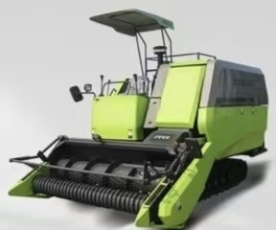
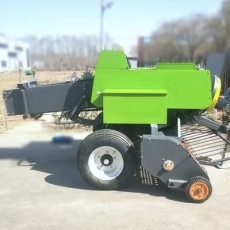
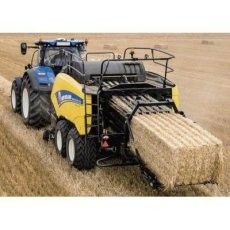
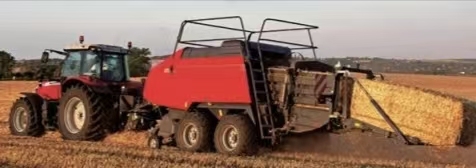
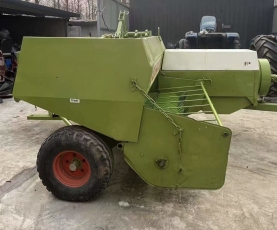
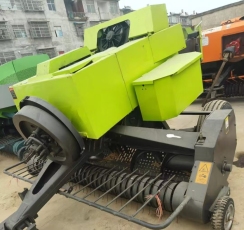
The design emphasizes practicality and cost-effectiveness.It employs a mechanical drive and a simple belt-roller baling principle,with relatively low operational and maintenance thresholds.It is typically equipped with a manually or simply hydraulically controlled pickup lift.Bale density is primarily adjusted via spring pressure.Binding is usually done with sisal or plastic twine using a manual or simple automatic tying mechanism.The compact structure has low power requirements,offering wide compatibility with various tractors.
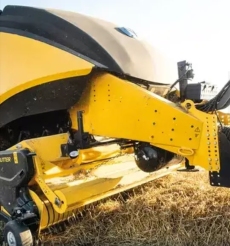
Pickup width is usually around 1.5 meters.The resulting bales are lightweight,generally between 15-25 kg,well-suited for manual lifting.The machine is primarily driven by the tractor's PTO via a gearbox.The bale chamber typically consists of 6 belts.The light overall weight allows easy mounting and transport even with small-to-medium horsepower tractors.Due to its relatively simple design,common wear parts are generally easy to source and replace on the market.
Primary users are small family farms,rice growers in Asia and other regions,and farmers needing to manage field-edge straw.It is used to bale wheat and rice straw into small bundles for collection as fuel,fodder,or for field incorporation.Also suitable for small-scale livestock keepers gathering scattered grass.Its low investment cost makes it an entry-level model that many farmers may consider when first adopting mechanized baling.







 Post RFQ


 Chat
Chat


 ALL CATEGORIES