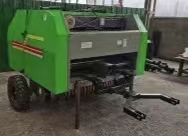

Basic Info
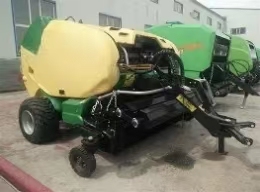
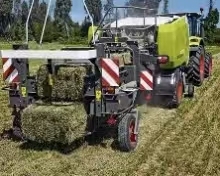
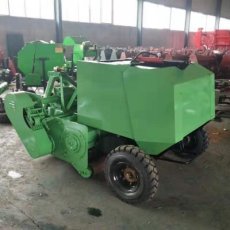
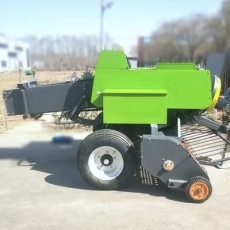
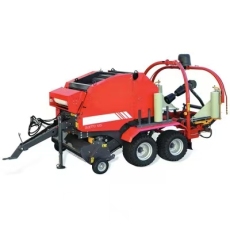
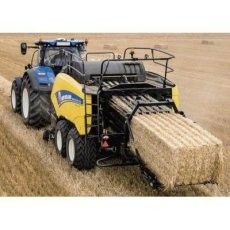
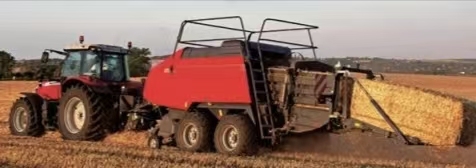
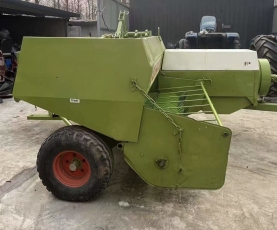
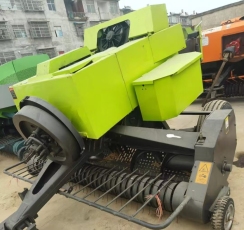
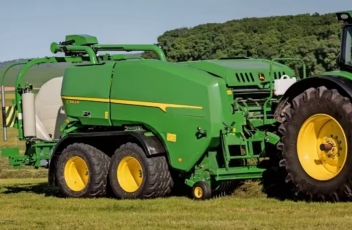
The Massey Ferguson 1846 is a medium-to-large round baler featuring a hydrostatic wheel drive(HWD)system,designed to provide smooth power transmission and user-friendly operation.By eliminating the traditional PTO driveline and using a hydraulic system to directly drive the baling mechanism,it may offer smoother power engagement on uneven terrain or during turns,potentially reducing shock loads on the tractor's PTO.
Customer reviews
Andrei Ivanov · Professional Straw Recycling Contractor
This round baler is our primary workhorse,processing over ten thousand acres of straw in a single season.Its durability is impressive,with exceptionally reliable knotter performance and minimal twine breakage or downtime.The bales are firm outside yet fluffy inside,ensuring safe transport and ideal conditions for later ensiling,receiving positive feedback from our clients.
Maria Sanchez · Technical Manager,Professional Straw Recycling Company
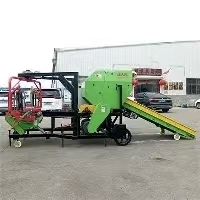
The trailed round baler-wrapper combination performed exceptionally well during the operating season.Its standard 6-layer wrapping cycle takes only 90 seconds,and the film tension control system is precise,maintaining premium silage quality after two months of field storage.The automatic film-changing mechanism has a failure rate 40%below industry average,significantly improving our operational continuity.
Erin Walters · Operations Director,Agricultural Services Company
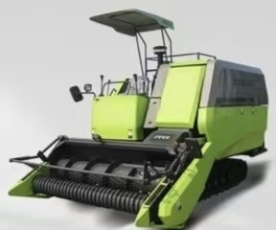
The self-propelled baler proved its value across 5000 contiguous acres.The hydrostatic drive system reduces headland turning time by 40%,and the intelligent monitoring system displays real-time forage moisture and bale weight data.Most notably,its modular design allows core component replacement in just 2 labor hours,reducing annual maintenance costs by approximately$18,000.
Product Description
Features
Its core feature is the hydrostatic drive system,which uses a high-pressure hydraulic motor to directly drive the bale chamber belts,theoretically providing smoother torque and speed control.The system incorporates an Automatic Density Control(ADC)function that monitors load and adjusts automatically to maintain relatively consistent bale density.The pickup is wide and features a floating action to follow ground contours.The machine typically includes a dual net/twine system,allowing the operator to switch binding material without stopping.

Specifications
Pickup width is approximately 2.3 meters.The bale diameter is fixed at 1.5 meters,with bale weight typically ranging from 400-700 kg depending on material moisture.Due to the hydrostatic drive,it has specific requirements for the tractor's hydraulic system capacity(flow and pressure).The bale chamber consists of multiple heavy-duty belts with adjustable tension.Design features for easier maintenance include centralized lubrication points and openable side panels.

Applications
Suitable for medium to large livestock farms and custom operators.The 1.5-meter diameter bale offers a common balance between transport weight and handling convenience.The operational flexibility provided by hydrostatic drive may be advantageous in hilly or irregularly shaped fields.Suitable crops include various grasses,wheat straw,and soybean straw,for use as hay reserves or bedding.
Frequently Asked Questions (FAQ)
Q:What are the typical bale dimensions for a medium round baler?
A:Typical bales are~1.5 meters(5 ft)in diameter and~1.2 meters(4 ft)in width.This size balances handling convenience and per-bale yield,suitable for mid-sized farms,and can be moved with a medium tractor grapple.
Q:Is it suitable for operation on sloping land?
A:It has some adaptability.Choose models with a low center of gravity and always operate along contour lines,avoiding side-hill travel.The tractor must have adequate power and stability;exercise extra caution on steep slopes.
Q:Can bales from a medium round baler be stored outdoors?
A:Yes,for short-term storage.The tight outer layer offers some weather resistance,but for long-term storage,choose a well-drained site and consider using a tarp over the top or a bale sleeve to prevent core spoilage.
Q:How to prevent bales with"dry-wet layers"when baling in damp conditions?
A:The key is controlling crop moisture.Aim to bale when forage reaches proper dryness(~15-18%moisture content).If the windrow top is dry but the bottom is damp,reduce ground speed to allow for more even feeding.
Q:How many wraps of twine/net are recommended after the bale is formed?
A:Typically 6-8 wraps for net,or 15-20 wraps for twine.This provides sufficient binding force to prevent the bale from unraveling during handling and storage.Refer to the manual and adjust slightly based on bale tightness.
Q:What are the main daily lubrication points on a medium round baler?
A:Key points include:pickup teeth bearings,all idler and guide roller bearings,bale chamber roller bearings,knotter moving parts,and drive chains.Use specified grease and follow recommended intervals.