Basic Info
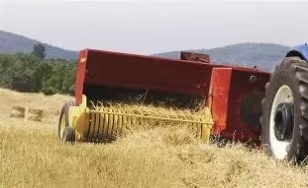
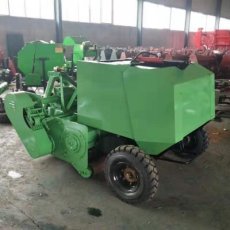
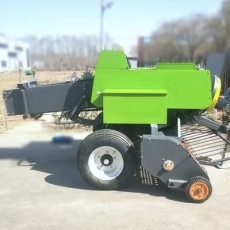
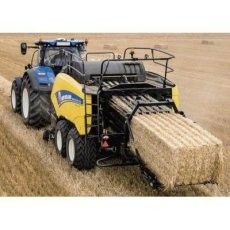
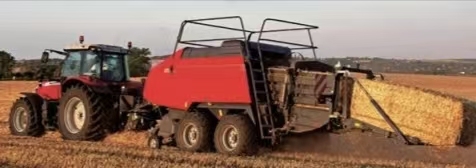
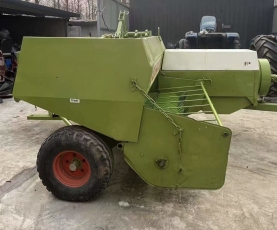
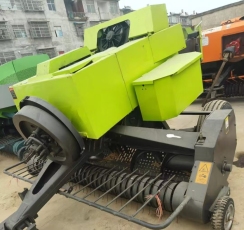
The Krone EasyCut series represents a category of durable,traditional small square balers.These machines employ the classic plunger-type baling principle and are known for producing neat,small square bales suitable for manual handling.They maintain steady demand among small to medium-sized farms,equestrian centers,and hay retailers,valued for the universal utility of their bales and straightforward operation.
Product Description
Features
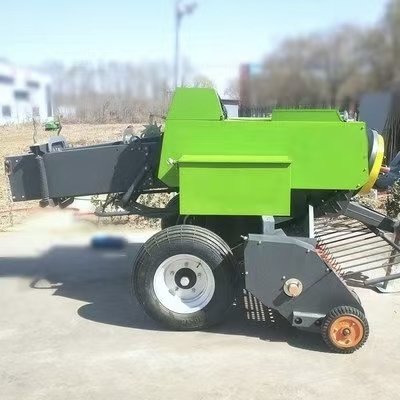
Focus is on structural robustness and tying reliability.The knotters are typically precision-tuned to minimize missed ties or twine breaks.Some models may include a"gentle feed"system intended to reduce leaf loss,which can be helpful for producing high-quality alfalfa hay.The drive train emphasizes durability and serviceability,with many key components designed for easy access and replacement.The operator interface is relatively intuitive,and troubleshooting tends to be straightforward.
Specifications
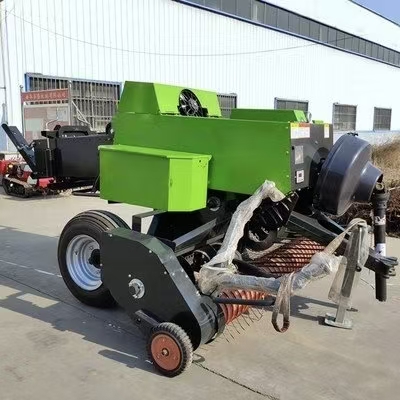
Common pickup widths are 1.9m or 2.1m.Bale length can be adjusted via mechanical or hydraulic systems,offering multiple set lengths or infinite variability.Two knotters(double twine)are typically used to secure the bales.The bale chamber size and plunger stroke are optimized to balance output and bale firmness.The machine requires a tractor with a 540 rpm PTO.The overall design aims to control cost and complexity while delivering reliable performance.
Applications
A classic choice for small to mid-sized family farms,ranches,and horse stables.The output bales are ideal for manual stacking,loading,and feeding without reliance on heavy machinery.This bale size is very common in the retail hay market,convenient for customers to buy and transport.It is also used in settings requiring precise feeding management,such as racehorse stables or the pet forage market.Suitable for grasses,legumes,and some crop residues like oat straw.
Frequently Asked Questions (FAQ)
Q:Can a small square pick-up baler handle lodged crops?
A:It can handle them,but efficiency may decrease.For moderately lodged crops,reducing ground speed and adjusting the pick-up height is recommended.For severely lodged or tangled crops,pre-windrowing or using a model with a helper reel may be necessary to ensure clean pickup.
Q:How does a small square baler handle fragile forage like alfalfa?
A:Operating in the early morning or when dew is present is recommended,as leaves are more pliable,reducing shatter loss.Loosening bale density slightly and reducing ground speed helps preserve leaf integrity.Models with a lateral feeding system can also better protect the forage.
Q:What adjustments are recommended for operating the machine on slopes?
A:Operate along the contour lines,avoiding straight up/downhill travel.Moderately reduce hydraulic system pressure according to the slope to ensure knotter reliability.Regularly check and secure all connections to prevent loosening from vibration.
Q:What usually causes inconsistent bale length?
A:Common causes are uneven feed volume or inconsistent windrow thickness.Check and adjust the pickup height for consistent gathering.Also inspect the metering wheel mechanism for wear or binding,and ensure drive chains are properly tensioned.
Q:How to choose economical and durable twine for a small square baler?
A:Opt for polypropylene twine with a 2-3mm diameter,offering good strength,UV resistance,and moderate cost.Check for uniform twist and tensile strength.Avoid overly thin or aged twine to prevent frequent breaks that reduce efficiency.
Q:What precautions are needed for use in low winter temperatures?
A:Warm up the hydraulic system thoroughly before operation.Use hydraulic fluid and lubricants suitable for low temperatures.Twine may become brittle;consider winter-grade twine or store it in a warm place.Avoid prolonged idling during breaks to prevent components from freezing.












 Post RFQ


 Chat
Chat


 ALL CATEGORIES