Basic Info
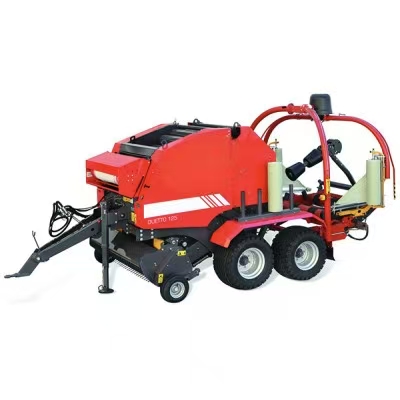
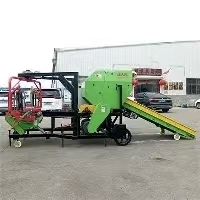
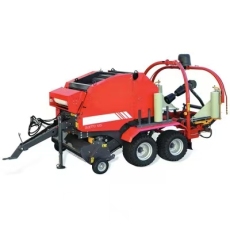
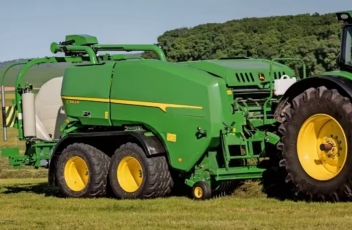
The McHale Fusion 3 is an integrated"combination"machine that merges the processes of round baling and film wrapping into a single unit.It can perform the complete sequence from picking up crop to producing a sealed silage bale in one pass in the field.This design aims to reduce the need for a separate wrapper and a second tractor,making it particularly suitable for producing high-quality grass or maize silage.
Product Description
Features
Its integrated design is the key feature.A smooth internal transfer system moves the newly formed bale directly to a rear rotating wrapping platform for multi-layer film application.This continuous process may help reduce oxidation time for the silage.The machine typically features multiple film roll carriers with functions like automatic roll change and breakage detection,intended to support non-stop operation.The baler section uses a roller or belt system,allowing adjustment of initial bale tightness as needed.
Specifications
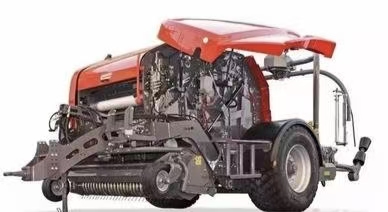
The bale chamber is typically 1.2 meters wide,producing standard 1.25-meter diameter bales.The wrapper section employs an independent rotating arm and film stretch system capable of applying a pre-set level of stretch to enhance wrap tightness.Standard configuration holds multiple rolls of silage film,and auto-splicing aids in extending continuous runtime.The entire machine is PTO-driven and requires several hydraulic circuits for baling,ejecting,transferring,and wrapping functions.
Applications
Well-suited for professional silage contractors,dairy,and beef farms making high-moisture silage from ryegrass,alfalfa,or whole-plant corn.The resulting sealed silage bales can be left in the field for fermentation,enabling convenient feeding and potentially reducing the cost and waste associated with bunker silos.For users focused on silage quality(e.g.,low acidity,high nutritional value),this rapid"cut-bale-seal"process is considered beneficial.
Frequently Asked Questions (FAQ)
Q:What are the advantages of a towed round bale wrapper combination machine?
A:This machine enables continuous"pickup-baling-wrapping"operation,producing silage-ready round bales in one pass,greatly saving labor and time.Its integrated design minimizes intermediate handling,effectively preserving feed nutrition,making it ideal for producing high-quality silage.
Q:Compared to traditional separate units,what are the advantages of a combo machine?
A:The key advantage is highly integrated operation,completing"pickup-baling-wrapping"in one pass,saving at least one tractor and one operator.It minimizes intermediate handling,preserves forage freshness and nutrients to the greatest extent,and significantly improves the efficiency and quality of silage production.
Q:How many layers of film are needed for a standard silage bale?
A:Typically,6-8 layers of high-quality stretch film are required to form an effective seal.This ensures a proper anaerobic environment,preventing air and moisture ingress and guaranteeing silage fermentation quality.The film's stretch rate and cling are critical,directly affecting seal effectiveness and film usage.
Q:Does it have high power requirements for the tractor?
A:Yes.Since it simultaneously powers the baling and wrapping systems,it typically requires a tractor of 90-130 HP or more,with a PTO that delivers sufficient and stable power.The tractor must also have adequate hydraulic remotes to control functions like the wrapping arm.
Q:What should be considered for wrapping operations in different weather conditions?
A:Avoid operation in strong winds,as they can disrupt film placement and adhesion.In very low temperatures,film elasticity decreases;use winter-grade film or reduce operating speed.After rain or in humid conditions,ensure electrical safety and that bale surfaces are not excessively wet/slippery.
Q:How to choose the appropriate wrapping mode(e.g.,layers,overlap)?
A:It is usually preset via the control panel.For long-term silage storage(over 12 months),higher layers(e.g.,8)and higher overlap(50%-70%)are recommended.Short-term storage may use fewer.Specific settings should follow film manufacturer recommendations,the equipment manual,and consider local climate.












 Post RFQ


 Chat
Chat


 ALL CATEGORIES