Basic Info
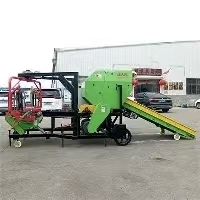
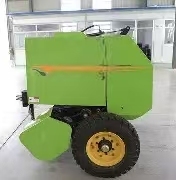
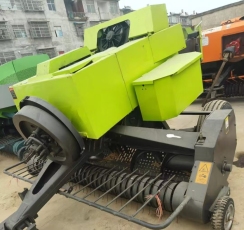
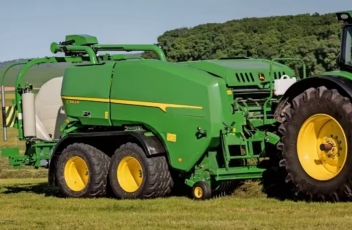
The Sipma AP 630 is a compact and maneuverable small round baler,primarily targeting small family farms,equestrian facilities,or users in hilly terrain.It produces lightweight,small-sized bales that are easy to handle manually,requiring no specialized large equipment for movement or feeding,offering a cost-effective solution for small-scale operations.
Product Description
Features
Its core strengths are simplicity,agility,and low power requirement.Using a belt-roller principle with typically 6 belts in the chamber,it forms reasonably dense small round bales.It employs a simple and reliable twine-tying system using sisal or plastic twine.The lightweight design and three-point hitch enable easy turning and transport,suitable for confined or uneven plots.
Specifications
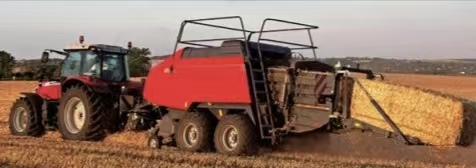
Pickup width is approximately 1.45 meters.Standard small bales weigh around 15-25 kg,ideal for manual lifting.The machine is primarily PTO-driven,with hydraulics only for pickup lift.Bale density is usually adjusted via mechanical springs.The design emphasizes modularity and ease of maintenance,with many components being easily removable.
Applications
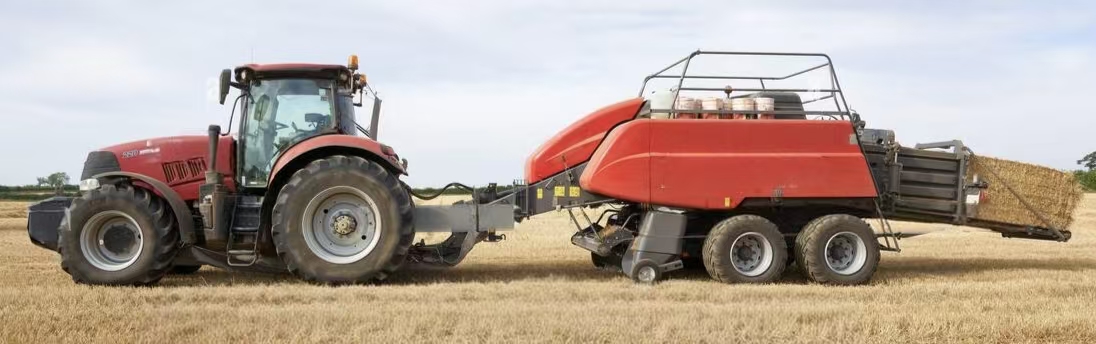
Well-suited for small dairy/sheep farms,horse stables,and owners of small pastures.Small bales can be fed whole,minimizing waste and allowing for portioned use.Its high maneuverability makes it useful in terraced or sloped fields inaccessible to larger machines.It represents a lower-entry-cost baling solution for new entrants to livestock farming or those with budget constraints.
Frequently Asked Questions (FAQ)
Q:Are small round balers suitable for hilly terrain or small fields?
A:Yes,very suitable.Compact with a small turning radius,they adapt well to hills.They require less traction power(a 70-100 HP tractor suffices)and have lower investment/operating costs,making them practical for small farms or scattered plots handling hay or straw.
Q:Who are the primary users of small round balers?
A:They are primarily aimed at small-scale farmers,horse owners,eco-farms,and users with scattered small plots or hilly terrain.Their low investment cost,low traction requirement,and high maneuverability are the core appeals for this group.
Q:What horsepower tractor is typically needed to tow a small round baler?
A:Usually,a medium-sized tractor in the 55 to 100 HP range is sufficient for effective towing and PTO operation.This allows it to be paired with existing small-to-medium tractors on the farm used for other tasks,avoiding investment in larger equipment.
Q:How stable are small round balers on hilly terrain?
A:Due to their light weight,low center of gravity,and relatively wide wheel track,they perform with good stability on gentle slopes.However,caution is still required on steeper slopes;operating along contours is preferable to up/downhill travel,and tractor stability/power must be adequate.
Q:What should be noted for storing small round bales?
A:Although the outer layer is tight,it's still advisable to place them on well-drained ground,ideally on pallets or rails to isolate them from soil moisture.Avoid prolonged direct contact with damp ground.For long-term storage,covering the top with a tarp is recommended if possible.
Q:Can small round balers be used to make hay bales for horses?
A:Absolutely,and it's very common.Making hay for horses demands high forage quality and cleanliness.Small balers help process small batches of high-quality pasture hay quickly and facilitate precise feeding management at horse facilities.












 Post RFQ


 Chat
Chat


 ALL CATEGORIES