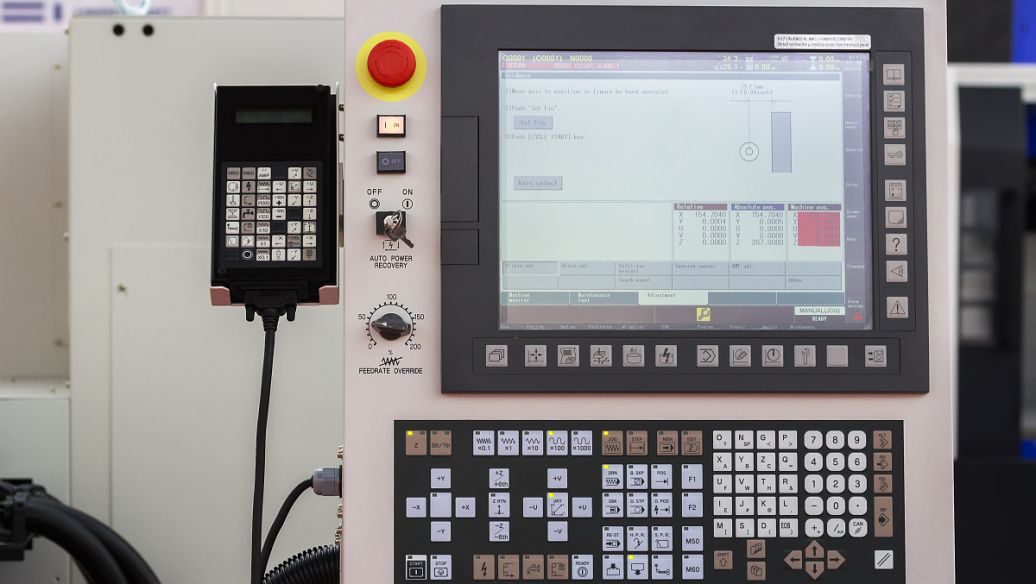
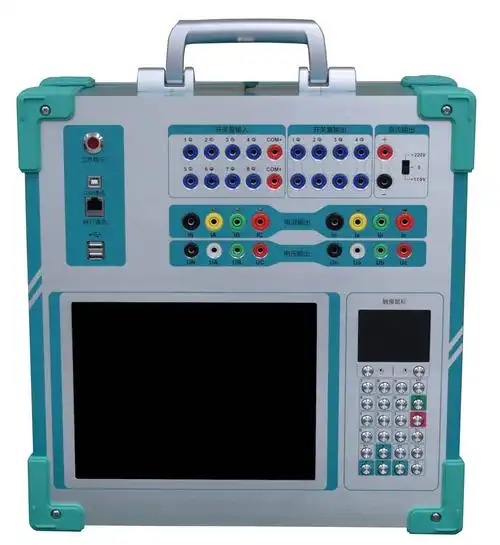


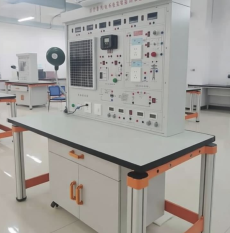
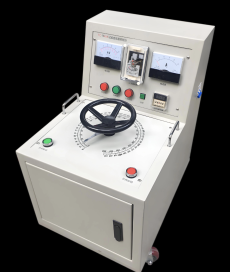
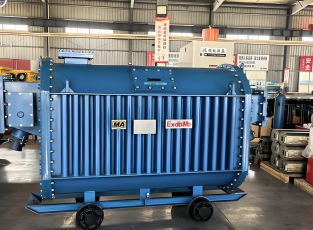
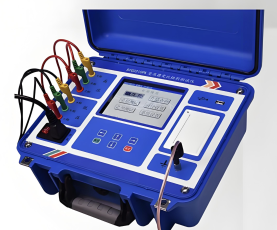

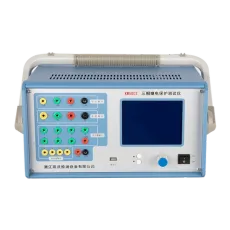
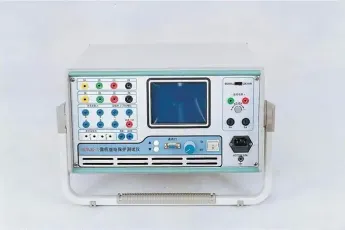
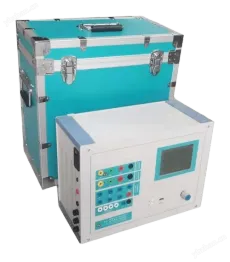
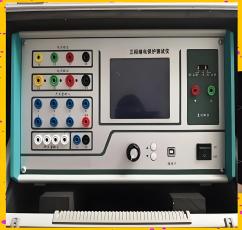
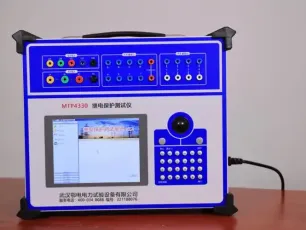
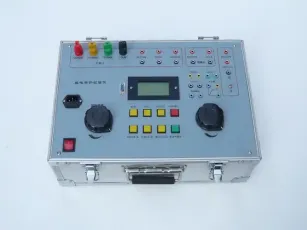
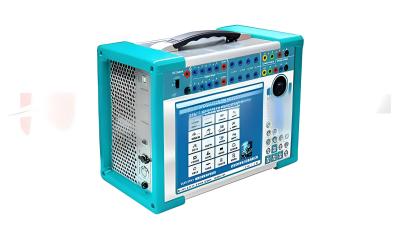
This new energy relay protection tester solves the professional testing pain points of new energy power stations. First, it supports the independent test of DC high voltage up to 1500V, which meets the testing requirements of large-scale photovoltaic inverter protection devices. Second, it can simulate various AC harmonic waveforms, which can detect the harmonic suppression performance of wind turbine converters. It supports multiple mainstream new energy equipment communication protocols, and can realize real-time data interaction with protected equipment. The built-in LTE wireless communication module supports remote debugging and data transmission, and the IP65 protection grade can adapt to outdoor dust and rain environments. In addition, it can quickly switch between DC and AC test modes, improving the testing efficiency of new energy power stations.
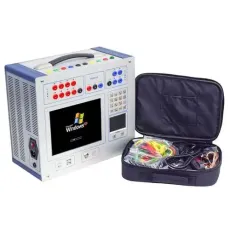
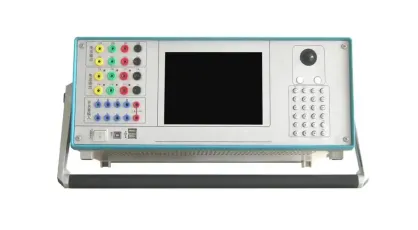
The product specifications of this new energy special relay protection tester are as follows: overall dimension is 320mm*260mm*150mm, net weight is 5.8kg. It supports dual power supply modes: AC 220V ±10% and DC 24V backup power supply. The display is a 7-inch TFT touch screen with a resolution of 800*600. The built-in storage can store up to 3000 sets of test data. The test channel configuration includes 12 DC/AC current channels (0~50A) and 10 DC/AC voltage channels (0~1500V for DC, 0~1000V for AC), with a measurement accuracy of 0.2 level. The standard communication interfaces include USB, Ethernet and LTE wireless module, and the protection grade is IP65.
This new energy relay protection tester is mainly applicable to the debugging, regular maintenance and fault detection of relay protection devices in new energy power stations. It can be used for the pre-delivery inspection and type test of photovoltaic inverter protection devices, the commissioning and maintenance of wind turbine converters, and the protection device testing of energy storage power stations. It can also assist the operation and maintenance personnel of new energy power stations to quickly verify the working status of protection devices, ensure the safe and stable operation of new energy power generation equipment, and meet the testing needs of large-scale new energy power station projects.







 Post RFQ


 Chat
Chat


 ALL CATEGORIES