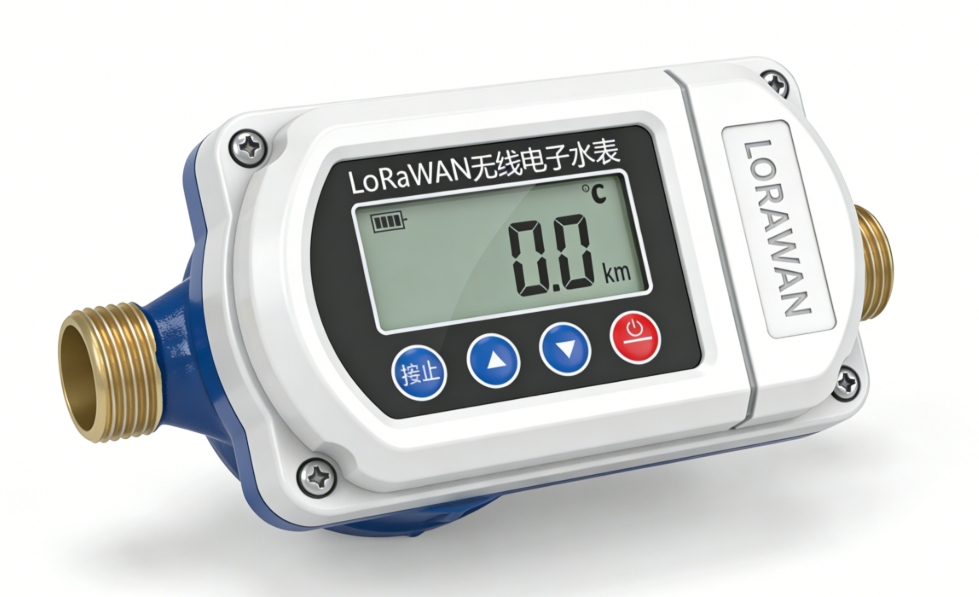
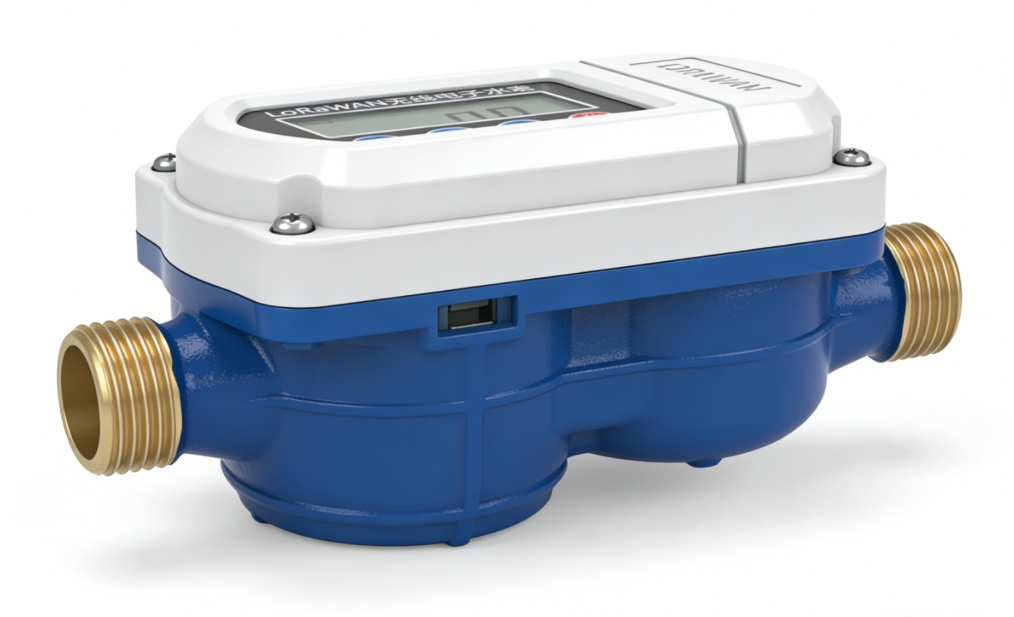


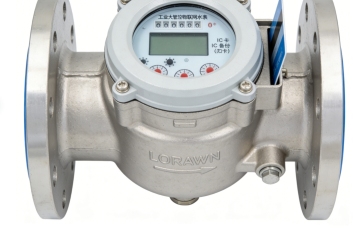
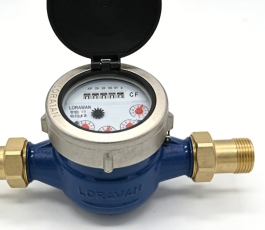
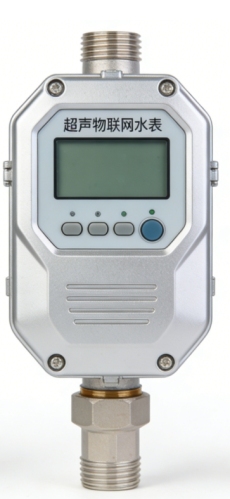
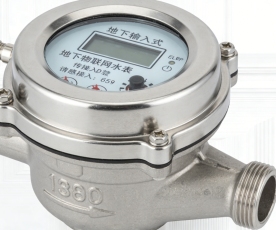
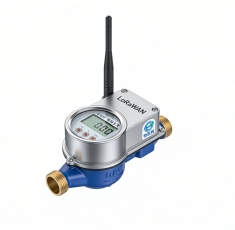

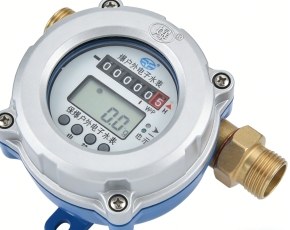
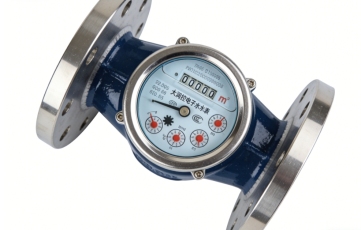
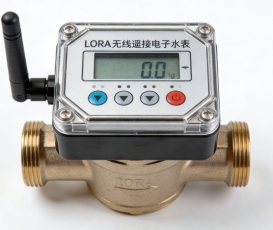
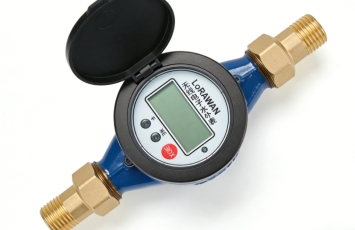
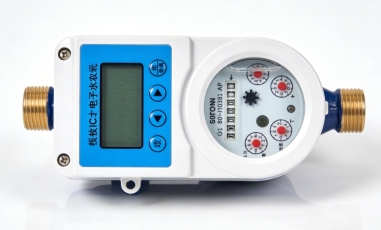
The core advantages of this large-caliber industrial water meter lie in its high-precision measurement performance, which meets the national Grade C water meter standard, ensuring accurate statistics of large-flow water consumption. It adopts a non-contact magnetic transmission measurement method, which avoids direct contact between the measuring component and water, reducing wear and extending the service life. The built-in anti-clogging filter can effectively block large impurities in the pipeline, avoiding the blockage of the measuring mechanism and ensuring long-term stable operation. The large LED LCD display can clearly show real-time flow, total water consumption and equipment status even in strong sunlight outdoor environments. It also has a data encryption transmission function to ensure the security of remote transmission data, and supports remote parameter configuration to avoid on-site debugging work.
This DN300 large-caliber industrial electronic water meter has a flange connection interface, which conforms to the national GB/T 778-2018 standard, and is suitable for connecting to large-diameter municipal water supply pipelines. Its flow measurement range is Q1=1m³/h to Q3=1000m³/h, which can meet the metering needs of most large-scale water supply scenarios. It is powered by AC380V mains power, with a solar backup panel that can support continuous operation for 30 days in case of power outages. The shell is made of ductile iron with epoxy resin anti-corrosion coating, which has strong corrosion resistance and can adapt to harsh outdoor and underground pipeline environments. The overall dimensions are 1200mm in length, 600mm in width and 800mm in height, with a total weight of 120kg, and it is equipped with a dedicated mounting bracket for fixed installation.
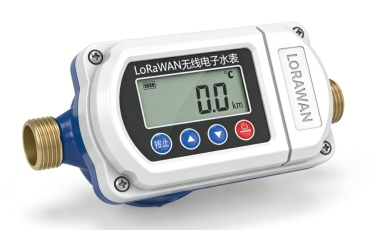
This large-caliber industrial electronic water meter is mainly applicable to municipal water pipe networks, large industrial factories, sewage treatment plants, water plants and other large-scale water metering scenarios. Municipal water supply departments can use it to count the overall water consumption of the city's pipe network, carry out water resource allocation and pipeline leakage detection. Industrial factories can use it to measure the water consumption of production lines and realize refined management of production water costs. Sewage treatment plants can use it to measure the water inflow and outflow, optimizing the operation of treatment equipment. It can also be connected to industrial Internet platforms to realize real-time monitoring and data analysis of water consumption data.







 Post RFQ


 Chat
Chat


 ALL CATEGORIES