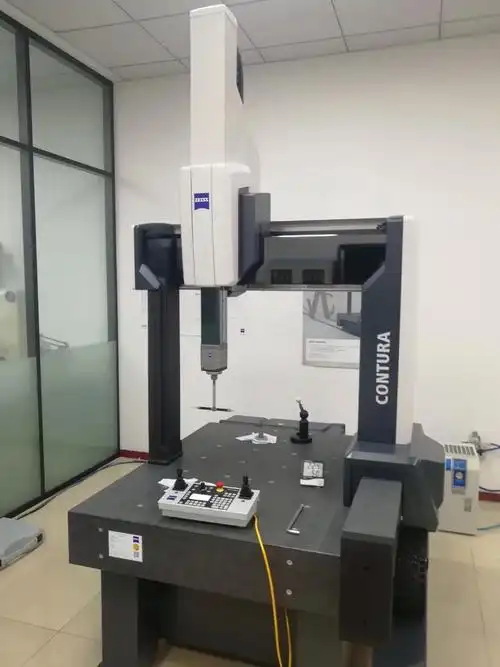
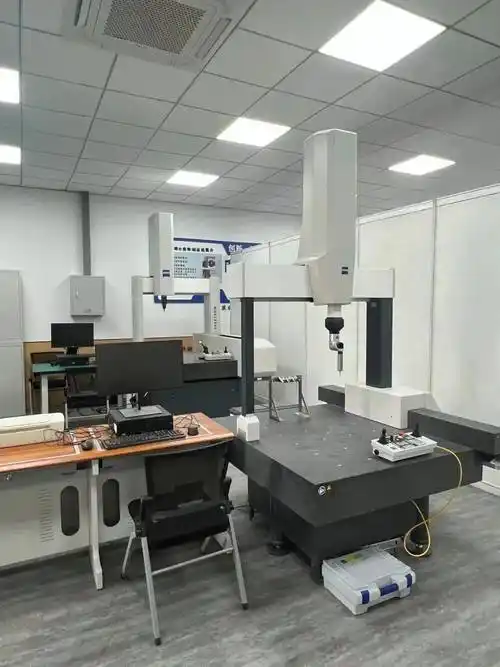





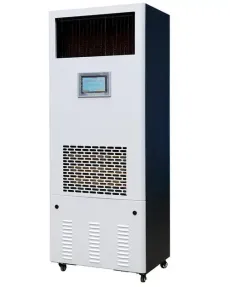
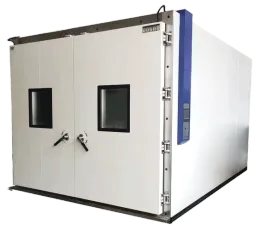

This laboratory CMM features an air bearing servo drive system, which has zero friction during movement, ensuring ultra-high movement accuracy and long-term stability. It adopts a ruby contact probe, which has high wear resistance and ultra-high repeat positioning accuracy of ±0.05μm. The matching measurement software is PC-DMIS Calibration 2024, which is specially designed for metrology calibration and supports high-precision data analysis and error correction. In addition, it is specially designed for constant temperature laboratory environment, and can maintain stable measurement accuracy in 18-22℃ environment. It also has a complete calibration and verification function, which can meet the requirements of national metrology certification.
The specific technical specifications are as follows: The effective measurement range is X-axis 600mm, Y-axis 500mm, Z-axis 400mm; the overall measurement accuracy is ±0.2μm (compliant with ISO 10360-2 international metrology standard); the drive system adopts air bearing servo system, with zero friction and ultra-high movement accuracy; the matching measurement software is PC-DMIS Calibration 2024, which supports metrology calibration and high-precision data analysis; the workbench is made of natural marble, with extremely low thermal expansion coefficient; the maximum load capacity of the workbench is 300kg; the probe is a ruby contact probe, with high sensitivity and wear resistance; the data interfaces include GPIB and Gigabit Ethernet to support professional data transmission; the whole machine size is 1200mm × 1000mm × 1600mm; the power supply is 220V 50Hz/60Hz, and it is suitable for 18-22℃ constant temperature laboratory environment; the repeat positioning accuracy is ±0.05μm.
This product is mainly used in metrology institutes, semiconductor research and development, precision instrument calibration, aerospace precision parts testing and other fields. Typical application scenarios include calibration of standard measuring tools, dimensional detection of semiconductor chips, calibration of precision instrument components, and high-precision detection of aerospace precision parts. In the metrology institute, it can be used as a standard detection equipment to calibrate other measuring instruments, ensuring the unity of measurement units.







 Post RFQ


 Chat
Chat


 ALL CATEGORIES