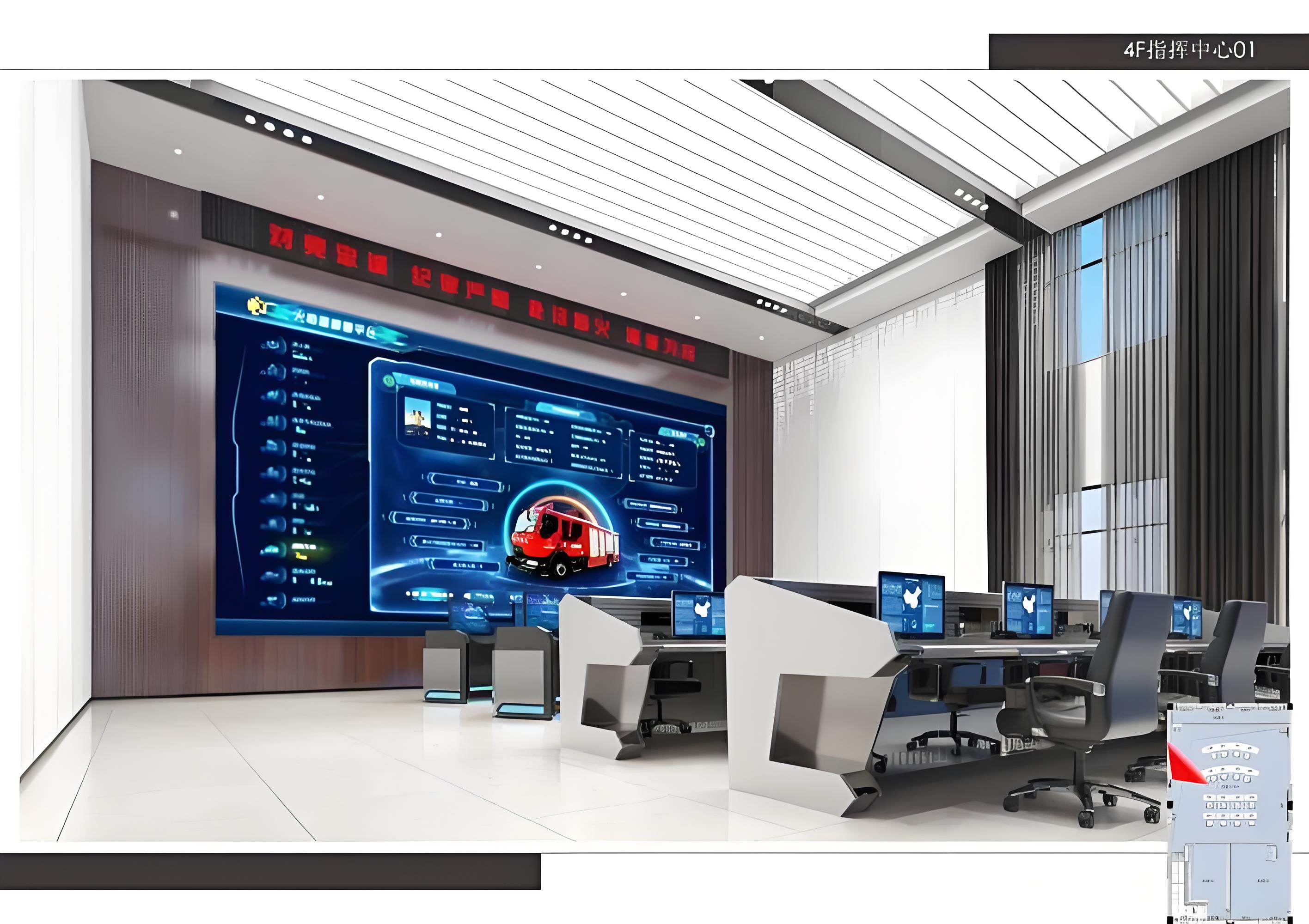
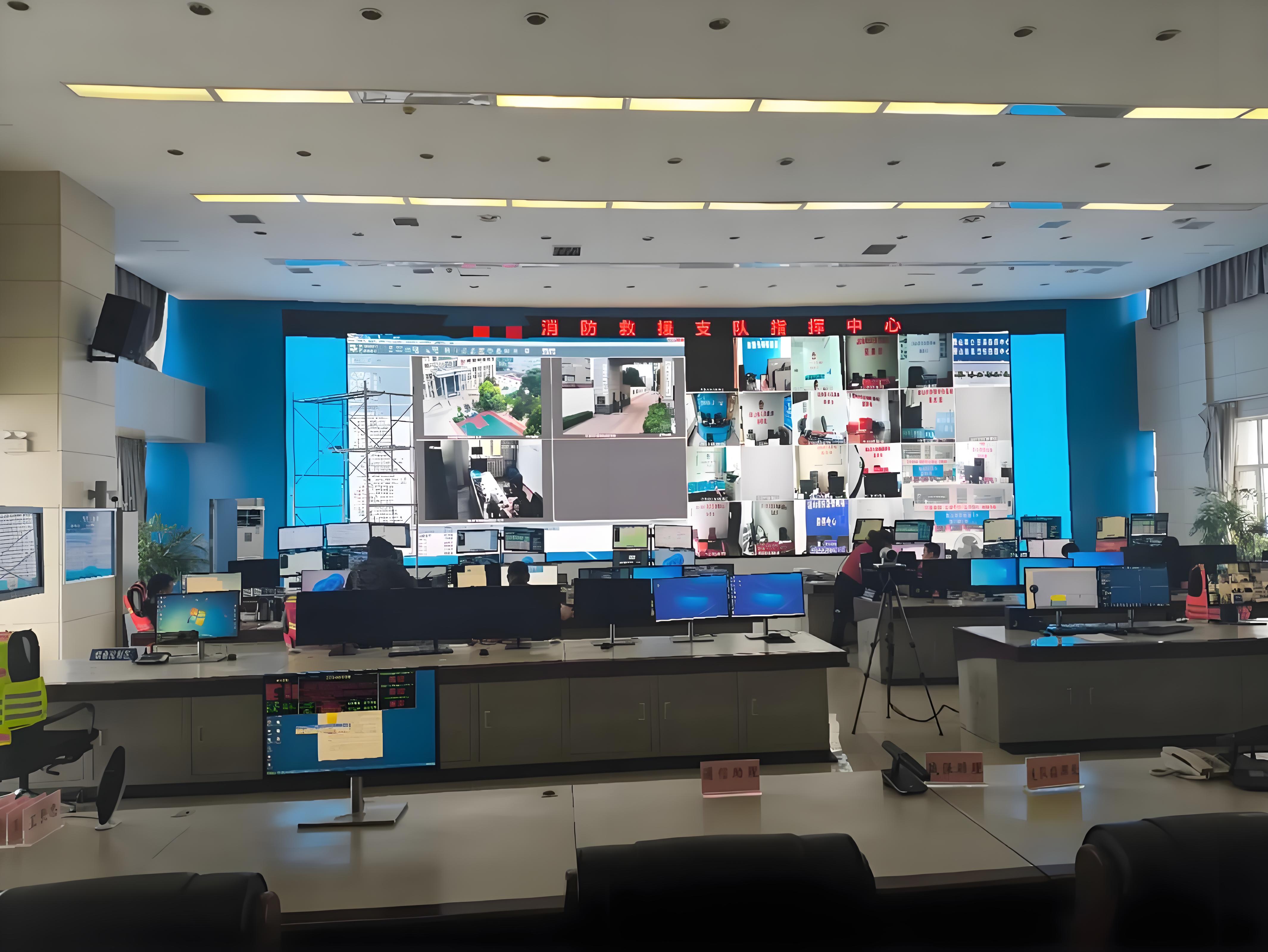


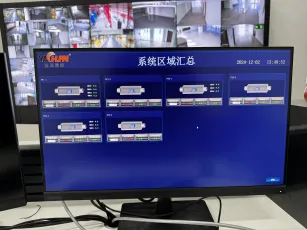
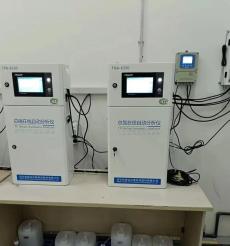
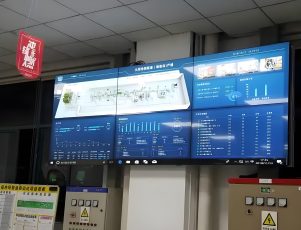
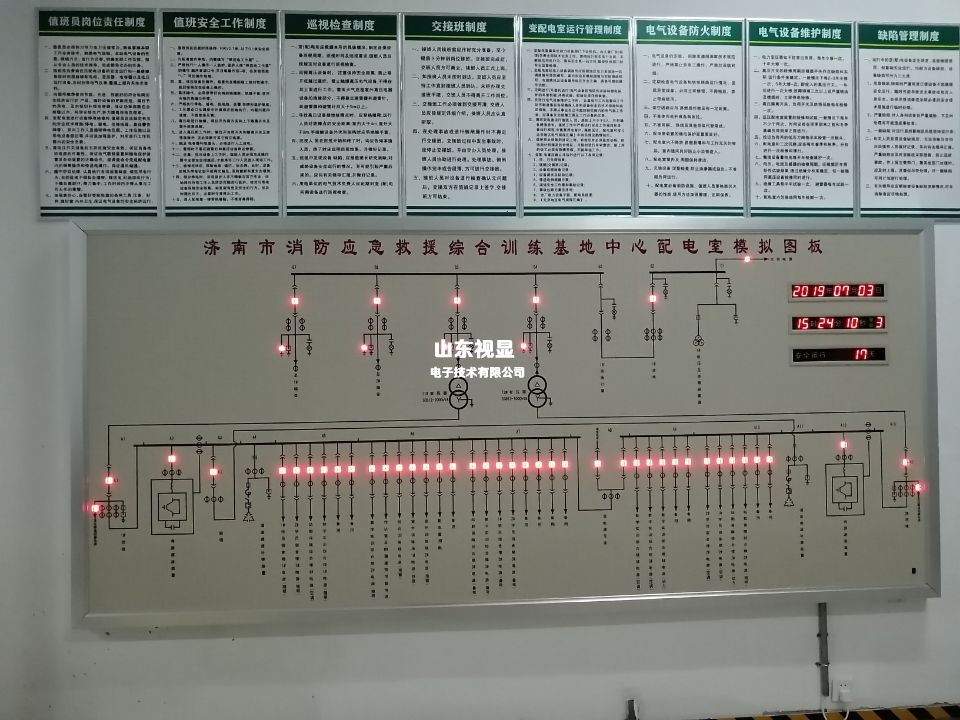
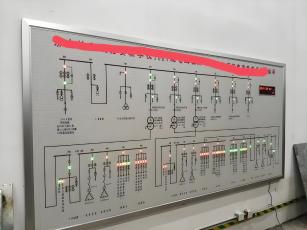
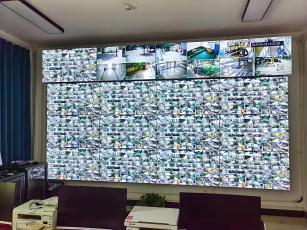
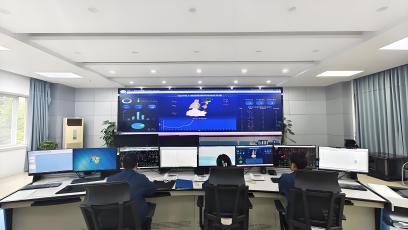
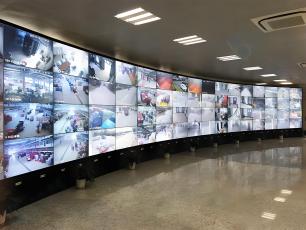
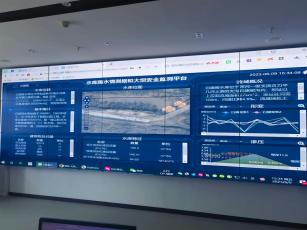
This mimic screen adopts high-resolution display technology, with a viewing distance of up to 50m, ensuring clear visibility of information in large command centers. The dynamic map editing function supports real-time updates of building structure changes, such as new partitions or facility additions, without replacing the entire screen. It links with fire control equipment such as fire pumps and sprinkler systems, automatically triggering equipment start-up when a fire alarm is received, shortening emergency response time. The dual power supply design ensures continuous operation of the screen during power outages caused by fires, providing stable information support for rescue work. It complies with NFPA standards, meeting the professional requirements of fire emergency command systems, and the IP55 protection grade resists dust and water splashing, suitable for use in humid or dusty control rooms.
The panel is made of 8mm anti-glare tempered glass, with a display resolution of 1920*1080, ensuring clear and detailed display of building layouts and fire facility information. The cabinet is made of cold-rolled steel with electrostatic spraying treatment, with a size of 2200*1600*300mm, which is firm and corrosion-resistant. The working temperature range is -10℃~50℃, and the storage temperature range is -25℃~60℃, with humidity adaptability of 10%~90% without condensation. The alarm response time is ≤5s, ensuring real-time synchronization of fire alarm information. The device consumes ≤320W of power, with a communication interface supporting Ethernet/RS485, realizing seamless connection with FAAS systems. The location accuracy of fire sources is ≤1m, providing accurate positioning for rescue work.
It is widely used in large shopping mall fire command rooms, office building emergency centers, industrial park fire monitoring stations, and high-rise building fire control rooms. Typical application scenarios include locating fire floors and positions in shopping mall fires to guide fire rescue teams, real-time alarm of fire facility faults in office buildings to prompt timely maintenance, linkage with sprinkler systems in industrial park fires to control fire spread, and planning rescue routes in high-rise building fires to ensure the safety of personnel evacuation. It also supports data storage of fire alarm records and rescue process information, facilitating post-fire accident analysis and summary of experience.









 Post RFQ


 Chat
Chat


 ALL CATEGORIES