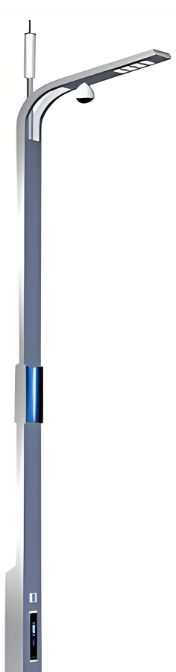





Crafted from Q355 high-strength low alloy steel, this pole features a tapered wall thickness design (6.0mm at the top to 8.0mm at the base), which optimizes weight distribution while enhancing load-bearing capacity, capable of supporting a total equipment load of up to 500kg. Its triple-layer surface protection—hot-dip galvanization with a thickness of over 120μm, epoxy primer, and polyurea spraying of 150μm—provides exceptional resistance to salt spray, acid rain, and extreme temperatures, ensuring a corrosion resistance life of more than 35 years, making it suitable for coastal and industrial pollution areas. The pole is pre-equipped with 8 wiring channels of 80mm diameter, facilitating separate routing of power, signal, and fiber optic cables, reducing signal interference. It also features adjustable antenna mounting brackets that can be rotated and tilted to optimize signal coverage direction, improving communication quality by 20% compared to fixed brackets.
The pole has an overall height of 25 meters, with a tapered octagonal cross-section that transitions from 450mm at the base to 150mm at the top. The wall thickness gradually increases from 6.0mm at the top to 8.0mm at the base, ensuring optimal structural rigidity and load-bearing capacity. The flange plate is 800*800*20mm, made of high-strength carbon steel, with 12 M30 anchor bolt holes for secure connection to the concrete foundation. The hot-dip galvanization process complies with GB/T 13912-2002 standards, with zinc coating adhesion meeting national requirements. The polyurea spraying layer uses aliphatic polyurea material, which has excellent wear resistance and UV resistance, with a surface hardness of 90 Shore A. The total weight of the pole is 1,200kg, and it can withstand wind speeds of up to 45m/s (Grade 14). The inner wall is equipped with a PVC wiring sleeve for each channel to protect cables from friction and corrosion.
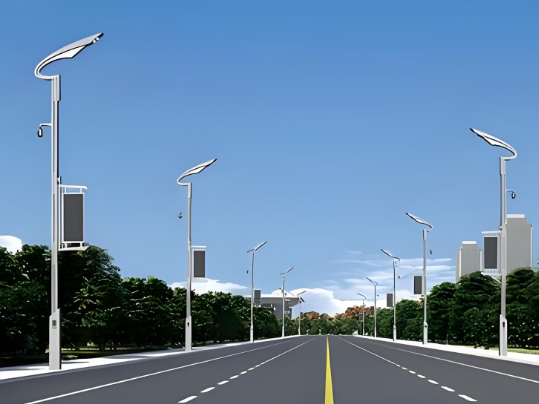
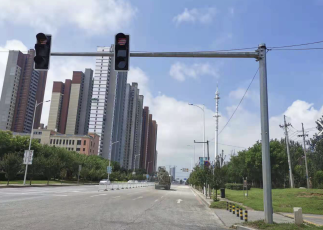
This product is primarily used in 5G communication base station construction projects, including urban suburban signal coverage, rural digital village construction, rail transit line signal enhancement, and coastal area communication network expansion. For telecommunication operators, it can be installed in mountainous areas to mount 5G high-gain antennas, providing signal coverage for a radius of up to 3km, solving the problem of poor communication in remote rural areas. In urban areas, it can be installed on building roofs or roadside to supplement 5G signal coverage in dense urban areas, reducing signal blind spots. In coastal areas, its polyurea coating provides excellent salt spray resistance, ensuring stable operation of communication equipment in marine climates. It is also compatible with solar power systems, enabling off-grid power supply for base stations in areas without access to mains electricity, supporting the construction of smart communication infrastructure.








 Post RFQ


 Chat
Chat


 ALL CATEGORIES