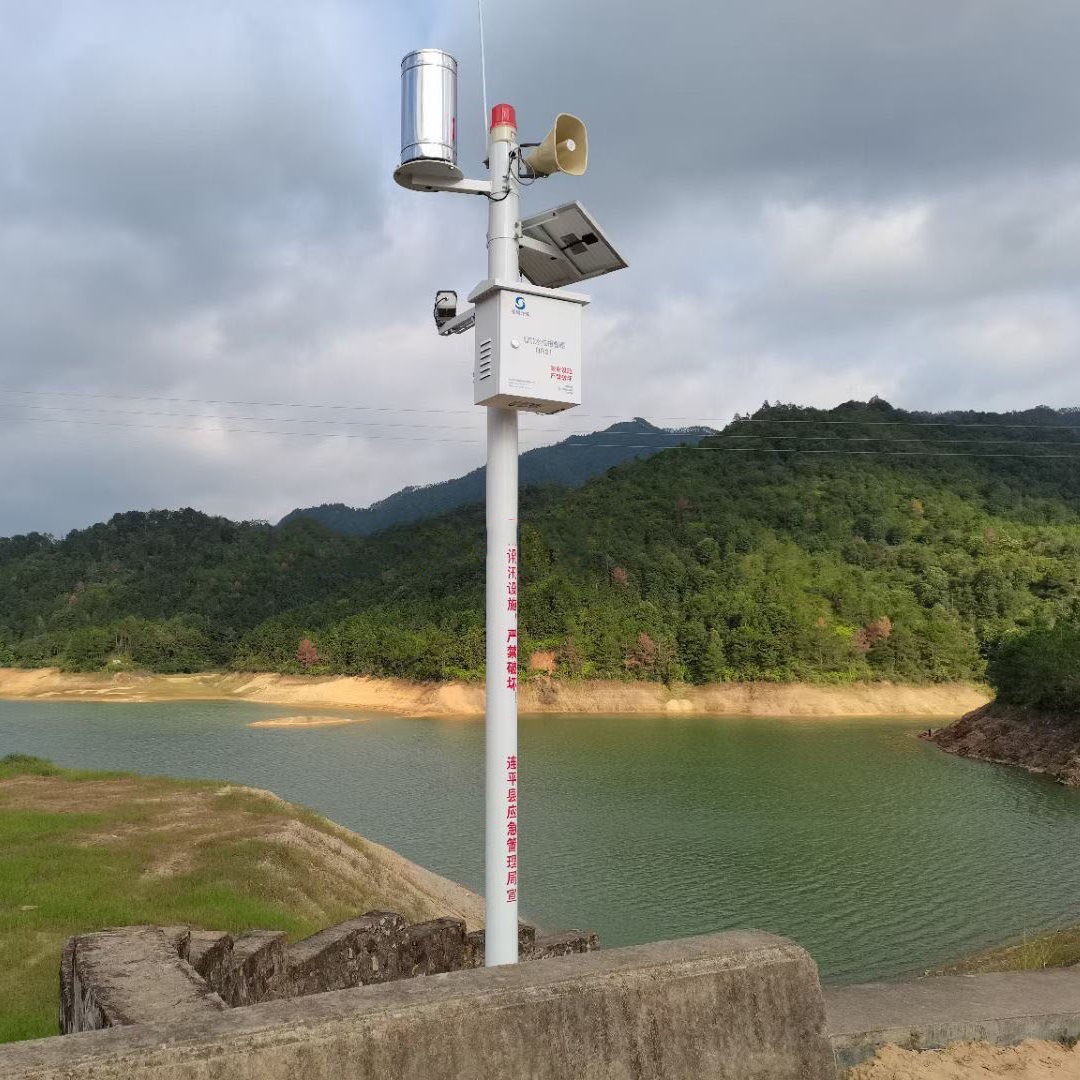
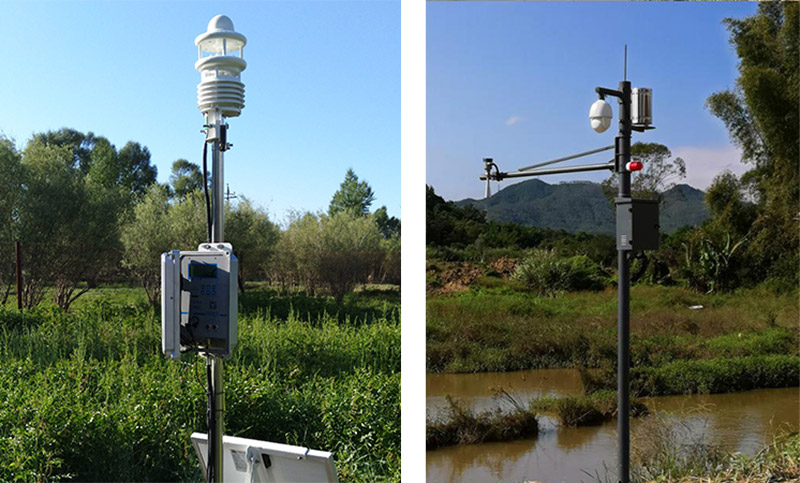







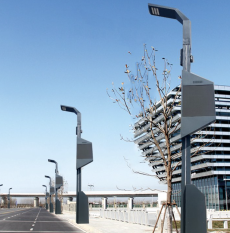
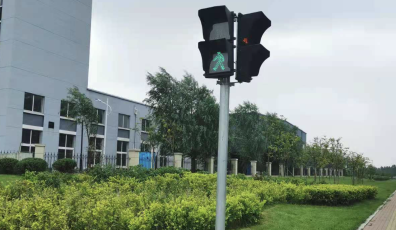
The landscape-friendly monitoring pole uses high-quality aluminum alloy material with a wood grain transfer surface treatment, which not only has the natural appearance of wood but also offers superior durability and anti-corrosion performance compared to real wood. Its lightweight design reduces the load on the ground, making it suitable for installation in fragile ecological areas such as wetland parks and mountain trails. Unlike ordinary metal poles, it has a smooth, burr-free surface that prevents injury to tourists and wildlife, while the anti-oxidation coating ensures the wood grain appearance remains vibrant for more than 3 years. It features a hidden wiring design that hides all cables inside the pole, maintaining a clean and natural appearance. The mini HD camera compatible with this pole has a discreet design that blends with the pole's appearance, ensuring unobtrusive surveillance in scenic areas.
This pole has an overall height of 3.5 meters, with a 1.2-meter cantilever arm that can be adjusted to a 90-degree angle, providing flexible surveillance coverage without blocking scenic views. The main pole has an outer diameter of 120mm, with a wall thickness of 4mm, and a wind resistance rating of Grade 9 (wind speed up to 20.8-24.4 m/s), ensuring stability in most outdoor scenic areas. It uses a ground nail + concrete base installation method, with a ground nail size of 300*300*500mm, which minimizes damage to the surrounding ecological environment compared to traditional large-scale concrete foundations. The protection rating is IP66, which means it is fully protected against dust and can withstand heavy rain and splashing water. The wood grain transfer coating has a thickness of ≥60μm, with excellent scratch resistance and color retention, meeting national outdoor landscape facility standards.
This monitoring pole is widely used in natural scenic spots such as national parks, forest parks, and mountain scenic areas, where it monitors tourist trails, viewing platforms, and ecological protection zones to detect forest fires, littering, and other abnormal behaviors. In urban parks and wetland parks, it blends with the natural landscape to monitor public facilities and prevent vandalism, while maintaining the aesthetic appeal of the park. It is also suitable for cultural tourism towns and historical and cultural sites, where it provides discreet surveillance to protect cultural relics and maintain public order without damaging the historical atmosphere. Additionally, it can be deployed in residential communities with garden-style designs, enhancing security while preserving the community's landscape beauty.








 Post RFQ


 Chat
Chat


 ALL CATEGORIES