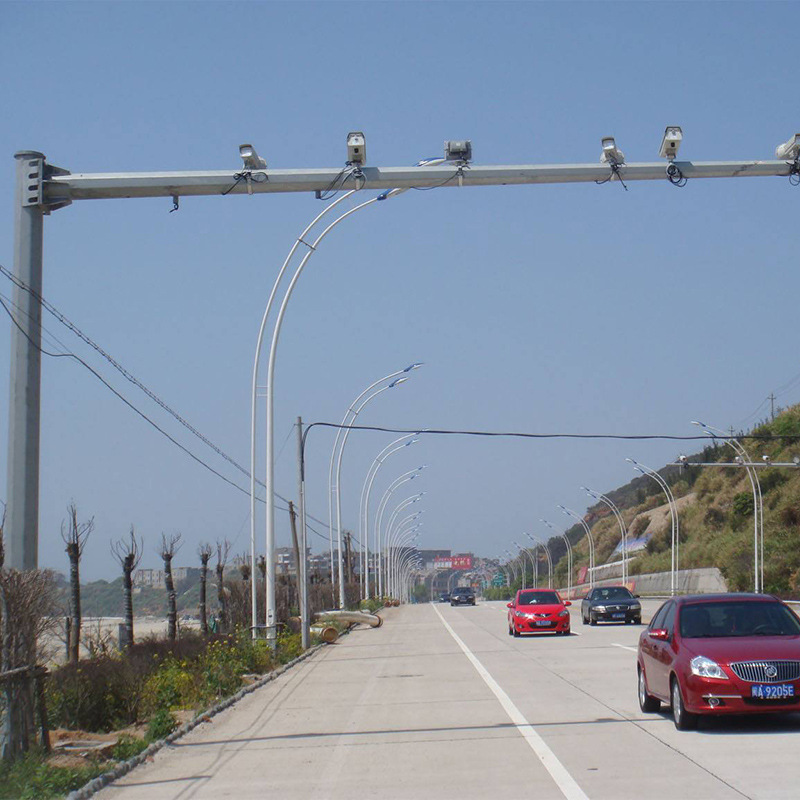
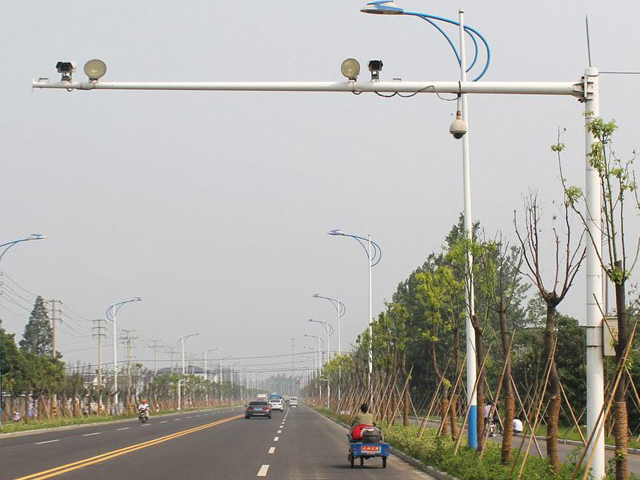





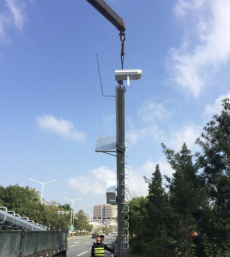
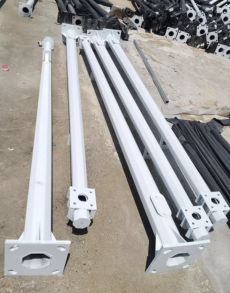
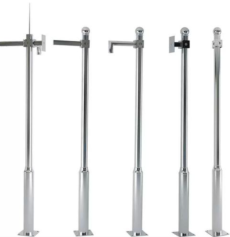
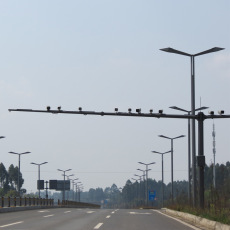
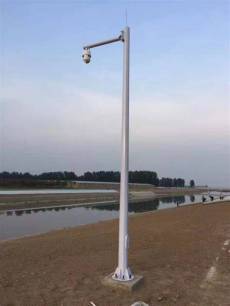
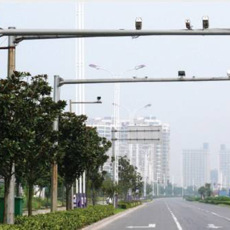
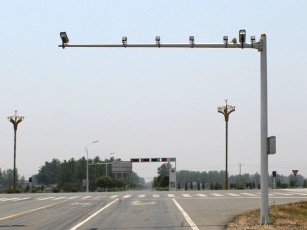
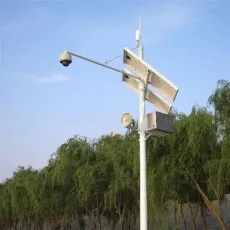
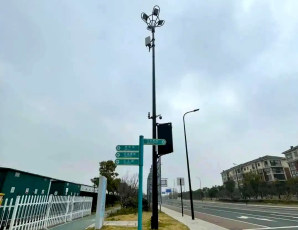
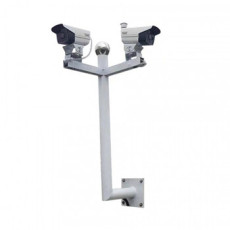
This highway-specific pole features Q355B high-strength steel construction, offering 40% higher tensile strength than standard steel poles, making it capable of supporting heavy high-speed cameras and LPR systems even in extreme wind conditions. The 4m long cross arm is designed with a tapered diameter (114mm to 89mm) to minimize wind resistance while maintaining sufficient strength, allowing cameras to be positioned 3-4 meters away from the main pole to cover multiple highway lanes. The dual corrosion protection system—hot-dip galvanization (100μm thickness) followed by epoxy coating—provides 25 years of rust resistance, critical for highway areas exposed to road salt and industrial dust. It includes a reinforced bottom flange with 10 M27 anchor bolts, ensuring a secure foundation even in soft soil conditions common in remote highway sections. The pole also features a dedicated cable management system with separate channels for power and data cables, reducing signal interference and simplifying maintenance.
The pole has an overall height of 8 meters, with a tapered main pole measuring 140mm in diameter at the top and 273mm at the bottom, paired with a 4m long cross arm with tapered diameter (114mm to 89mm). The main pole wall thickness is 6mm, and the cross arm wall thickness is 4mm, constructed from Q355B high-strength carbon steel. The corrosion protection is hot-dip galvanization with a minimum thickness of 100μm, meeting ISO 1461 standards, followed by a 70μm epoxy coating for additional chemical resistance. It has a Level 18 typhoon wind resistance rating, capable of withstanding wind speeds up to 61m/s. The mounting flange is a 400*400*20mm Q235 steel plate with 10 M27 anchor bolt holes, compatible with concrete foundations of 1000*1000*1200mm. It supports high-speed traffic cameras and LPR systems weighing up to 20kg, and comes with a 7-year factory warranty for material and workmanship defects.
This surveillance pole is specifically designed for highway and expressway monitoring scenarios, including intercity expressways, toll plazas, highway rest areas, and remote rural highway sections. It is also used in urban expressway on-ramps and off-ramps to monitor traffic flow and detect congestion. Target customers include provincial highway management bureaus, toll road operators, and transportation infrastructure contractors. Typical use cases include multi-lane license plate recognition for toll collection and traffic violation enforcement, high-speed traffic flow monitoring to optimize highway management, and incident detection to alert authorities to accidents or debris on the road. In mountainous highway areas, its high wind resistance ensures stable camera operation during strong valley winds, while its corrosion protection makes it suitable for coastal highways exposed to salt spray. Additionally, it can be integrated with intelligent transportation systems (ITS) to support real-time traffic data analysis and management.








 Post RFQ


 Chat
Chat


 ALL CATEGORIES