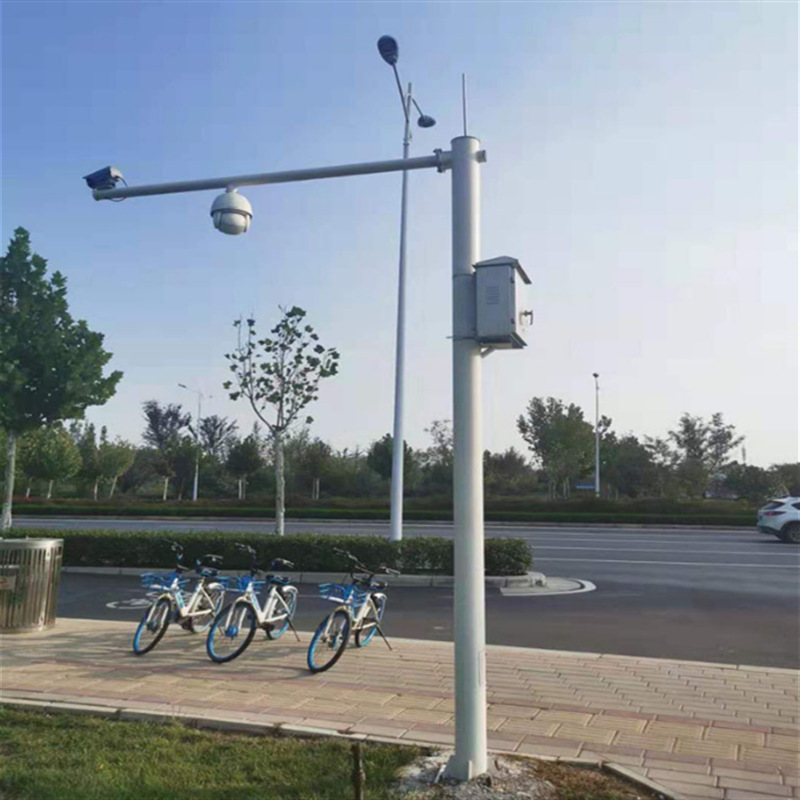
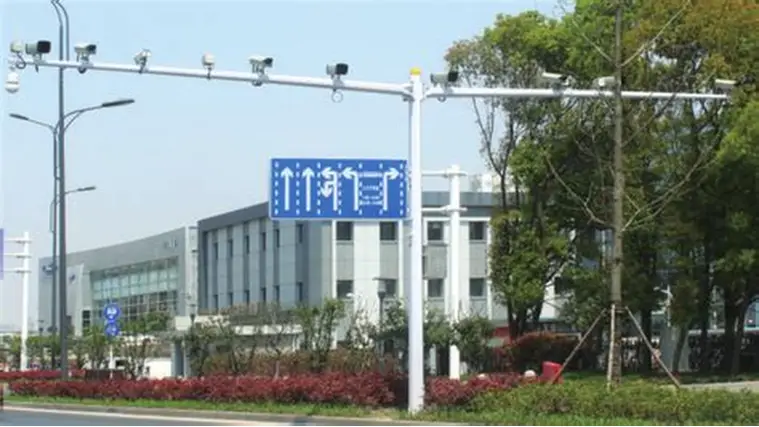





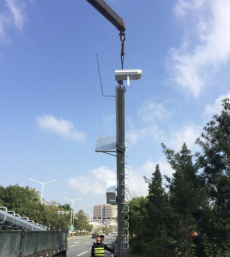
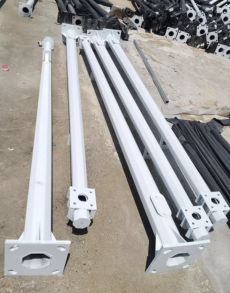
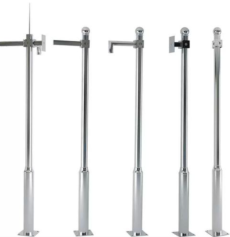
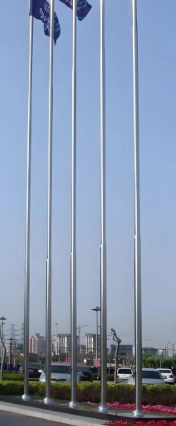
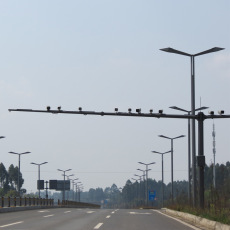
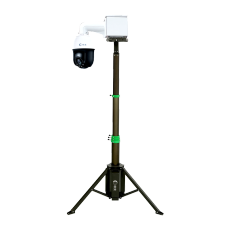
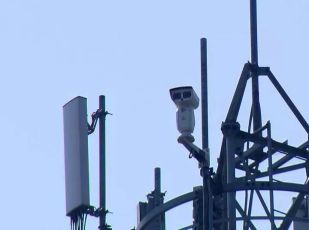
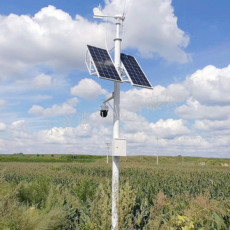
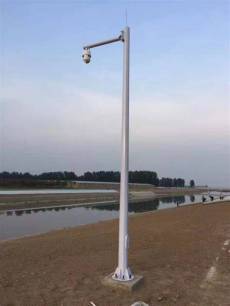
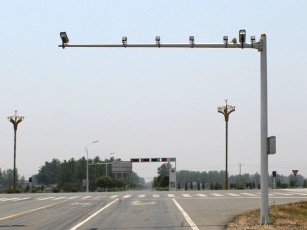
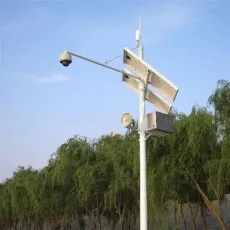
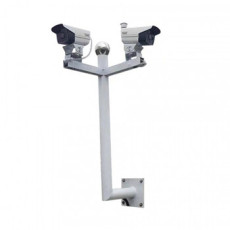
This surveillance pole stands out with its Q355 high-strength steel construction, offering 30% higher bending resistance compared to standard Q235 steel, ensuring stability even under heavy camera loads and strong winds. The dual-layer corrosion protection system—85μm hot-dip galvanization followed by 60μm outdoor polyester spraying—extends its service life to over 20 years, eliminating frequent replacement costs in coastal or industrial areas. An integrated lightning grounding bus complies with GB50057-2010 lightning protection standards, effectively diverting lightning strikes to protect connected cameras and wiring. The adjustable 2m cross arm allows flexible positioning of multiple cameras (dome, bullet, speed cameras) to cover blind spots, while the reinforced bottom flange with 8 M24 anchor bolts ensures a secure foundation. Pre-drilled cable holes streamline wiring, reducing on-site installation time by 40% compared to unprocessed poles.
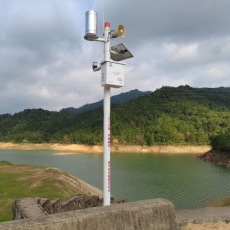
The pole boasts an overall height of 6 meters, with a tapered main pole measuring 114mm in diameter at the top and 219mm at the bottom, paired with a 2-meter cross arm of 89mm diameter and 3mm wall thickness. The corrosion protection layer consists of hot-dip galvanization with a minimum thickness of 85μm, meeting ISO 1461 standards, followed by a weather-resistant polyester spray coating in municipal gray. It holds a Level 16 typhoon wind resistance rating, capable of withstanding wind speeds up to 51m/s. The lightning protection system includes an integrated copper busbar connected to a ground electrode, achieving a ground resistance of ≤4Ω. The mounting flange is a 300*300*16mm Q235 steel plate with 8 M24 anchor bolt holes, compatible with concrete foundations of 800*800*1000mm. The pole is designed to support cameras weighing up to 15kg, including high-resolution 4K speed dome cameras, and comes with a 5-year factory warranty for material and workmanship defects.
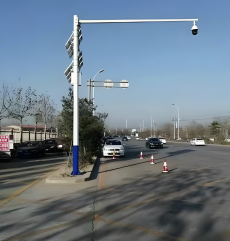
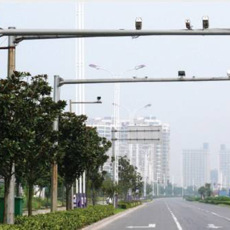
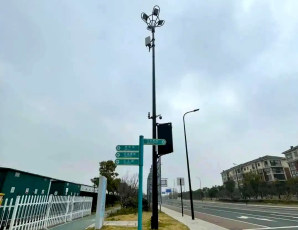
This surveillance pole is ideally suited for high-traffic urban scenarios, including city main roads, cross intersections, roundabouts, bus hubs, and urban expressways. It is also widely used in large public spaces such as city squares, central parks, and industrial park perimeters. Target customers include municipal transportation management bureaus, public safety departments, and infrastructure engineering contractors. Typical use cases include 24/7 traffic flow monitoring to optimize signal timing, automatic violation capture for speeding and red-light running, and emergency incident monitoring to enable rapid first responder deployment. In coastal regions, its high wind resistance and corrosion protection make it a reliable choice for coastal road monitoring, where salt spray and strong typhoons are common. Additionally, it can be integrated with smart city platforms to support data-driven traffic management and public safety initiatives.








 Post RFQ


 Chat
Chat


 ALL CATEGORIES