




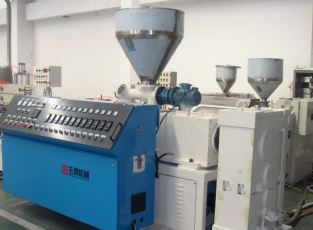


The primary feature of a multi-screw extruder is its exceptional surface renewal and devolatilization capability.Multiple engagement zones create a vast,constantly renewing material surface area,providing extremely short diffusion paths for small molecule volatiles(e.g.,monomers,solvents,moisture).Devolatilization efficiency can be an order of magnitude higher than twin-screw systems,making it particularly suitable for resin purification,solution concentration,and post-polymerization treatment.Secondly,its near plug-flow conveying characteristics and extremely narrow residence time distribution provide a near-ideal reactor environment for precisely controlled chemical reactions(e.g.,polymerization,grafting,controlled degradation),minimizing side reactions and ensuring extremely high product uniformity.Furthermore,the gentle and uniform shear field enables non-destructive mixing,better preserving the structural integrity of shear-sensitive additives(e.g.,long glass fibers,elastomers)or when dispersing nano-fillers.
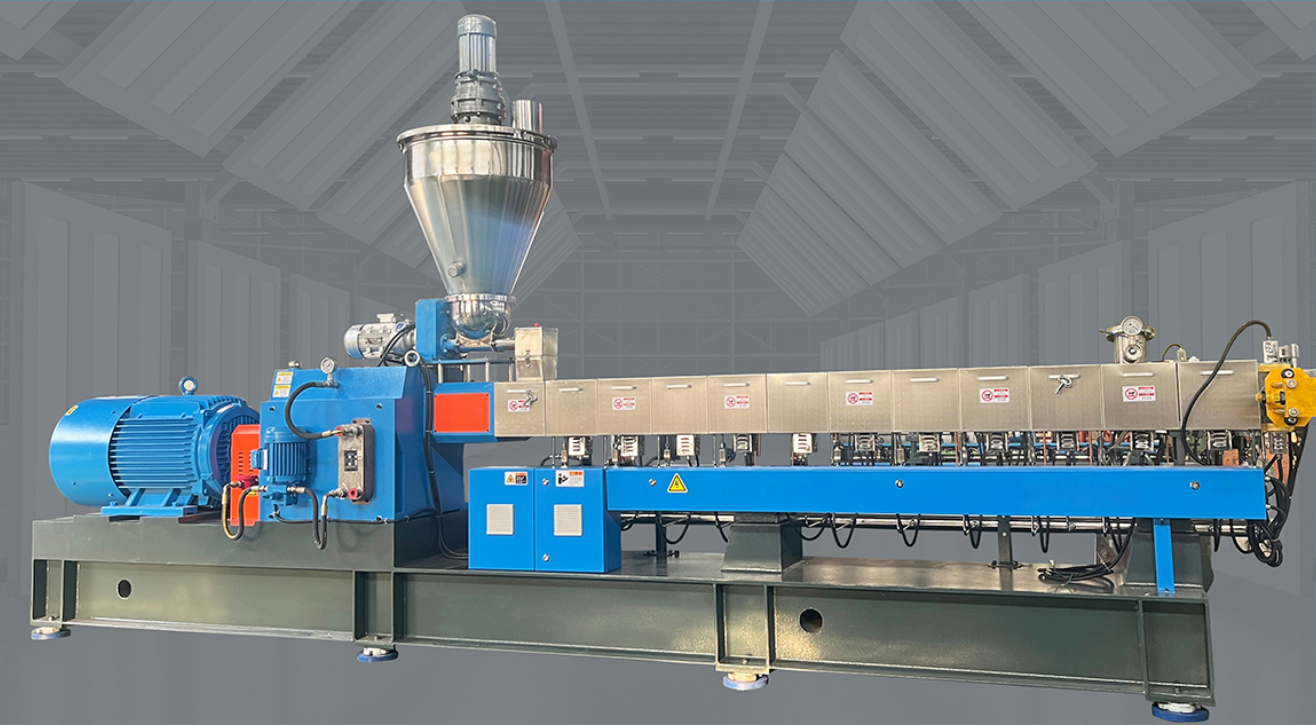
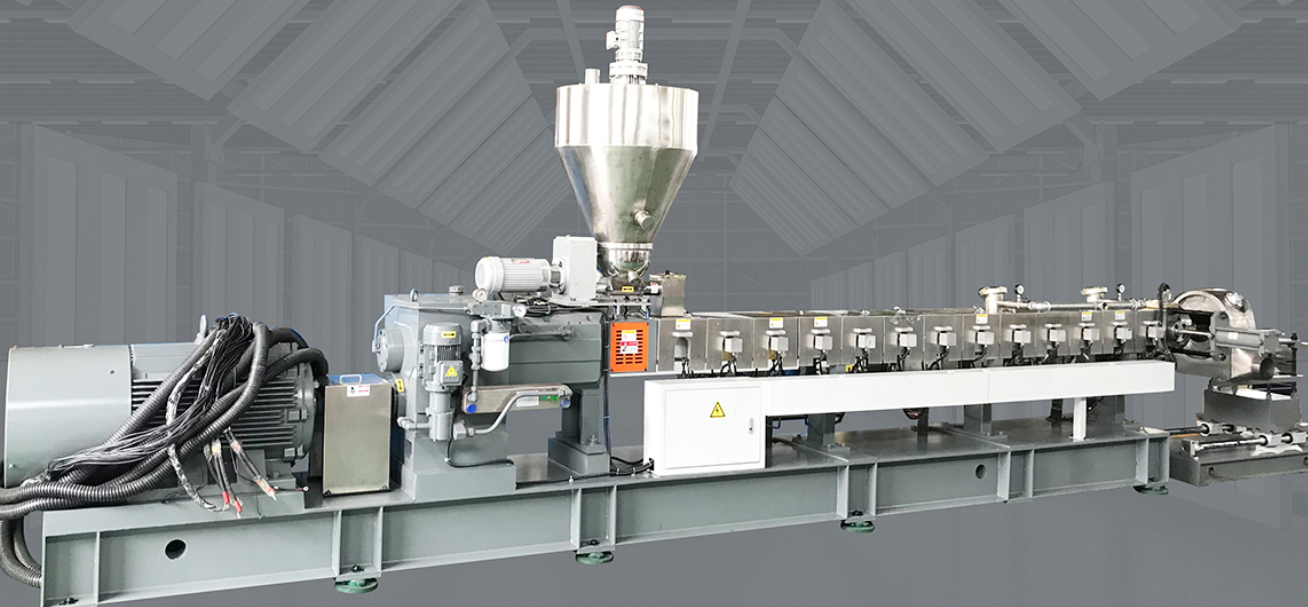
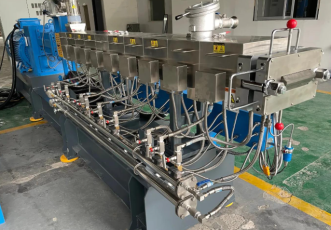
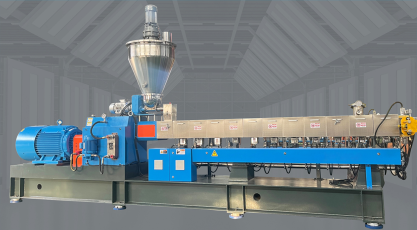
Taking a triple-screw extruder for devolatilization and polycondensation as an example.Its core is a triple-screw module with screws arranged in an equilateral triangle,fully intermeshing to form continuous,interconnected"∞"-shaped chambers.The drive system uses a heavy-duty main gearbox distributing power synchronously to three output shafts via a precision gear train.The barrel is assembled from dozens of independent modules in series,each customizable for specific functions(e.g.,main feed,multi-stage vacuum devolatilization,liquid reactant injection,side-stream sampling).The vacuum system is equipped with multi-stage steam ejectors or dry mechanical pump sets to achieve high vacuum levels(can be below 1 mbar).The machine is fully equipped with comprehensive online monitoring,including melt pressure,temperature,viscometers,and Process Analytical Technology(PAT)tools like Near-Infrared(NIR),enabling full closed-loop control.
The applications of multi-screw extruders are primarily concentrated in high-end specialty polymer fields with extreme requirements for mass transfer,heat transfer,and reaction kinetics.Its core applications include the efficient devolatilization and purification of polymers(such as the production of optical-grade PC and pharmaceutical-grade PVP),as well as the post-condensation and reactive extrusion of materials like nylon and polyester.This equipment is also a key technology for preparing high-performance alloys(e.g.,PA/PPO)and nanocomposites,enabling the uniform dispersion of high-load nano-fillers.Furthermore,it is capable of gently processing shear-sensitive materials such as thermoplastic polyurethane,silicone resins,and long glass fiber reinforced plastics,and is used in the production of high-value-added specialty masterbatches,concentrates,and polymer modifiers.







 Post RFQ


 Chat
Chat


 ALL CATEGORIES