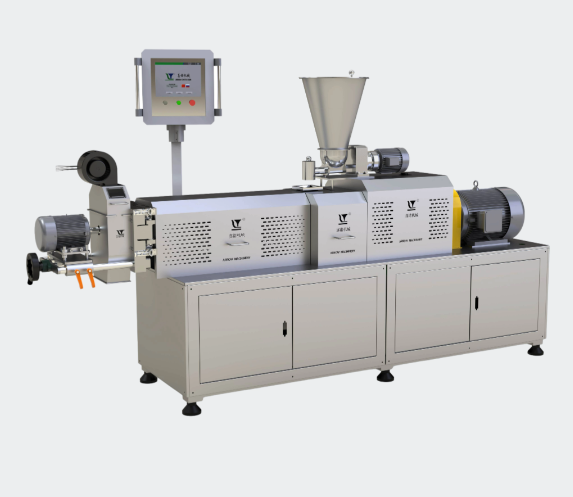
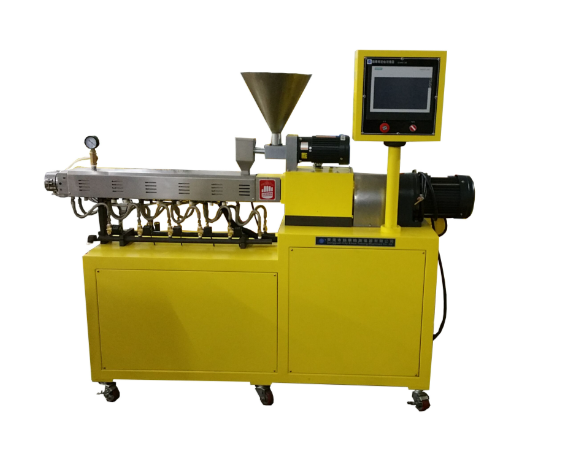





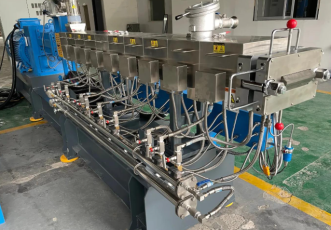
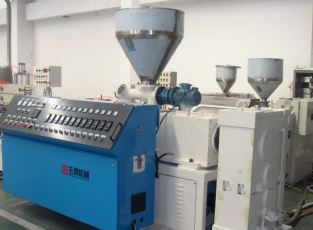


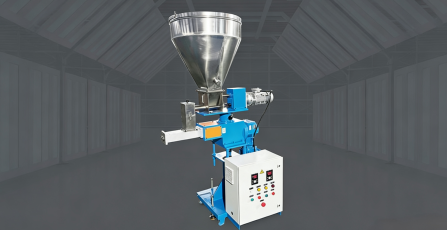
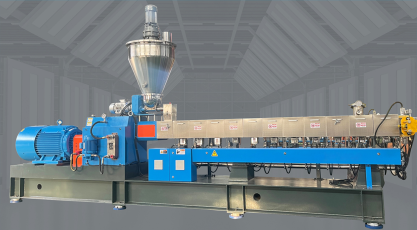
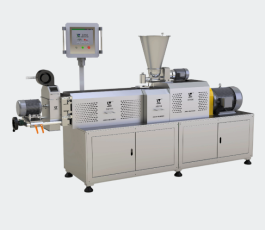
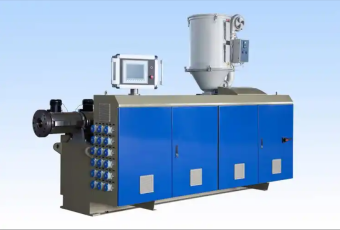
Its core value lies in "pilot-scale" experimentation and simulation. It can simulate industrial-scale twin-screw extruder process conditions (temperature, shear, residence time) with minimal material consumption (typically hundreds of grams), allowing experimental results to be directly scaled up to production equipment. Modular design allows free adjustment of screw configuration and process section length. High-precision sensors provide real-time data on torque, pressure, and temperature, offering reliable basis for R&D. Easy to clean thoroughly, suitable for frequent formula changes.
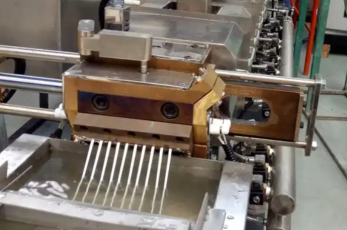
Employs the same co-rotating intermeshing principle as large machines but with higher manufacturing precision. The drive system responds quickly with control precision up to 0.1 rpm. Each barrel section has independent temperature control with ±1°C accuracy. Standard or optional equipment includes online sampling valves, strand pelletizers, or micro underwater pelletizing systems. Professional software not only controls the machine but also records, analyzes, exports, and compares all process curves, supporting research papers and process reports.
Applied in nearly all R&D fields involving extrusion processes: research on blending/modifying new engineering plastics/bio-based plastics, nanocomposite preparation, reactive extrusion process development, processing of polymer materials for drug carriers, color masterbatch formulation screening, functional fiber masterbatch development, 3D printing filament formula experiments, and polymer processing rheology studies. An essential tool for innovation-driven work.







 Post RFQ


 Chat
Chat


 ALL CATEGORIES