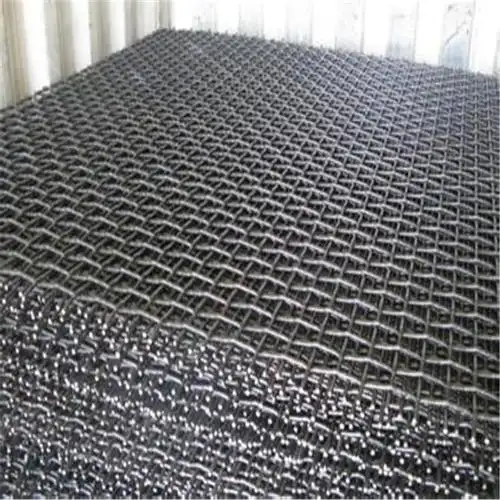
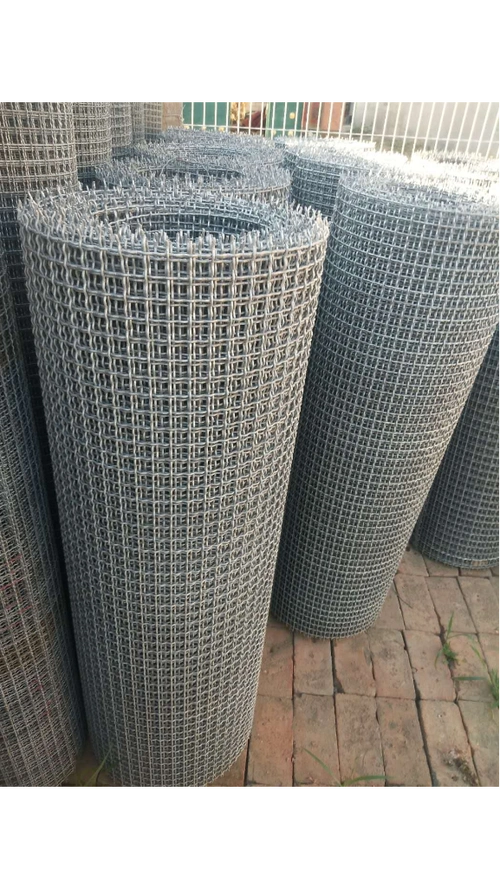


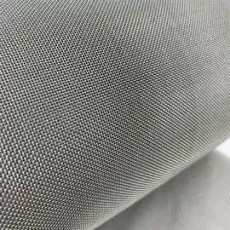
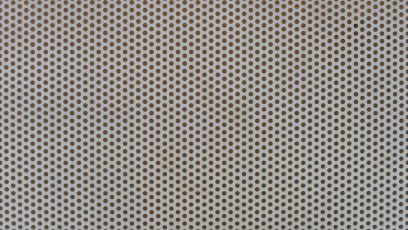
1. Extreme Corrosion Resistance: 316L marine-grade stainless steel contains molybdenum, which provides superior resistance to chloride ions, acids, and alkalis, making it suitable for coastal mining, chemical wastewater treatment, and other high-corrosion environments, far outperforming ordinary 304 stainless steel mesh. 2. High Tensile Strength: The 1.2mm thick wire and twill weave structure result in a breaking strength of ≥1200N/cm, which can withstand heavy ore impact and high load screening without deformation or tearing, solving the problem of frequent mesh replacement in mining operations. 3. Enhanced Wear Resistance: The twill weave structure overlaps wires tightly, reducing friction between the mesh and materials, extending service life by 2-3 times compared to plain weave mesh in high-wear scenarios such as ore screening. 4. Customizable Solutions: Offers optional hot-dip galvanization for additional corrosion protection, and supports custom widths and lengths to fit different industrial screening equipment, meeting diverse production needs. 5. Stable Screening Performance: The 10x10 mesh count and 1800μm uniform aperture ensure accurate ore classification, improving the efficiency of mineral processing and reducing the loss of valuable minerals.
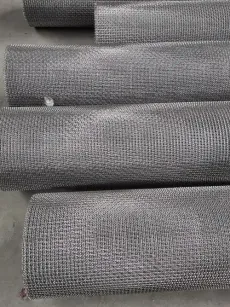
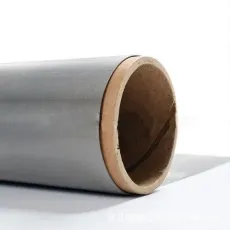
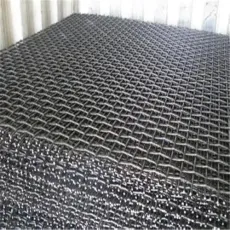
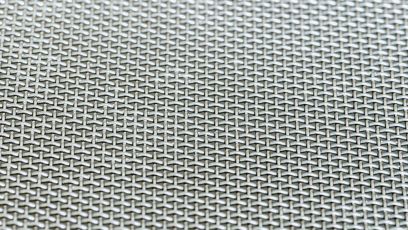
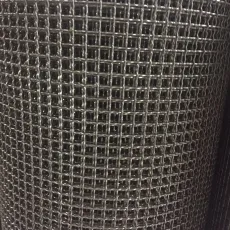
Constructed from 316L marine-grade stainless steel with a wire diameter of 1.2mm, this mesh offers exceptional tensile strength and corrosion resistance. The 10x10 mesh count corresponds to a uniform aperture size of 1800μm, suitable for screening large ore particles and tailings. Its standard width is 1.2m, with customizable lengths ranging from 5m to 30m to adapt to different industrial screening equipment dimensions. The twill weave structure provides a breaking strength of ≥1200N/cm, ensuring resistance to heavy impacts and high loads in mining and metallurgy applications. It is highly resistant to acids, alkalis, and chloride ions, suitable for use in pH 1-13 environments. Optional hot-dip galvanization treatment further enhances corrosion resistance for coastal or high-moisture environments. The mesh has a service life of 4-6 years in normal industrial scenarios, reducing replacement frequency and maintenance costs. It can be packaged in rolls or wooden crates for safe transportation. The maximum operating temperature is 900℃, suitable for high-temperature material screening. The surface is smooth with no sharp edges, ensuring safe installation and operation.
1. Mining Industry: Used for ore classification, tailings screening, and coal preparation, effectively separating different sizes of ore particles and improving mineral processing efficiency. 2. Metallurgy Production: Applied in steel and non-ferrous metal smelting to screen raw materials, remove impurities, and ensure the quality of smelted metals. 3. Chemical Processing: Used for solid-liquid separation in chemical wastewater treatment, filtering solid residues and corrosive chemicals without being damaged by harsh chemical environments. 4. Construction Aggregate Screening: Screens sand, gravel, and concrete aggregates to ensure uniform particle size and improve construction material quality. 5. Coastal Engineering: Due to its excellent corrosion resistance, it is used in coastal port construction for sediment screening and seawater filtration, withstanding the corrosive effects of seawater and salt spray. 6. Waste Recycling: Applied in municipal and industrial waste recycling to screen and classify different types of waste materials, improving recycling efficiency and reducing environmental pollution.







 Post RFQ


 Chat
Chat


 ALL CATEGORIES