


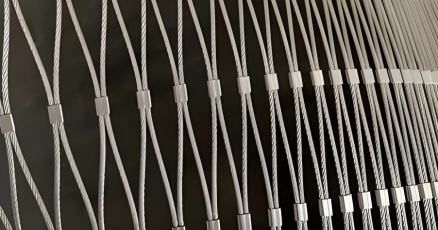
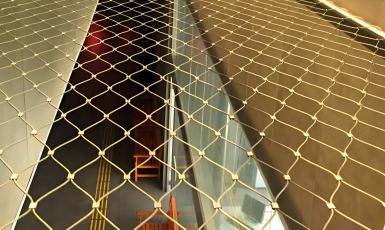
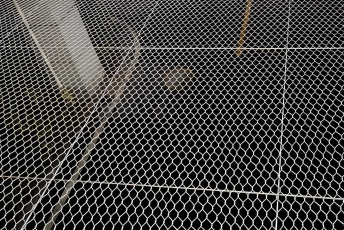
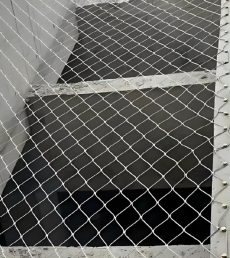
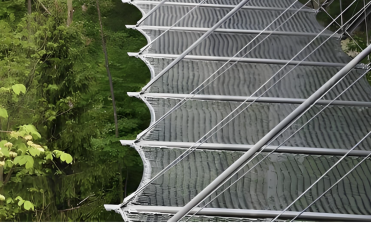
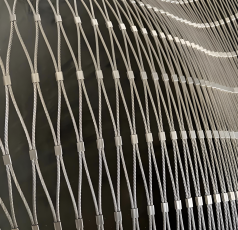
This duplex stainless steel mesh offers unique advantages for marine applications. The 2205 duplex stainless steel material provides exceptional corrosion resistance, with a salt spray resistance of 1000 hours, which is 3 times higher than 316L stainless steel, making it ideal for continuous exposure to saltwater and harsh marine environments. It has a high tensile strength of 950MPa, which is 40% higher than 316L stainless steel, making it resistant to deformation from wave impact and structural loads. The mesh also has excellent resistance to biofouling, preventing the growth of marine organisms like barnacles and algae, which reduces maintenance frequency and improves operational efficiency. It is compatible with marine coating systems, allowing for additional protection against corrosion and biofouling. The mesh undergoes a passivation process to enhance its corrosion resistance, and meets ABS and DNV GL marine engineering standards, ensuring consistent quality and reliability for critical offshore applications. It is also easy to install and can be customized into screen panels, filter cartridges, or aquaculture cages to meet specific application requirements.
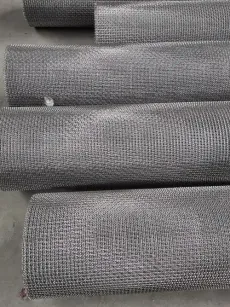
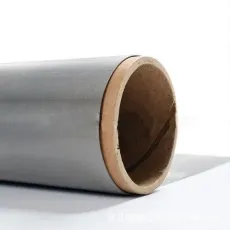
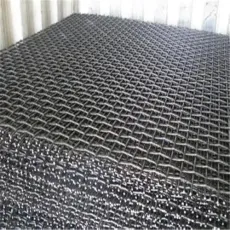
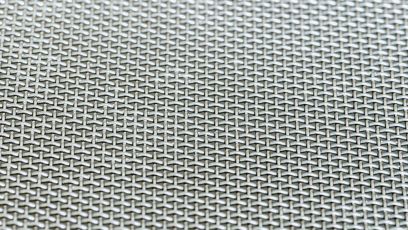
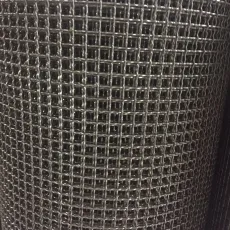
The Marine Engineering 2205 Duplex Stainless Steel Woven Mesh features technical parameters optimized for extreme marine environments. The wire diameter is 0.3mm, providing a balance between structural strength and filtration accuracy. With a mesh count of 30 per square inch, the nominal aperture measures 0.5mm, effectively capturing marine debris while allowing seawater flow. The salt spray resistance is 1000 hours, meaning it can withstand continuous exposure to saltwater without visible corrosion. The effective width ranges from 1.2m to 2.0m, with a standard roll length of 20m, suitable for large-scale offshore structures and aquaculture systems. It offers a maximum temperature resistance of 900℃, allowing it to withstand high-temperature welding and installation processes. The corrosion resistance grade is Class A++, meaning it can resist exposure to saltwater, acidic marine sediments, and chloride concentrations up to 35,000ppm. It has a tensile strength of 950MPa, ensuring it does not deform under wave impact loads of up to 1000kg per square meter. The mesh weighs 1.8kg per square meter, with a hardness of HRC 30, ensuring durability and resistance to wear from marine debris. It is certified by ABS and DNV GL, meeting international marine engineering standards.
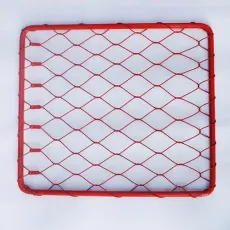
This marine-grade mesh is widely used across multiple offshore and marine applications. In offshore engineering, it is used as a screening mesh for offshore platforms, protecting equipment from wave impact and marine debris, and as a corrosion-resistant mesh for subsea pipelines and risers. In seawater desalination plants, it serves as a pre-filtration medium, removing marine debris, plankton, and algae to protect reverse osmosis (RO) membranes and improve desalination efficiency. In marine aquaculture, it is used to build aquaculture cages, containing fish and shellfish while allowing seawater flow to maintain water quality. Additionally, it is used in coastal protection structures as a wave energy dissipation mesh, reducing the impact of waves on seawalls and breakwaters. It can be customized into filter bags, screen panels, or subsea barriers to meet specific application requirements. It is suitable for both shallow and deep-sea applications, and can withstand extreme weather conditions such as hurricanes and typhoons.







 Post RFQ


 Chat
Chat


 ALL CATEGORIES