


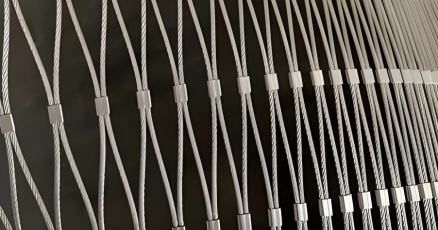
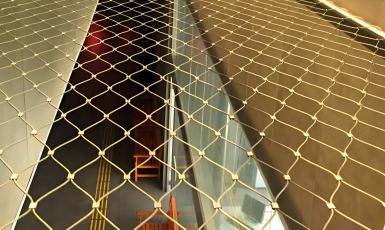
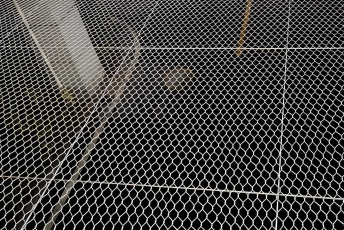
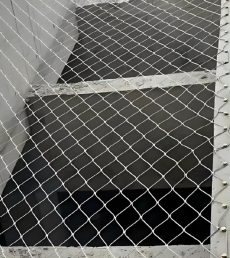

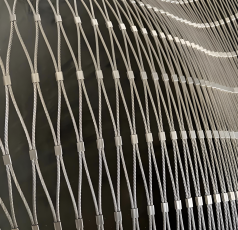
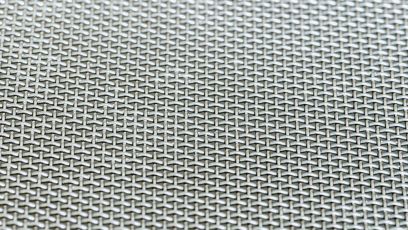
Unlike mechanical woven mesh, this product uses photolithography and chemical etching processes to create openings, eliminating wire deformation and stress concentrations, resulting in a flatness of ≤0.1mm per square meter—far exceeding the industry standard of 0.5mm. It offers ultra-high precision with opening size tolerances of ±0.005mm, enabling consistent filtration of micro-particles as small as 0.02mm, which is impossible for traditional woven mesh. The 304 stainless steel base material with a polished surface has excellent electrical conductivity and thermal stability, making it suitable for high-temperature electronic manufacturing environments up to 350℃. Its smooth, burr-free edges prevent scratching of sensitive electronic components, such as silicon wafers and sensor chips, while the sealed edge treatment prevents wire detachment. The product also supports custom pattern design, including non-uniform opening layouts, to meet specific airflow or filtration requirements of high-tech equipment.
This etched mesh is made of 0.05mm thick 304 stainless steel foil, balancing structural rigidity and ultra-thin design for integration into compact electronic devices. The minimum opening size is 0.02mm, with a maximum opening size of 5mm, and custom mesh patterns are available upon request. The surface roughness is Ra≤0.4μm, meeting the cleanliness requirements of Class 100 cleanrooms in semiconductor manufacturing. It has a temperature resistance range of -20℃ to 350℃, maintaining dimensional stability in extreme temperature fluctuations common in aerospace applications. The product holds ISO 9001 quality management certification and IPC-A-610 electronic component assembly standards, ensuring consistent quality across all batches. Standard sheet sizes are 300x300mm and 600x600mm, with custom cutting and laser marking services available for specific equipment fitting. Each square meter weighs approximately 0.4kg, making it lightweight and easy to install in precision devices.
This precision etched mesh plays a critical role in multiple high-tech scenarios: in semiconductor manufacturing, it is used as a filter in cleanroom air conditioning systems to remove 0.02μm micro-particles, ensuring a dust-free environment for chip production; in aerospace, it serves as an airflow control mesh for satellite sensor systems, maintaining stable pressure and temperature in closed electronic compartments; in medical devices, it is integrated into precision drug delivery systems and diagnostic equipment to filter micro-particles in liquid reagents, ensuring test accuracy; in electronic battery manufacturing, it acts as a current collector mesh for high-density lithium-ion batteries, improving energy conversion efficiency. It is also used in optical instrument lens protection, preventing dust accumulation while maintaining light transmittance, and in automotive electronic control units to filter cooling system impurities, extending component service life. The product’s customizability makes it adaptable to niche high-tech applications that require non-standard mesh configurations.








 Post RFQ


 Chat
Chat


 ALL CATEGORIES