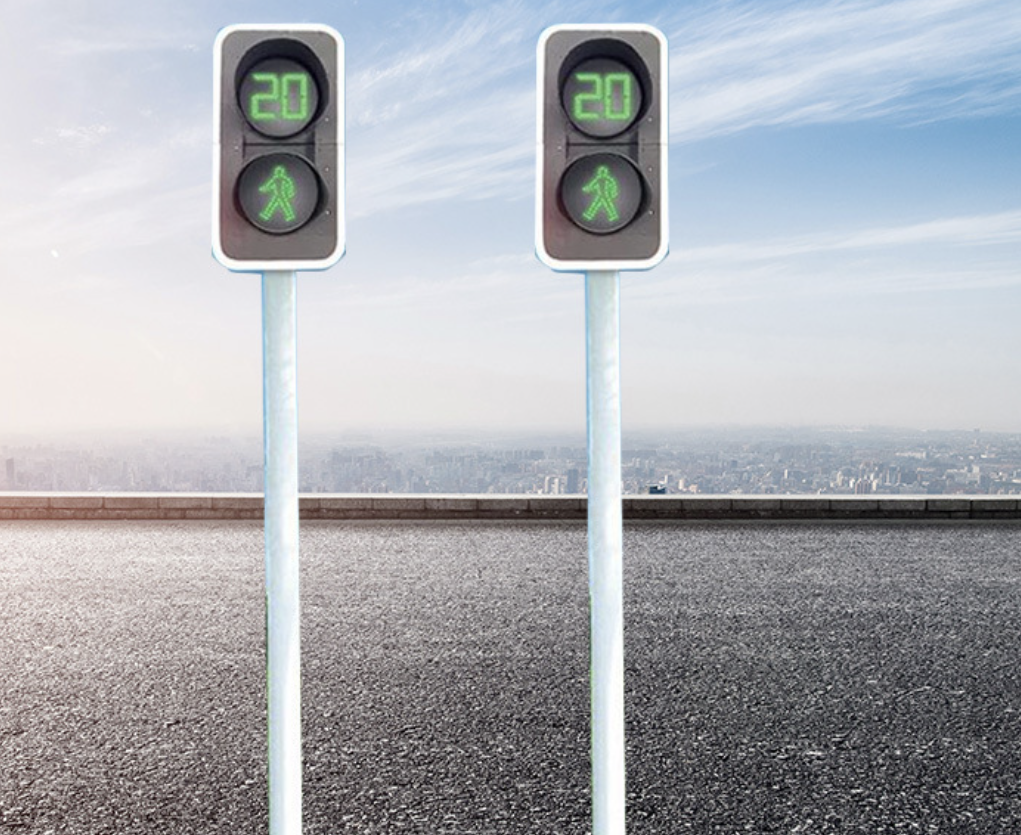






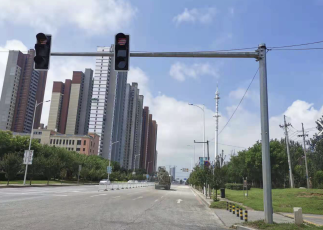
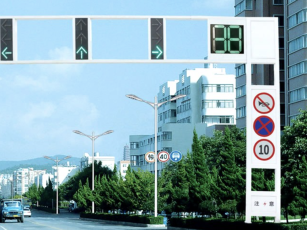
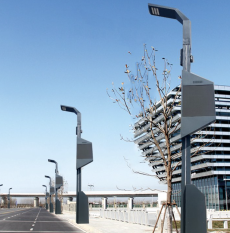
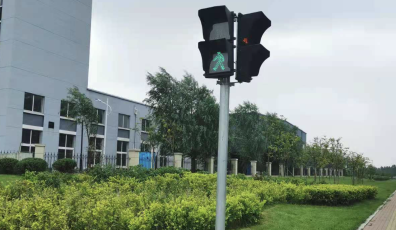
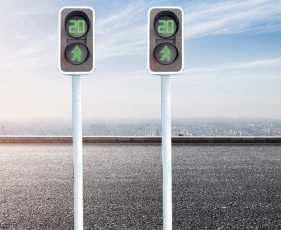
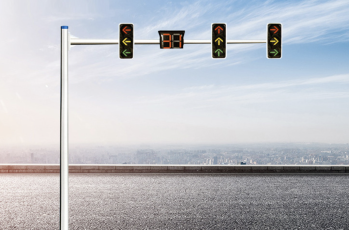
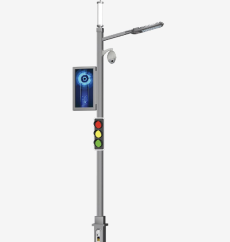
The key advantage of this pole is its 2.8-meter low height, which places the pedestrian signal display at a 1.5-2.0 meter height, matching the average eye level of pedestrians, helping to address visibility issues found with traditional high poles where pedestrians cannot clearly see signal indications. The round, compact design takes up minimal sidewalk space, avoiding obstruction of pedestrian flow. It supports solar-powered operation, with a built-in lithium battery that can store enough power for 7 days of continuous use without sunlight, making it suitable for remote pedestrian zones. The pedestrian button trigger function allows pedestrians to request a green light, reducing unnecessary waiting time and improving pedestrian crossing efficiency. The polyester powder coating provides reliable anti-corrosion protection, with customizable colors to match urban landscape aesthetics.
This pedestrian signal pole has an overall height of 2.8 meters, with a round pole body of 114mm diameter and 4mm wall thickness. The total weight of the pole is approximately 55 kilograms. It has a wind resistance rating of 100 km/h and a design lifespan of 25 years. The polyester powder coating layer has a minimum thickness of 60μm, passing a 500-hour salt spray test. The pedestrian signal display is 300*300mm in size, with a brightness of at least 500 cd/㎡, ensuring clear visibility in strong sunlight. It supports both AC 220V and solar-powered operation, with a 10W solar panel and 20Ah lithium battery for solar models. The pedestrian button has a response time of less than 0.5 seconds, and the signal switching time can be adjusted based on pedestrian flow. It has an IP65 protection rating for outdoor use.
This pole is primarily designed for urban commercial district pedestrian crossings, school surrounding roads, community entrances, hospital surrounding walkways, and tourist scenic area pedestrian streets, where pedestrian traffic density is high. In school surrounding areas, it can be integrated with school bell systems to automatically adjust signal timing during school opening and closing hours, ensuring student safety. In commercial districts, it can be connected to intelligent pedestrian management systems to implement pedestrian priority control during peak pedestrian hours, reducing pedestrian-vehicle conflicts. It is also suitable for old urban area renovation projects, replacing traditional high pole pedestrian signals to improve pedestrian visibility and safety. Additionally, its solar-powered model is ideal for remote tourist scenic area pedestrian paths, where power access is limited.










 Post RFQ


 Chat
Chat


 ALL CATEGORIES