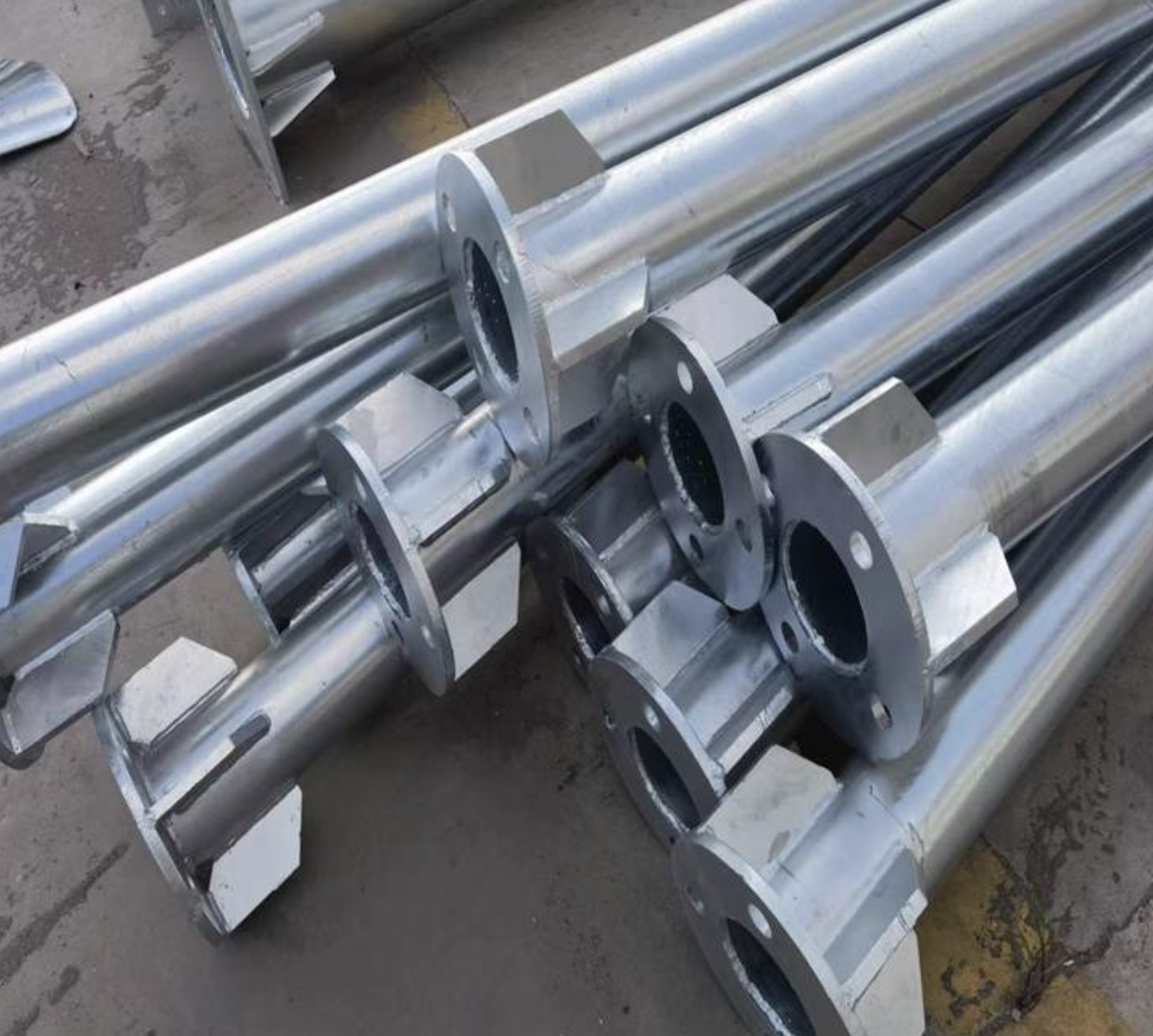
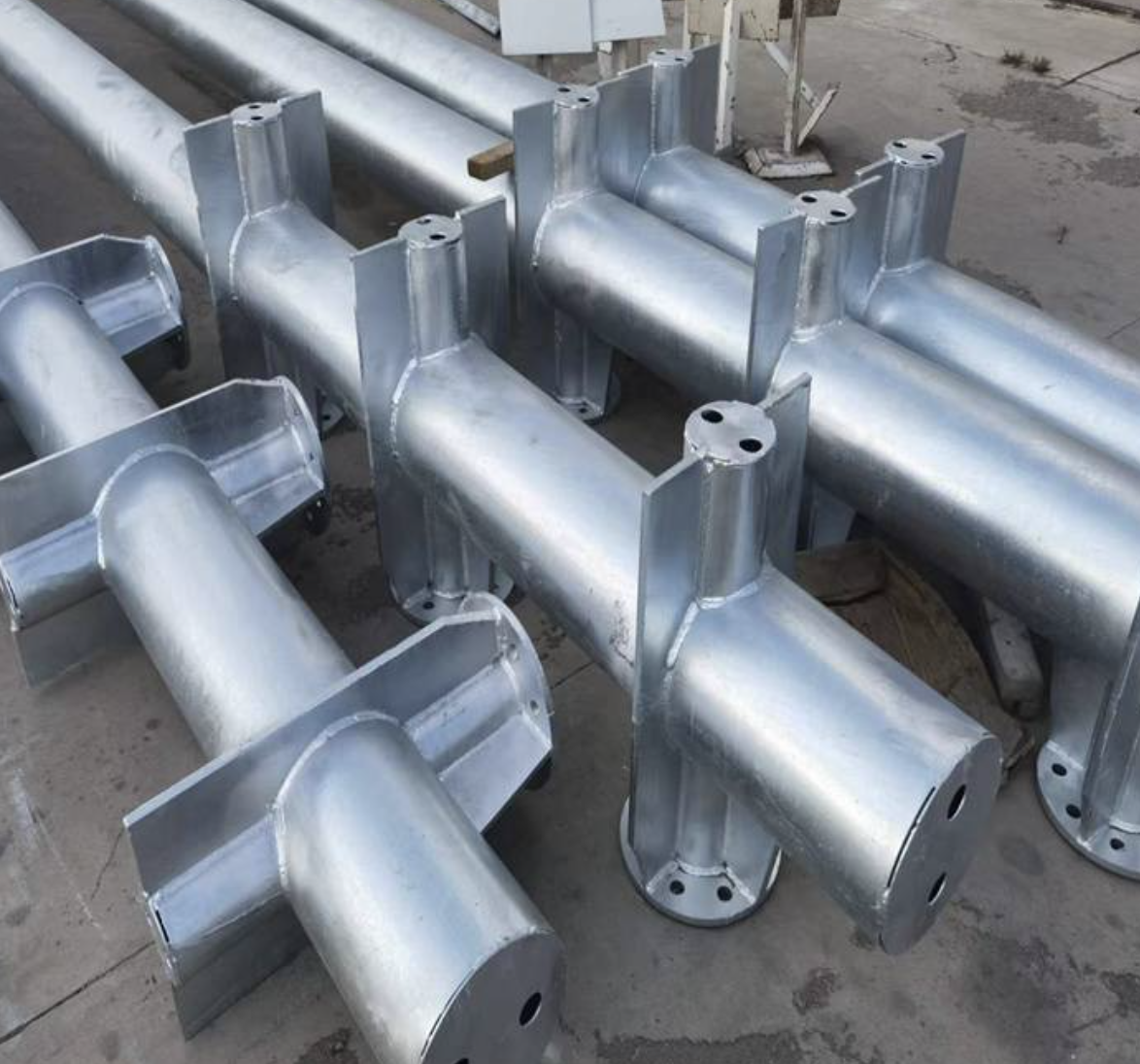





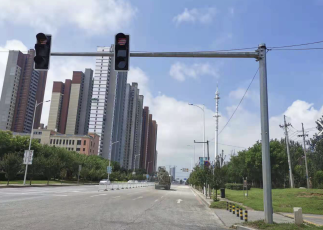
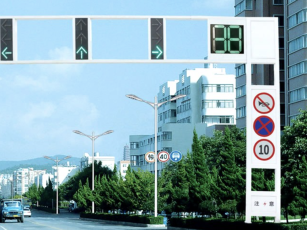
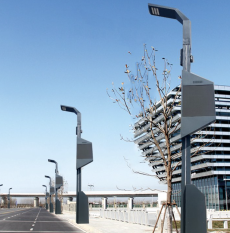
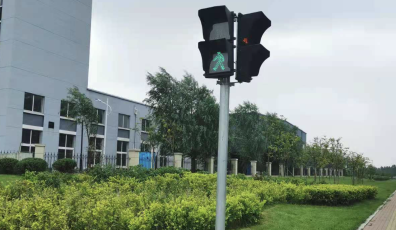
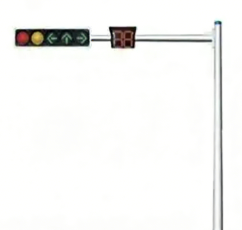
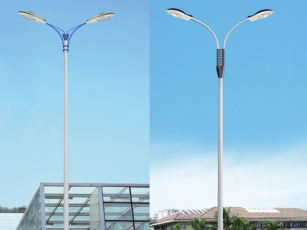
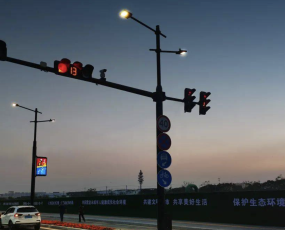
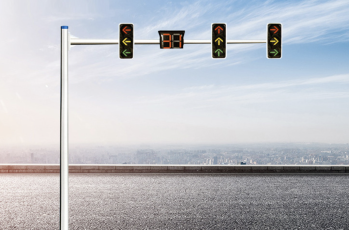
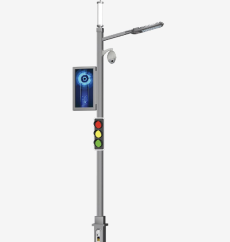
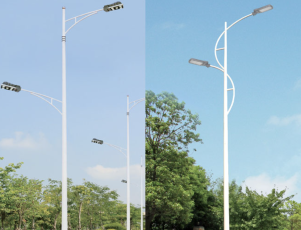
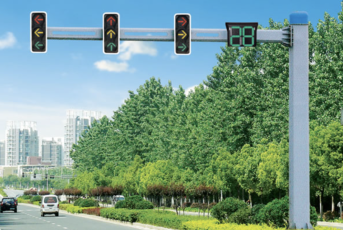
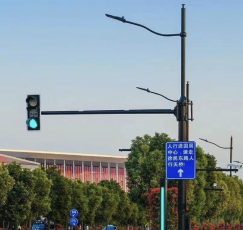
The key advantage of this pole is its 304 stainless steel material, which provides excellent resistance to salt spray, humidity, and chemical corrosion, making it ideal for coastal and port areas where carbon steel poles rust rapidly. The tapered, double-arm design offers balanced structural stability and wide signal coverage for two-way lanes, eliminating the need for separate poles on each side of the road. The passivation and polishing treatment creates a smooth, glossy surface that resists dust accumulation and is easy to clean, maintaining its aesthetic appearance for decades. It also has a wind resistance rating of 130 km/h, capable of withstanding category 1 typhoon conditions. The modular mounting system allows quick installation of signal heads and other devices, reducing on-site construction time.
This signal pole has an overall height of 9 meters, with a tapered pole body that transitions from a 180mm top diameter to a 360mm bottom diameter, featuring a uniform 6mm wall thickness. The two cantilevers each measure 3 meters in length, with a 5mm wall thickness and a maximum load capacity of 120kg each. The total weight of the pole is approximately 380 kilograms. It has a wind resistance rating of 130 km/h and a design lifespan of 40 years. It passes a 1000-hour neutral salt spray test without corrosion, meeting ASTM A312 stainless steel standards. The mounting method is pre-buried, requiring a 1.8-meter deep concrete foundation. It is compatible with AC 220V/110V power supplies and has an IP66 protection rating for outdoor use.
This pole is primarily designed for coastal city main roads, port terminal surrounding roads, cross-sea bridge approach roads, and island tourist scenic areas, where high salt content and humidity cause rapid corrosion of traditional carbon steel poles. It is also suitable for high-end commercial districts, coastal resort areas, and yacht club access roads, where aesthetic appearance and durability are both important. In port areas, it can be integrated with port traffic management systems to control vehicle access and guide container truck flows, ensuring safe and efficient port operations. Additionally, its maintenance-free design makes it ideal for remote island areas where regular maintenance is difficult.









 Post RFQ


 Chat
Chat


 ALL CATEGORIES