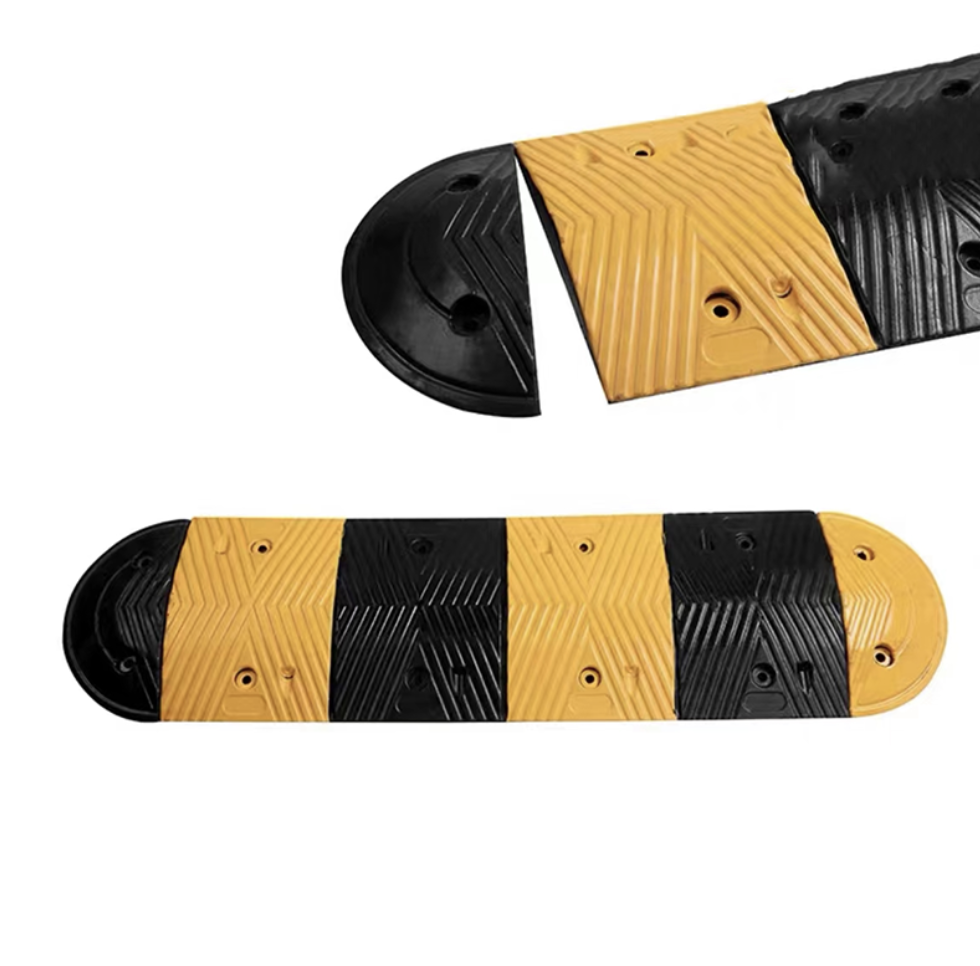





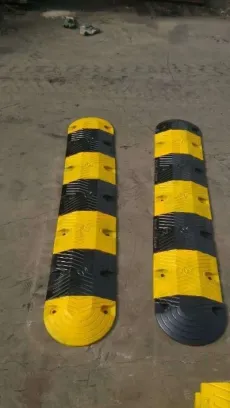
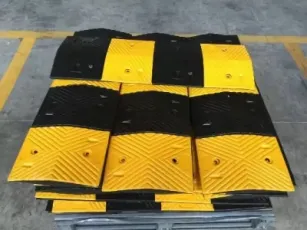
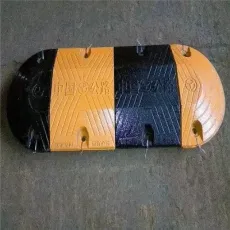
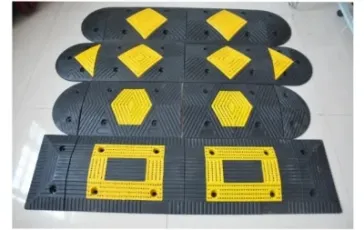
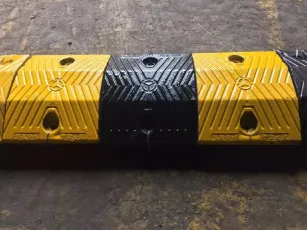
The core differentiation of this speed bump is its interlocking modular design, which enables quick splicing and disassembly without specialized tools, solving the pain point of fixed-length speed bumps not fitting irregular road layouts. The modified rubber material is infused with anti-slip additives, increasing friction between tires and the speed bump surface by 25%, reducing the risk of vehicle skidding in wet conditions. The 100-ton load capacity makes it suitable for both heavy industrial vehicles and passenger cars, expanding its application scope. The interlocking buckles are made of high-strength engineering plastic, ensuring tight connections between modules without gaps or shifting during vehicle rolling. Additionally, the product can be easily cleaned and repaired by replacing damaged individual modules, reducing maintenance costs compared to full-unit replacement.
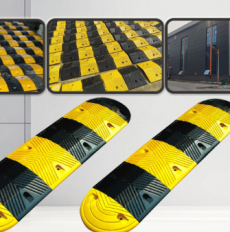
Each single module measures 500mm in length, 300mm in width, and 50mm in height, with a net weight of 9kg. The modified rubber material has a Shore hardness of 62±5 HA, providing excellent wear resistance and impact absorption. Temperature resistance ranges from -40℃ to 80℃, ensuring stable performance in most climate zones. The interlocking buckle design uses a dovetail structure, with a connection strength of 5 tons per buckle, preventing module separation under heavy load. The maximum spliced length allows customization to match any road width or shape. Installation requires 2 M12 expansion bolts per module, with pre-drilled holes aligned with the buckle positions for seamless fixation. The product’s reflective strips are made of high-brightness PET material, with a reflectivity of 780cd/lx·m². It complies with SGS safety and quality standards.
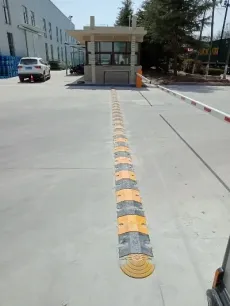
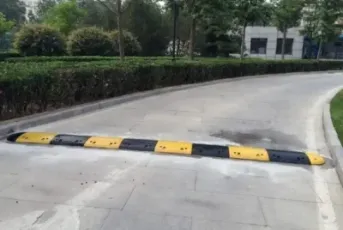
This modular speed bump is widely used in temporary construction zones where traffic routes change frequently, irregular factory roads with non-standard widths, scenic area pedestrian-vehicle mixed paths, and parking lots with variable bay layouts. It is also suitable for event venues with temporary traffic control, university campuses with diverse road shapes, and rural roads with narrow or curved sections. In these scenarios, it can be quickly assembled to custom lengths, providing flexible speed control without modifying road surfaces permanently. Its easy disassembly allows for relocation to different areas as traffic needs change, making it a cost-effective solution for short-term and long-term traffic management projects.









 Post RFQ


 Chat
Chat


 ALL CATEGORIES