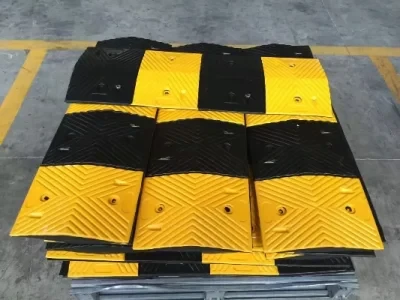
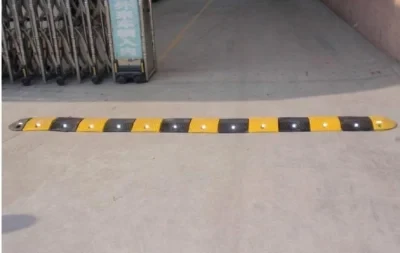





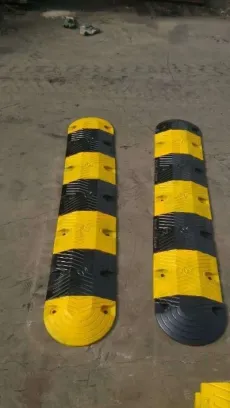
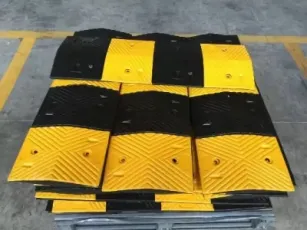
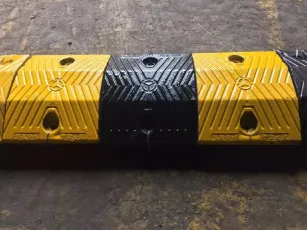
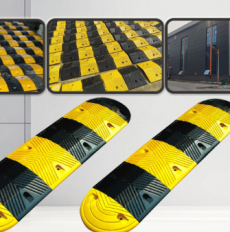
The standout advantage of this residential speed bump lies in its ultra-low noise performance, which solves the long-standing issue of traditional hard speed bumps disrupting community quiet. The vulcanized rubber material enhances wear resistance and tensile strength, ensuring no cracking or deformation even under 50,000+ vehicle passes. Its surface features deep non-slip textures, increasing tire friction to prevent skidding in rainy or snowy conditions, further boosting driving safety. The black-yellow coating is infused with UV-resistant additives, resisting fading after prolonged sunlight exposure to maintain high visibility. Unlike heavy metal alternatives, it is lightweight for easy transportation and on-site cutting to fit custom road widths, reducing installation time and labor costs. Additionally, its elastic material minimizes impact on vehicle suspensions, protecting both the bump and passing vehicles from premature wear.
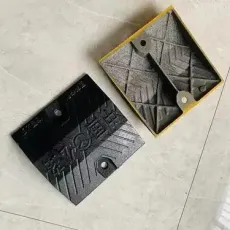
Measuring 1000mm in length, 350mm in width, and 50mm in height, this speed bump has a dimensional tolerance of ±2mm to ensure consistent product quality. Made from a 70% natural rubber and 30% styrene-butadiene rubber formulation, it achieves a Shore hardness of 65±5 HA, balancing shock absorption and speed reduction effectiveness. Pre-drilled 12mm diameter installation holes match standard M10 expansion bolts, enabling firm fixation on asphalt or concrete surfaces. Its load capacity is tested to exceed 10 tons in static and dynamic load tests, complying with national traffic facility safety standards. The operating temperature range spans from -40℃ to 60℃, ensuring normal performance in frigid northern regions and hot southern climates. The product has passed ISO 9001 quality certification, with each unit undergoing pressure and wear resistance testing before leaving the factory.
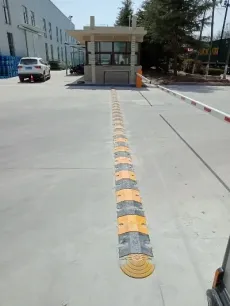
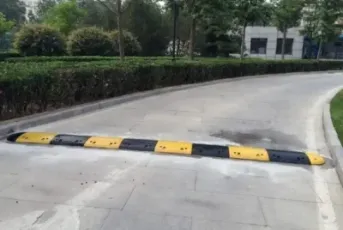
This speed bump is ideal for a wide range of low-speed traffic management scenarios. In residential communities, it can be installed on internal roads near high-rise buildings, parking lot entrances, and children's activity areas to prevent speeding vehicles from endangering residents, especially the elderly and children. At primary and secondary schools, it is deployed within 50 meters of school gates to enforce speed limits during morning and afternoon peak hours, reducing the risk of student traffic accidents. It also suits pedestrian streets, commercial plazas, and urban villages, where mixed pedestrian and vehicle traffic is common, guiding vehicles to travel at safe speeds. Additionally, it is suitable for hospitals, nursing homes, and quiet office parks, as its low-noise operation avoids disrupting patients, elderly residents, or office workers.










 Post RFQ


 Chat
Chat


 ALL CATEGORIES