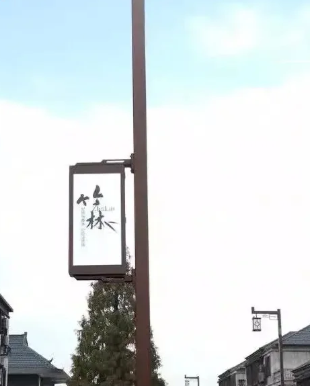
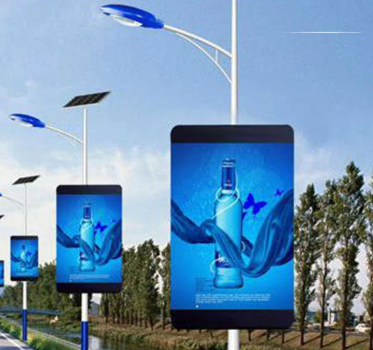





As a component of smart city infrastructure, this display is built for resilience, intelligence, and integration. Its features focus on withstanding continuous outdoor operation: robust housing (IP66), vandal resistance (IK08), and a wide operating temperature range. A key smart feature is ambient light-sensing auto-dimming, which optimizes readability while conserving energy and reducing light pollution at night. It is designed for network integration, featuring multiple communication backhauls (Ethernet, 4G/5G) to connect to a central cloud management platform. This allows it to function not just as a display, but as an interactive node that can potentially integrate data from other pole-mounted sensors (air quality, traffic, noise).
These displays are relatively compact, with sizes tailored to pedestrian viewing distances. They are powered directly from the streetlight’s mains electricity or via Power over Ethernet (PoE) where available. The cooling system is entirely passive (fanless) to ensure silence, prevent dust intake, and maximize reliability. The management software enables remote scheduling of content (e.g., ads by time of day, public service messages), real-time monitoring of screen health (temperature, brightness), and instant broadcasting of emergency alerts. Mounting is accomplished via specially designed clamps or flanges that securely attach to standard pole diameters, often allowing for easy tilt and rotation adjustment during installation.
Deployed as part of “smart pole” or “smart kiosk” initiatives, this product modernizes public communication. In city centers and pedestrian zones, it provides wayfinding maps, local event information, and public transit schedules. At bus stops, it shows real-time arrival information. In parks and public squares, it displays community notices, weather, and safety information. It serves as a hyper-local digital advertising platform for nearby businesses. During emergencies, it becomes a critical channel for authorities to disseminate evacuation routes or safety instructions. Its integration capability also makes it a potential hub for public Wi-Fi or environmental monitoring data display.











 Post RFQ


 Chat
Chat




 ALL CATEGORIES