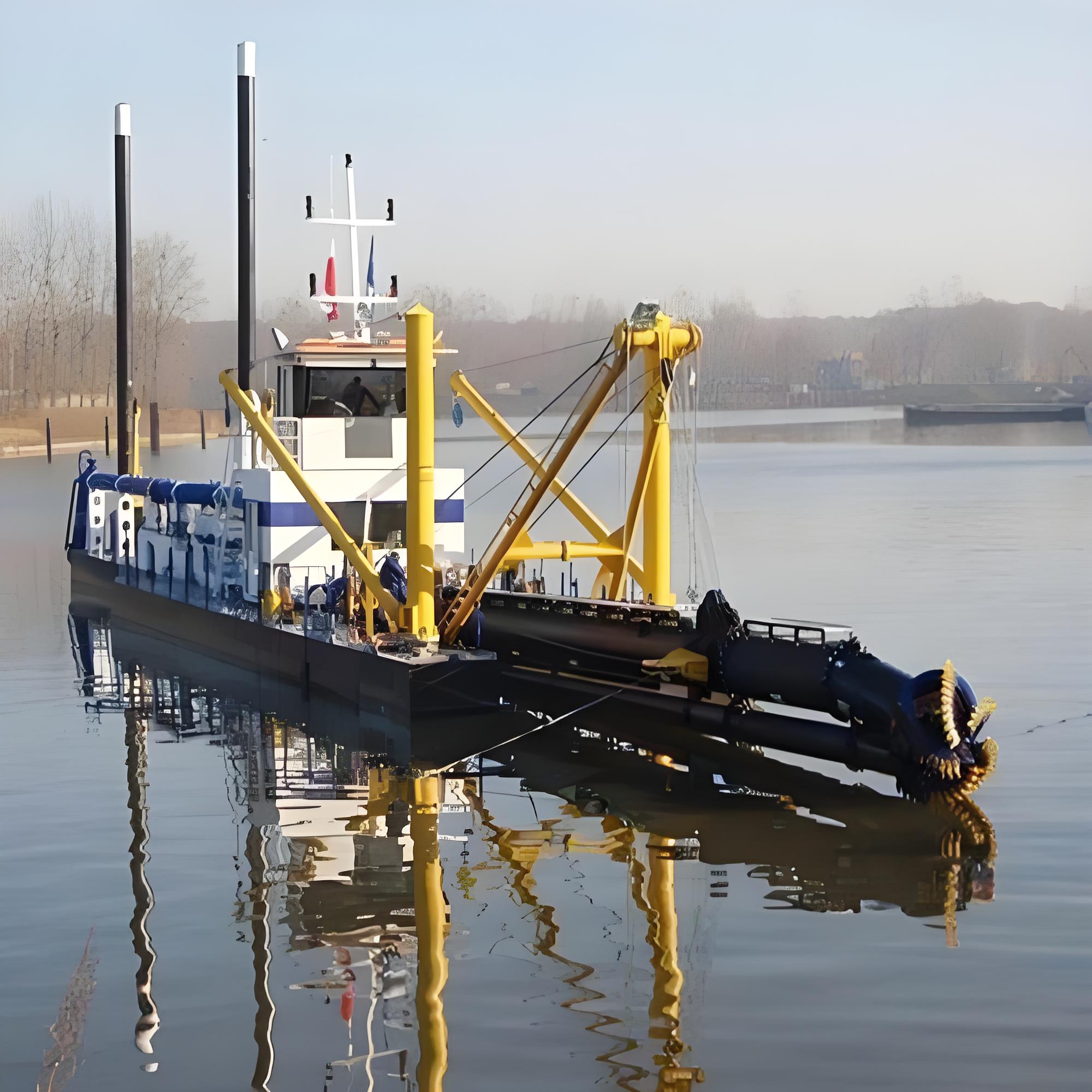





The equipment adopts HDPE lightweight hull, which greatly reduces the overall weight and facilitates cross-regional transportation via pickup trucks or small trailers. It is equipped with a gasoline/diesel dual-power system, adapting to energy supply needs of different usage scenarios. The dual-mode control system supports manual operation and remote control, reducing the operation difficulty of operators. The foldable cutter head can quickly adapt to underwater operations with different sediment thickness without additional tools for adjustment. The IP65 protection level ensures circuit safety of the equipment during wading operations, reducing failure rate. With a dredging capacity of 30 cubic meters per hour, it can efficiently complete the silt removal work of small water areas, with efficiency increased by more than 20 times compared with manual silt removal.
Detailed technical parameters include maximum operating water depth of 3.5 meters, maximum dredging depth of 5 meters, main engine power of 15 kilowatts, sludge discharge distance of 150 meters, total weight of 850 kilograms, hull made of HDPE high-density polyethylene material, slurry discharge pipe diameter of 100 millimeters, dual-mode power supply of gasoline/diesel, dual control modes of manual and wireless remote control, protection grade of IP65, transport size of 220*80*110 centimeters, dredging capacity of 30 cubic meters per hour. The whole equipment is treated with antirust and anticorrosion to ensure durability during long-term wading operations, and it is equipped with a special transportation bracket for convenient loading, unloading and transfer.
It is mainly applicable to silt removal of small farm ponds, maintenance of community landscape pools, dredging of rural small rivers, auxiliary dredging of small municipal drainage pipelines, silt removal of shallow water areas of reservoirs and other scenarios. It is suitable for individual farmers, community properties, rural grassroots municipal departments, which can quickly solve problems such as poor drainage, insufficient water storage and water eutrophication caused by siltation in small water areas.







 Post RFQ


 Chat
Chat


 ALL CATEGORIES