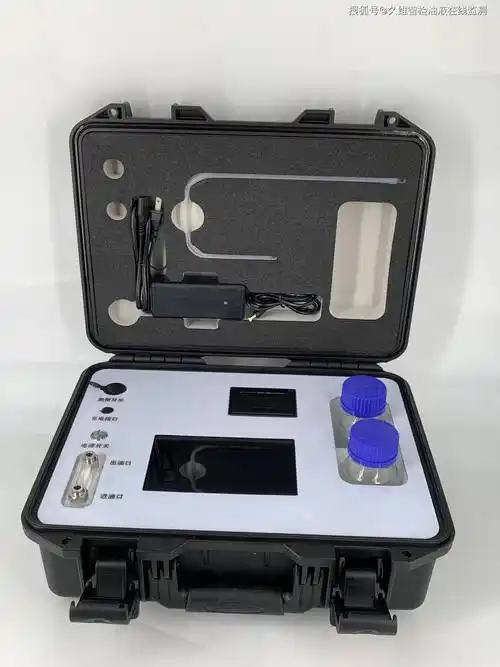


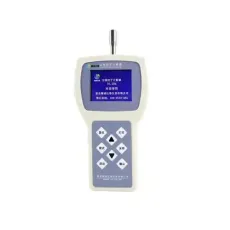
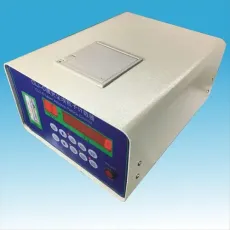
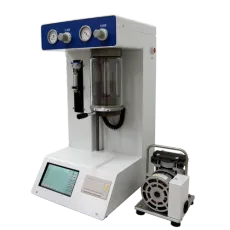
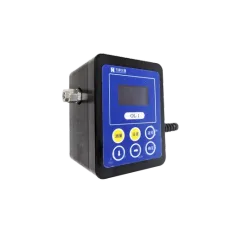
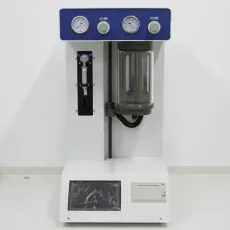
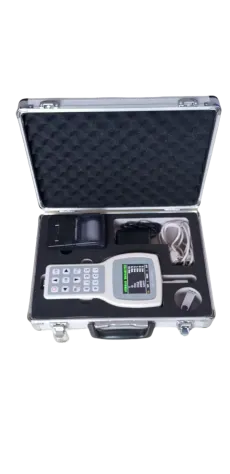
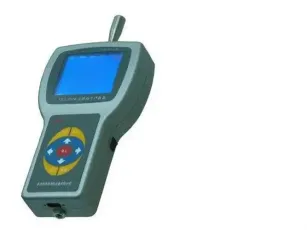
The core highlight is the low-power semiconductor laser sensor with a detection accuracy of 0.5μm, solving the pain points of traditional particle counters being bulky and unable to conduct on-site testing. It is equipped with Bluetooth 5.0 wireless transmission function, which can synchronize data to the mobile terminal in real time for analysis and storage. The IPS high-definition screen supports real-time viewing of particle size distribution curves, and the built-in intelligent data analysis algorithm can automatically generate detection reports and export them. The body is made of drop-resistant ABS material with IP54 waterproof rating, adapting to complex outdoor working environments. Compared with similar products, its weight is reduced by 30%, making it easier to carry.
Detailed parameters: The detection particle size range covers 0.5μm to 100μm with 16 particle size channels. The liquid flow rate is stably controlled at 100mL/min with an error of ≤±2%. It has a built-in 3.7V 2000mAh rechargeable lithium battery with a continuous working time of up to 8 hours. The body dimensions are 120*70*35mm with a net weight of 320g. It supports USB data cable transmission and Bluetooth 5.0 wireless transmission, compatible with Windows and MacOS systems. It has an automatic calibration function and can complete self-inspection when turned on. The data storage capacity can reach 50000 groups of detection data, supporting one-click export to CSV format. It has passed CE and FCC certifications, meeting the safety standards of the EU and US markets. The sampling method is built-in peristaltic pump automatic sampling without manual sampling.
It is suitable for hydraulic equipment maintenance, lubricating oil quality testing, water quality particle monitoring in pure water preparation plants, contamination detection of aerospace hydraulic systems, marine fuel particle analysis and other scenarios. It can quickly locate tiny particle pollution sources in fluid systems, help enterprises prevent equipment wear and faults in advance, reduce maintenance costs, and meet the requirements of ISO 4406, NAS 1638 and other industry pollution grading standards.








 Post RFQ


 Chat
Chat




 ALL CATEGORIES