

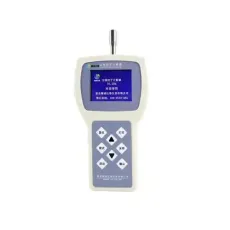
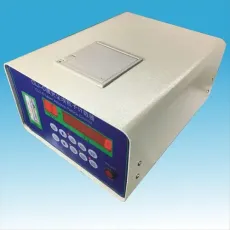
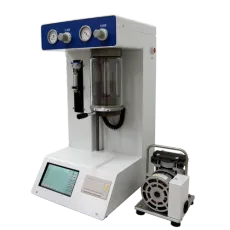
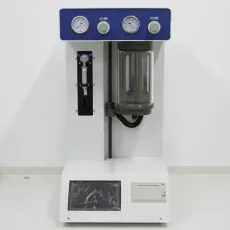
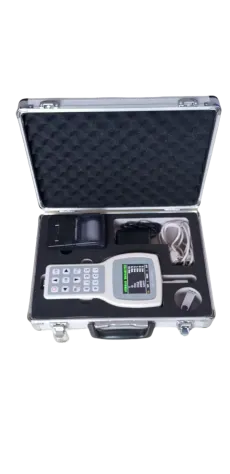
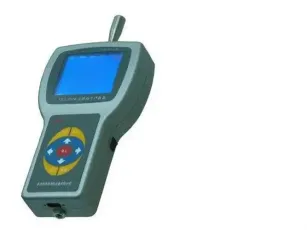
The core competitive advantages of this laboratory liquid particle counter lie in its ultra-high detection sensitivity and intelligent data analysis functions. It can detect micro-particles as small as 0.1μm, which meets the testing needs of high-purity liquid samples. It is equipped with a 316L stainless steel flow cell, which has good corrosion resistance and will not cause secondary contamination to the tested liquid samples. The built-in intelligent data analysis system can automatically generate standardized test reports, which can be exported to USB flash drives or uploaded to a computer through the Ethernet interface. It supports adjustable sampling volume, which can meet the testing needs of different sample volumes.
This laboratory high-precision liquid particle counter has the following detailed technical specifications: the detection range covers 0.1μm to 100μm, which can meet the testing needs of various high-purity liquid samples; the sampling volume can be adjusted freely between 1mL and 100mL, adapting to different sample testing requirements; the single test time is no more than 10 seconds, which greatly improves the testing efficiency; the measurement accuracy reaches ±2%, which is far higher than the industry average level; the flow cell is made of 316L stainless steel, which has good corrosion resistance and will not cause secondary contamination to the tested liquid; it supports USB and Ethernet interfaces, which can facilitate data transmission and remote control; it is powered by 110V/220V AC power supply, and has passed ISO 14644-1 and CE certifications; the working environment requires a relative humidity of 30%~80% RH non-condensing, the overall dimensions are 400*300*200mm, and the weight is 8.5kg.
This laboratory high-precision liquid particle counter is widely applicable to various liquid particle testing scenarios. In the pharmaceutical industry, it can be used for particle detection of injection, infusion and other drug preparations to ensure that the drug does not contain excessive particulate impurities. In the food and beverage industry, it can be used for impurity detection of drinking water, beverages and other products to ensure food safety. In the chemical industry, it can be used for particle detection of suspensions and emulsions to ensure the stability of product quality. In the semiconductor industry, it can be used for particle detection of wafer cleaning fluid to ensure the cleanliness of the cleaning fluid.








 Post RFQ


 Chat
Chat




 ALL CATEGORIES