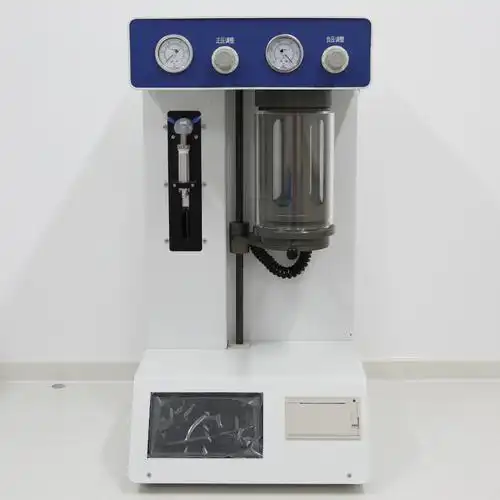
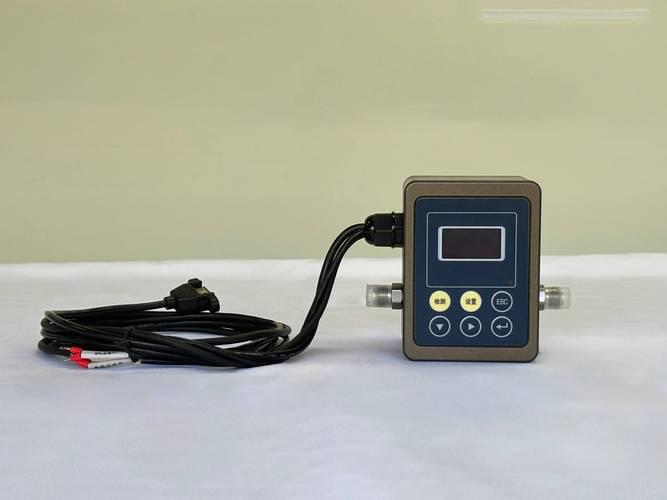


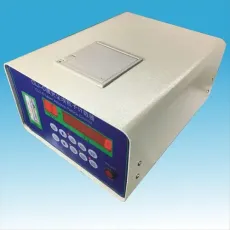
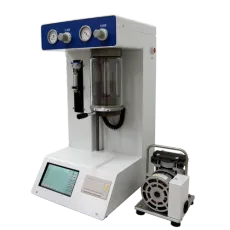
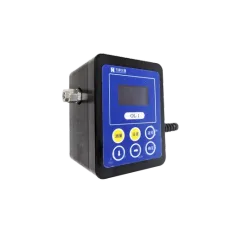
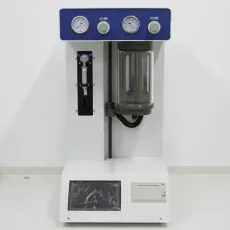
The core competitiveness of this product lies in its professional oil medium adaptation and high-pressure resistance. It adopts a special oil flow path design, which can effectively avoid blockage and pollution of the detection module caused by oil impurities. It supports a pressure resistance of 10Bar, which can adapt to the high-pressure oil pipeline environment of engineering machinery. The aluminum alloy shell has an IP67 protection rating, which can resist water immersion and dust, and is suitable for harsh industrial site environments. It supports real-time sampling of oil products with a flow rate of 10L/min, and can complete the detection of a single sample in 30 seconds. It has an audible alarm function when the particle concentration exceeds the standard, and can export detection reports in standard formats. Compared with similar products, it has a longer service life of the detection module, and the maintenance cycle can reach 12 months.
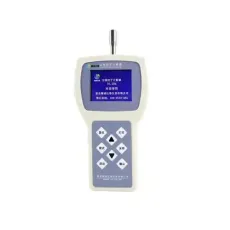
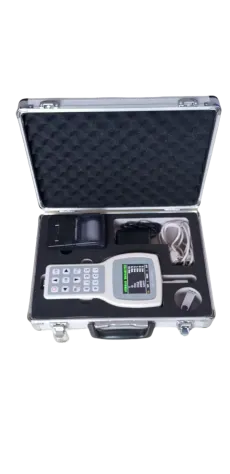
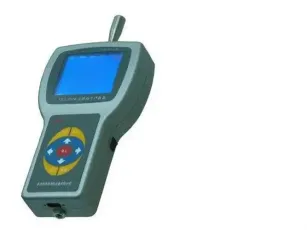
This oil particle counter has 6 standard particle size detection channels: 1μm, 2μm, 5μm, 10μm, 25μm and 100μm. The sampling flow rate is accurately controlled at 10L/min, which meets the testing standards of hydraulic oil particle pollution. It supports pressure resistance of 10Bar, and the oil flow path adopts anti-corrosion treatment. The power supply supports DC12V and AC220V dual modes, adapting to different on-site power supply environments. The overall size is 300mm (length) ×200mm (width) ×150mm (thickness) and a net weight of 1.5kg, which is easy to carry and install. It supports operating temperature range of -10℃-60℃ and humidity range of 10%-95%RH (no condensation), and has passed CE and ISO 9001 certifications, meeting the use standards of industrial machinery and equipment maintenance.
This product is suitable for particle pollution detection of hydraulic systems of engineering machinery, lubricating oil monitoring of generator sets, coolant particle detection of machine tools, oil quality testing of petrochemical enterprises, and hydraulic oil quality monitoring of port machinery. It can help enterprises timely detect oil pollution problems, replace filter elements in time, reduce equipment wear, extend the service life of mechanical equipment, and reduce production costs. It is also suitable for oil quality testing in shipbuilding and automobile manufacturing industries.








 Post RFQ


 Chat
Chat




 ALL CATEGORIES