

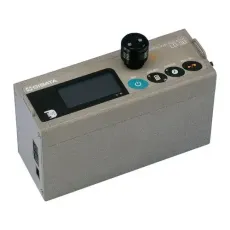
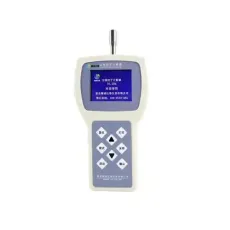
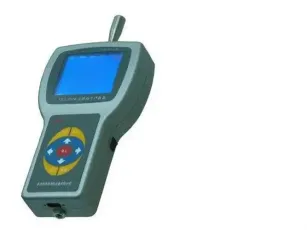
The core competitive advantages of this handheld particle counter lie in its ultra-high portability and simple operation. Its compact size and lightweight design make it easy to carry in a pocket or handbag, suitable for various on-site testing scenarios. It supports real-time display of PM2.5 and PM10 concentration data, and is equipped with an audio alarm function, which will automatically send out an alarm signal when the particulate matter concentration exceeds the set threshold. The low-power design ensures 6 hours of continuous working time after a single full charge, meeting the needs of daily testing. It also supports one-key startup and simple operation, reducing the professional threshold for ordinary users.
This handheld PM2.5 particle counter has the following detailed technical specifications: the detection range covers 0.5μm to 10μm, and supports 4 detection channels of 0.5μm, 1.0μm, 2.5μm and 10μm; the sampling flow rate is 1.0L/min, which can accurately collect particulate matter in the air; the single test time is only 3 seconds, which can quickly obtain test results; the built-in 1500mAh rechargeable lithium battery can support 6 hours of continuous working time after a single full charge; the overall weight is only 210g, and the dimensions are 150*60*25mm, which can be easily carried in a pocket; the housing is made of ABS plastic, which has good drop resistance; it has passed CE and FCC certifications, and is suitable for working in an environment of -10℃~50℃ with a relative humidity of 30%~90% RH non-condensing; the overall protection level reaches IP53, which can prevent splashing water and dust.
This handheld PM2.5 particle counter is widely applicable to various daily air quality detection scenarios. In the home environment, it can be used to detect the concentration of PM2.5 and PM10 to assess the indoor air quality and avoid the impact of haze and decoration pollution. In the office environment, it can be used to monitor the air quality of the office to ensure the health of office workers. In the construction site, it can be used to detect the concentration of construction dust to assess the level of air pollution and protect the health of on-site workers. It can also be used for air quality detection in vehicles and outdoor scenarios to meet the needs of daily air quality monitoring.








 Post RFQ


 Chat
Chat




 ALL CATEGORIES