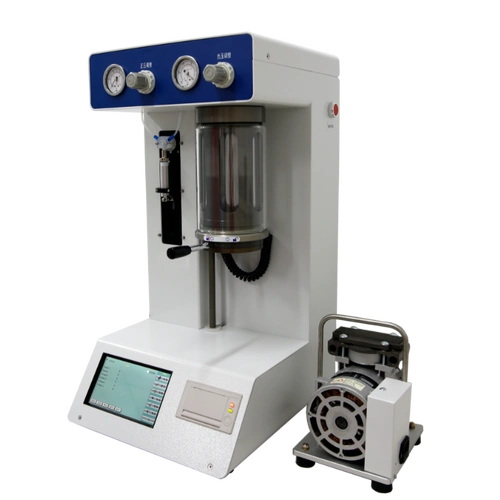
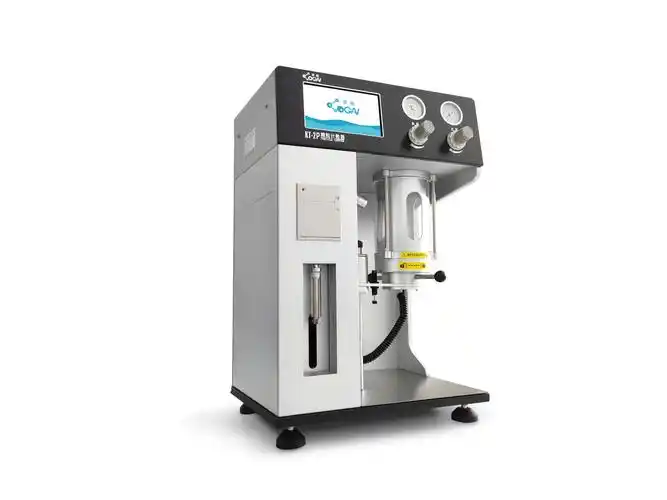


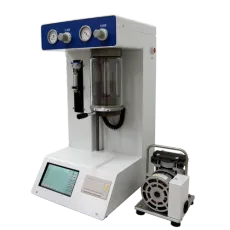
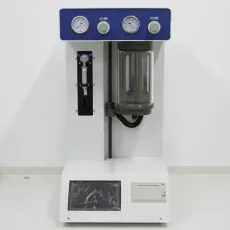
This product adopts a 780nm infrared laser light source, which avoids the interference of visible light to the oil and improves the detection accuracy of fine particles. It is compatible with a variety of oil viscosities, and can be tested directly without dilution. It has a built-in precise oil density compensation algorithm, which ensures the accuracy of test results at different oil temperatures. The built-in RS232 communication interface can be connected to a computer to generate professional test reports, which comply with NAS1638, ISO4406 and other industry standards. It can quickly switch testing modes, and support one-click generation of cleaning level reports that meet customer requirements. Compared with traditional laboratory testing, it saves 90% of time, solving the problems of long送检 time and inability to quickly evaluate oil conditions for enterprises.
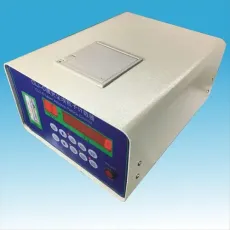
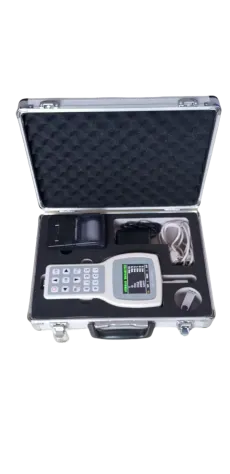
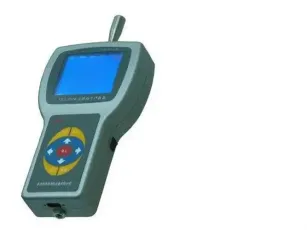
This oil-specific particle counter covers detection particle sizes of 4μm, 6μm, 14μm, 21μm, 38μm, 70μm, which complies with the ISO 4406 standard. The sampling flow rate is 100ml/min, and the sampling volume per test is 50ml. The detection accuracy error is controlled within ±4% under standard oil environment. It is equipped with a 2.4-inch LED digital screen that displays particle concentration and cleaning level. The built-in data storage capacity is 5000 groups of test data, and supports RS232 interface to connect to PC software for data analysis and report generation. The overall dimensions are 220mm×150mm×100mm, and the weight is 2.8kg. The operating temperature range is 5℃~45℃, and the operating humidity is 20%~80%RH (non-condensing). It supports two power supply modes: 110V/220V AC and 12V DC car charger, and comes with a dedicated oil sample extraction tube.
This oil-specific particle counter is suitable for hydraulic system oil testing of engineering machinery, lubricating oil cleanliness testing of industrial gearboxes, diesel engine fuel particle testing of ships, hydraulic oil testing of aerospace, hydraulic oil monitoring of automobile manufacturing production lines and other scenarios. It can help enterprises evaluate equipment wear status, formulate reasonable oil replacement cycles, reduce equipment maintenance costs, and extend equipment service life.









 Post RFQ


 Chat
Chat




 ALL CATEGORIES