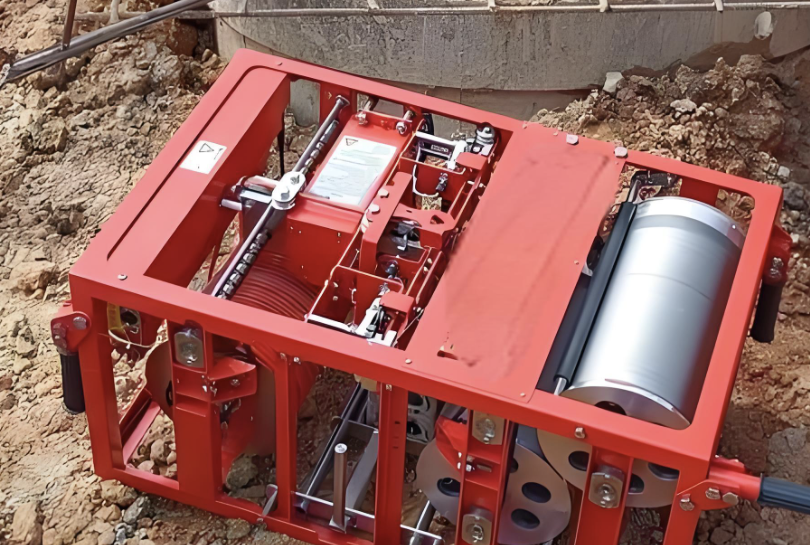
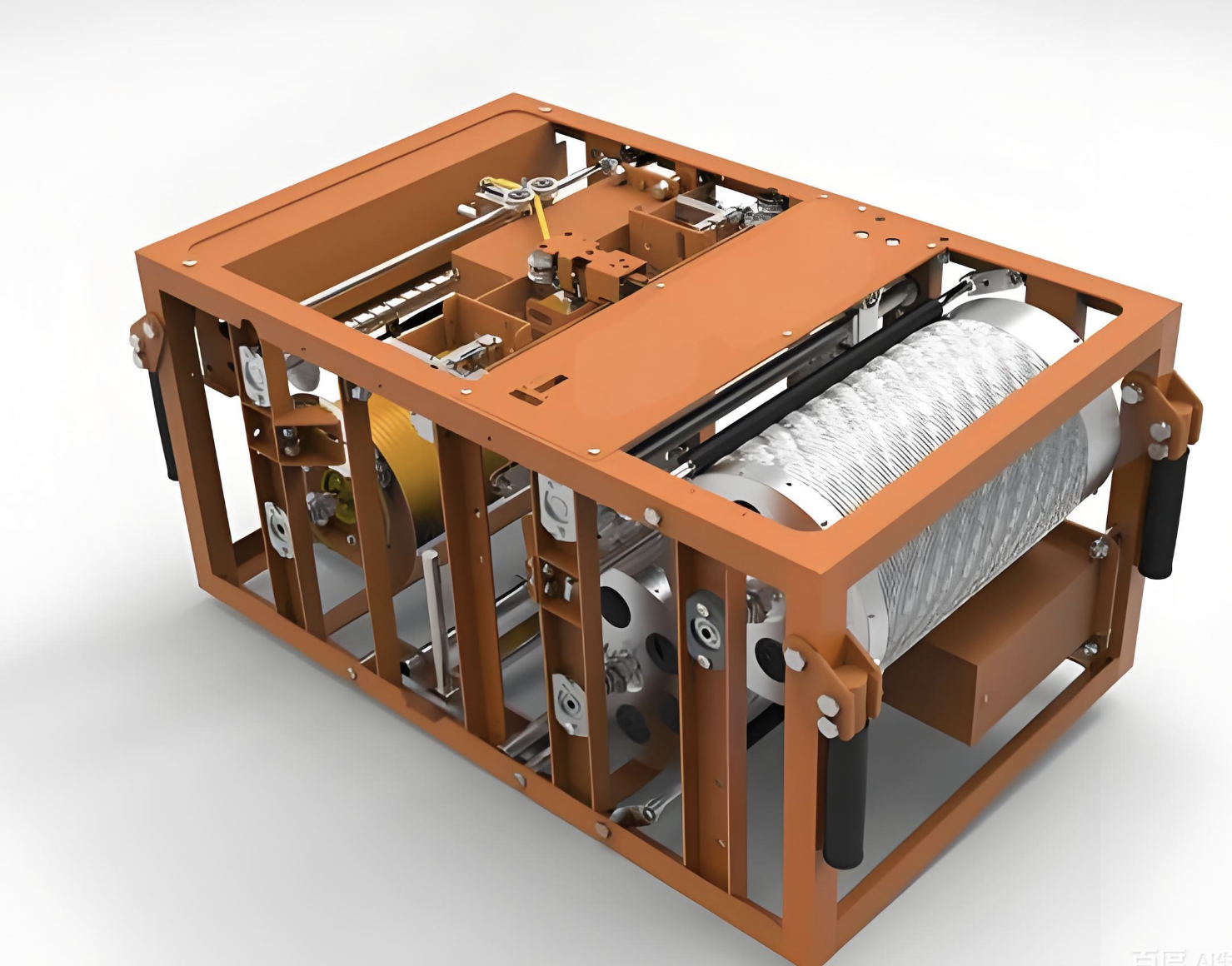


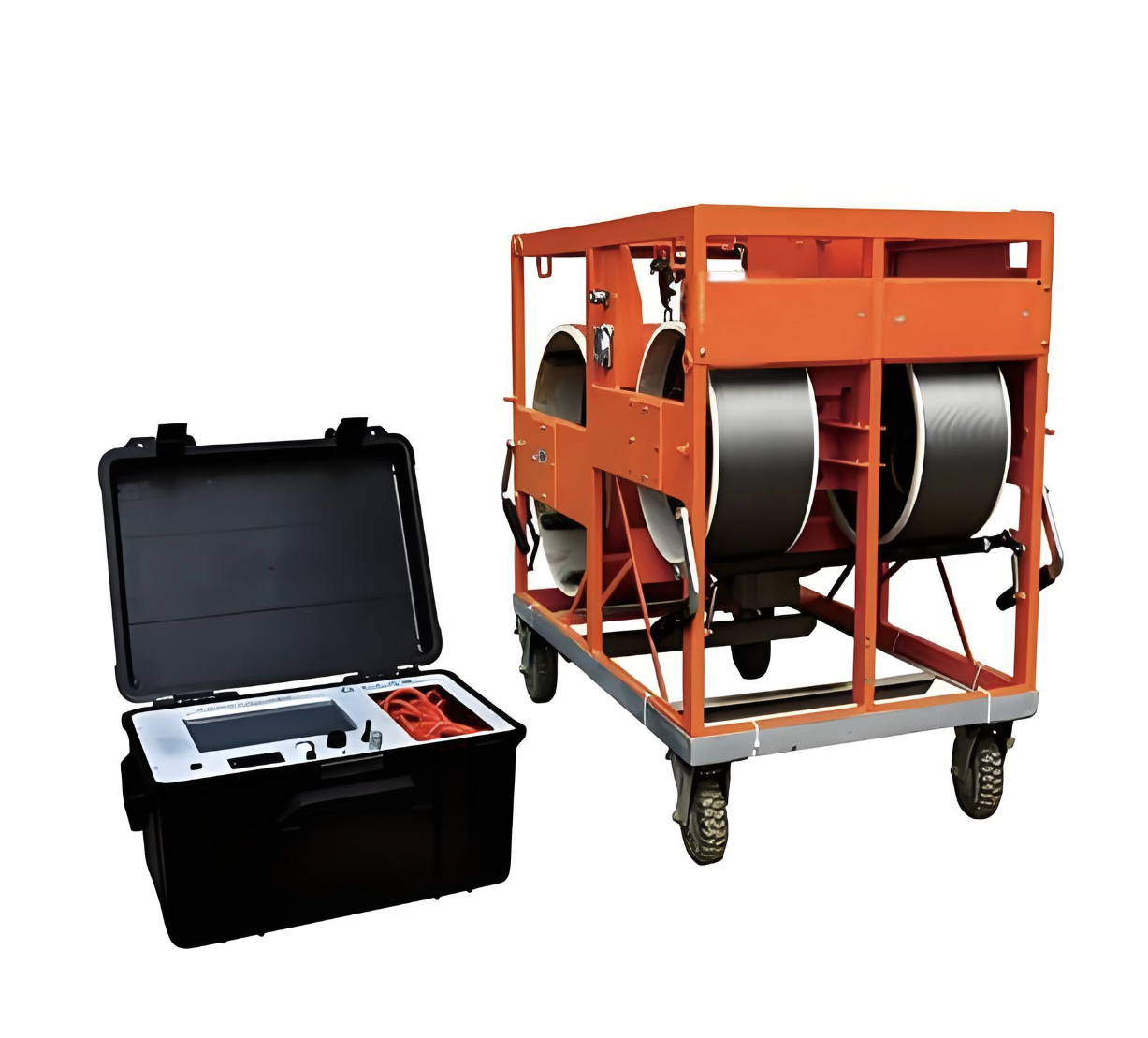
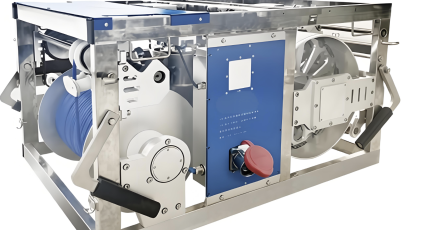
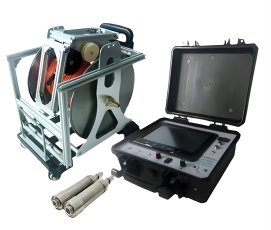
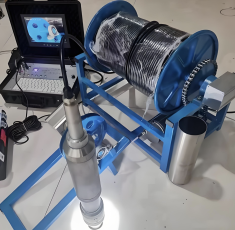
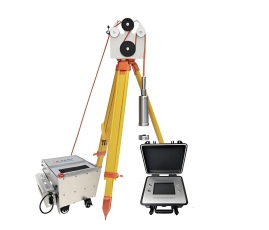
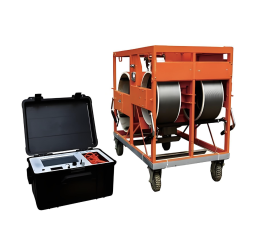
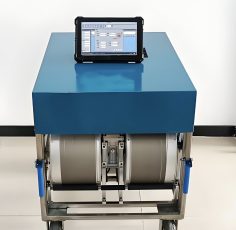
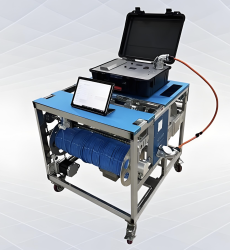
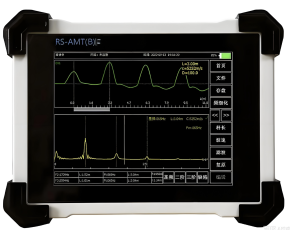
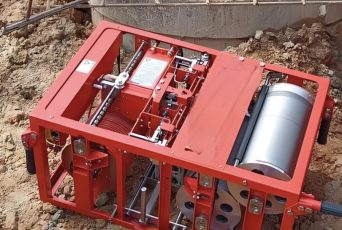
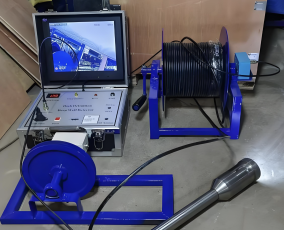
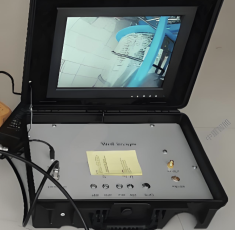
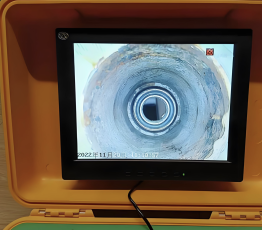
This detector features ultra-high integration with a built-in high-precision displacement sensor and tilt sensor, realizing synchronous detection of borehole diameter, depth and inclination. It adopts IP67 waterproof and dustproof design, suitable for harsh outdoor construction environments. The 7-inch high-brightness touch screen supports real-time data display and offline analysis, and the built-in 128GB large-capacity storage can store thousands of sets of detection data. It also supports wireless data transmission via BT 5.0, which can transfer detection data to a mobile terminal or computer in real time, greatly improving construction efficiency and reducing on-site operation time. The automatic calibration function avoids the trouble of frequent manual calibration, ensuring long-term stable detection accuracy.
The detection aperture range is 300-3000mm, which can meet the detection needs of most conventional cast-in-place piles. The maximum detection depth is 150m, suitable for conventional building foundation pile detection. The probe diameter is 80mm, which can smoothly enter and detect in standard boreholes. The whole machine weighs only 2.3kg, which is convenient for single-person carrying and operation. The battery life is up to 8 hours, which can meet the detection needs of a whole working day. The interface types include USB and BT 5.0, which can meet the needs of data import and wireless transmission. The housing is made of high-strength aluminum alloy, which has good shock resistance and corrosion resistance, and the protection grade reaches IP67, which can resist rain and dust erosion in outdoor construction sites.
It is mainly applicable to the quality detection of cast-in-place pile boreholes in civil engineering fields such as highway and railway bridges, high-rise building foundations, port wharves, and wind power foundation piles. Typical use scenarios include on-site rapid acceptance detection before pile foundation concrete pouring, post-detection of borehole construction quality, and on-site supervision and inspection of construction units and supervision units. It can help construction personnel quickly find problems such as too small aperture, too deep hole bottom sediment, and inclination exceeding the standard, so as to take corrective measures in time and avoid potential safety hazards in subsequent construction.










 Post RFQ


 Chat
Chat




 ALL CATEGORIES